REVIEW · NAPLES
Skip the Line Herculaneum Ruins Ticket
Book on Viator →Operated by Askos Tours · Bookable on Viator
Roman streets, preserved under Vesuvius mud. With this skip-the-line ticket, you can get into the Herculaneum excavations fast and wander at your own pace through bakeries, thermal baths, houses, and standout villa rooms. I especially like that the site’s burial-by-volcano story turns every turn into a small history lesson. And I really like that you can pick an entry time when you book, so your day doesn’t revolve around one strict schedule. The main thing to keep in mind is that this is ticket-only: no guidance is included, so you’ll want a plan for what to see.
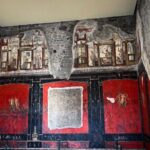
What I like most is how personal Herculaneum feels once you’re inside. Unlike the bigger, louder Pompeii day trips, Herculaneum tends to feel more calm and photo-friendly, with lots of surfaces to read up close, like mosaics and fresco-style wall decoration. I also love the way the famous rooms feel like real places instead of museum labels, especially when you see the House of the Skeleton and the thermal bath area.
One drawback: the skip-the-line part may not work perfectly every time. Some people reported needing to queue anyway to get paper tickets issued because the gate didn’t accept barcode-style e-tickets smoothly. If you’re visiting at a busy time, arrive early, keep your voucher handy (printed or on your phone), and be ready for a short fuss at the entrance.
In This Review
- Key points to know before you go
- Herculaneum’s Roman city, preserved under Vesuvius dust
- Skip-the-line reality check at the gate
- What the 4.5-hour self-paced visit actually feels like
- Stop-by-stop: houses, baths, and the named highlights
- House of Neptune and Amphitrite
- La Terrazza di M. Nonio Balbo
- Casa del Rilievo di Telefo
- Partem Domus lignea – Casa del Tramezzo di Legno
- House of the Deer
- College of the Augustales
- House of the Black Salon
- House of the Skeleton
- Casa Sannitica
- Central Thermae
- Casa del Bel Cortile
- House of the Grand Portal (House with the Large Doorway)
- Salone della Barca di Ercolano
- House of Galba (also referenced as a large portal-related stop)
- How to plan your walk: timing, heat, and photos
- Price and logistics: is $25 good value for Herculaneum?
- Who should book this skip-the-line Herculaneum ticket?
- Final verdict: should you book?
- FAQ
- How long is the Herculaneum visit with this ticket?
- What’s included in the ticket?
- Is guidance included?
- Where does the experience start?
- Where does it end?
- What time does it start?
- Can I choose an entry time?
- Is transportation included from Naples?
- Are children allowed?
- Are service animals allowed?
- Is free cancellation available?
Key points to know before you go
- Skip-the-line entry helps you get through the first bottleneck and start walking sooner
- Self-paced route lets you move slowly through mosaics, courtyards, and bath areas
- Big highlight rooms include the House of the Skeleton and several named villas
- Ticket-only experience means no guide is provided, so bring a method to learn
- A smaller site feel often makes it easier to take photos and linger in rooms
Herculaneum’s Roman city, preserved under Vesuvius dust
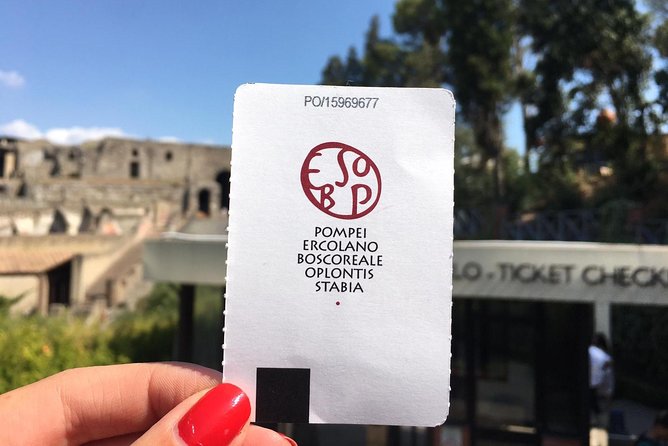
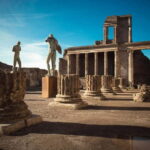
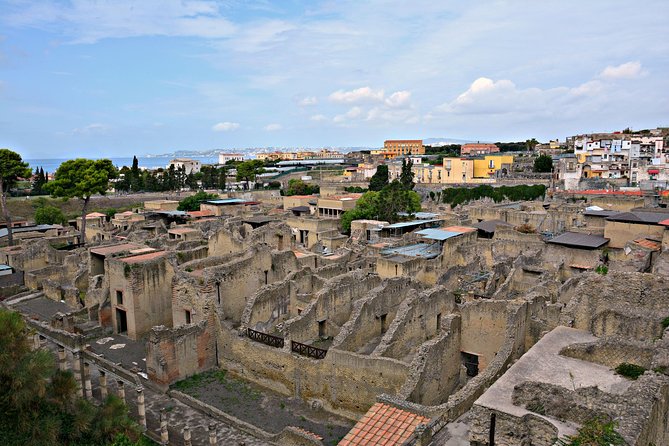
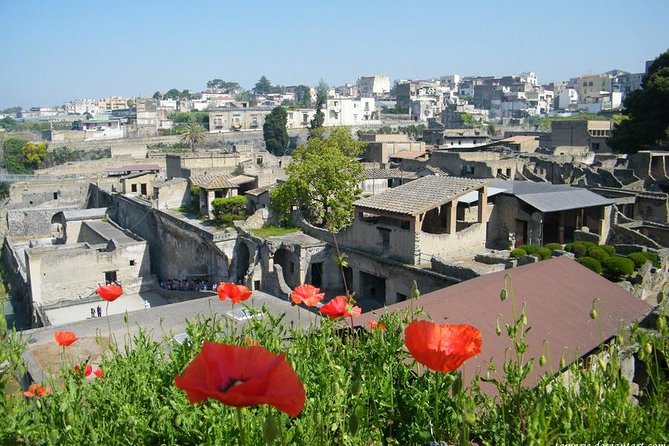
Herculaneum is the other side of the Vesuvius story. In AD 79, the eruption buried the town under volcanic mud and dust, and that unusual “cover” is why so much survives. You’re not just looking at ruins. You’re walking through spaces that stayed protected for centuries, then carefully uncovered.
What makes this special for you is the contrast between Roman life and the layers of time. In Pompeii, you often spend more energy navigating crowds and big street grids. In Herculaneum, the experience leans toward houses, rooms, and everyday corners: mosaics set into floors, terraces attached to upper living spaces, and bath areas that show how routine life worked.
You’ll also notice the atmosphere right away. Even with limited signage, the rooms make sense as you go. One minute you’re staring at a mosaic panel in a named house. The next minute you’re in the kind of space where a family might have gathered, walked, cooled off, or hosted guests.
And yes, it’s a lot to take in. A good trick is to pick a few “must-see” rooms up front, then let the rest be extra. That keeps the visit from turning into a frantic checklist.
You can also read our reviews of more tours and experiences in Naples


Skip-the-line reality check at the gate
On paper, this ticket promises skip-the-line entry. In practice, the value depends on how smoothly the site processes vouchers and how busy the day is.
Here’s the balanced truth:
- When crowds are light, you may see almost no waiting anyway. One early-morning visit reportedly had no meaningful queue for regular tickets.
- When crowds are heavier, you might still spend time at the entrance. Some visitors described a situation where there wasn’t a dedicated skip-the-line desk for their e-ticket, so they ended up in the same queue to get paper tickets issued. Another issue was a scanner that didn’t reliably read barcode-style e-tickets.
So how do you protect your time?
- Arrive close to your entry time (or a little early if you have flexibility).
- Have your voucher ready immediately. Keep it accessible on your phone and, if possible, bring a printed copy as backup.
- If you’re the type who hates friction, plan for the entrance to take a bit longer than you’d expect.
Does that make the ticket “not worth it”? Not necessarily. The ticket still helps you avoid the full uncertainty of buying on the spot and dealing with day-of lines. But you’ll get the best payoff when you show up prepared.
What the 4.5-hour self-paced visit actually feels like
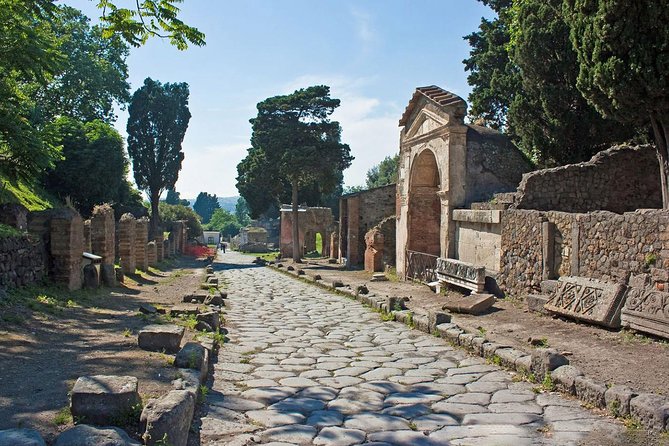
The tour length is listed as about 4 hours 30 minutes, and that time makes sense if you like to linger. Herculaneum isn’t huge like a city stroll, but it’s detailed. Named houses and room types take time because you’ll want to look closely at mosaics, preserved wall decoration, thresholds, and layout details.
At the same time, don’t stress if you don’t need the full window. One person noted the visit can be done in about 1 hour if you move quickly and focus on a handful of main stops. That’s useful to know if you’re combining Herculaneum with other Vesuvius sites or you’re traveling with kids who might not want to stare at every room.
A smarter approach for most people:
- Spend your first chunk of time on the “wow rooms” (like the House of the Skeleton).
- Use the middle chunk to slow down in bath-related areas and courtyards.
- Leave the final chunk for the smaller named spots and photos.
The site also helps you pace yourself because the stops are broken into short segments. In other words, you’re not walking forever between “interesting points.” You’re mostly walking from one preserved room to the next.
Stop-by-stop: houses, baths, and the named highlights
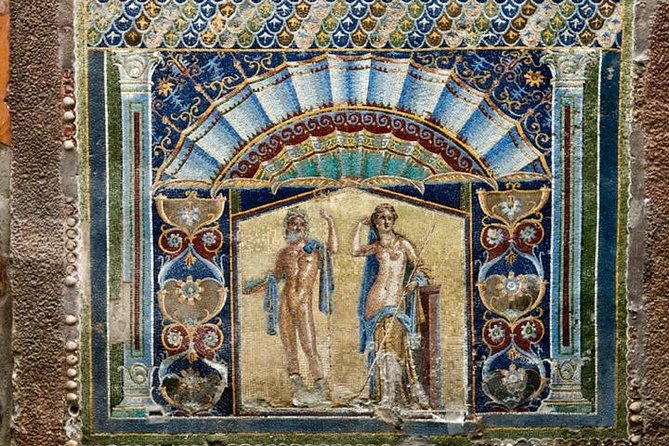
You’ll follow a path that hits many of the site’s best-known spaces. The good news is that each stop is short, so you can reset your eyes and keep moving without feeling overwhelmed. Here’s what to expect at each named point, and what to watch for.
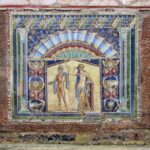
House of Neptune and Amphitrite
This is all about mosaic detail. The name tells you what to look for: a mosaic connected to Neptune and Amphitrite, the sea divinities. When you arrive, take a few extra seconds to stand at different angles. Mosaics often look different depending on how the light hits the surface.
Potential drawback: if you speed through, mosaics can feel like just “floor art.” Give it a minute longer than you think you need.
You can also read our reviews of more tours and experiences in Naples
La Terrazza di M. Nonio Balbo
Think of this stop as a chance to understand the home’s relationship to space. Terraces show you how people might have lived with views and fresh air. Even if you can’t fully imagine the original skyline, the terrace shape helps your brain place the house above or beside the street level.
Casa del Rilievo di Telefo
This is a relief-focused stop, so look for the preserved sculpted panel tied to Telephus (the name is your clue). Take time to study where it sits and how big it feels compared to the room.
If you love visual storytelling, this is one of the easiest stops to “get” quickly: you’re literally looking at the kind of art Roman households displayed to show culture and taste.
Partem Domus lignea – Casa del Tramezzo di Legno
Wood partitions are the theme here. This stop is a reminder that not everything preserved is stone. If you’re the type who wonders how rooms functioned day-to-day, pay attention to how a partition shapes movement and privacy.
Note: even if the original wood isn’t fully intact, the idea of a “wooden partition” is what makes this stop interesting.
House of the Deer
This is the family-friendly stop without being childish. The name signals a decorative focus tied to deer. Look for where the decoration appears and how it relates to the main space of the house.
College of the Augustales
This one shifts you from private houses to a more organized communal/ceremonial space. The “college” idea is your clue that you’re looking at a place connected to group identity. Slow down here and try to read the room as a gathering spot, not just a hallway.
House of the Black Salon
Now you’re entering a room where mood matters. A “black salon” suggests a striking interior finish and creates a more dramatic contrast than the bright mosaics and courtyards elsewhere. Take a moment to notice how dark surfaces change the way you see preserved details.
House of the Skeleton
This is the stop most people remember. The name says it plainly, and it’s exactly what you’d expect from a site like Herculaneum: a preserved human story caught in the eruption’s aftermath.
This is where you’ll want a calm minute. It’s intense, and it helps to step back and look at the room as a whole, not only at the most famous part.
Casa Sannitica
“Sannitica” points to regional identity and helps you think beyond one single lifestyle. When you reach this stop, don’t rush—use it to compare with the other houses around it. Even without deep technical interpretation, your eyes can spot different styles of layout and decoration.
Central Thermae
This is your thermal bath stop, the “what did people do to relax and clean” part of the visit. Thermal areas make Roman life feel practical. When you’re here, focus on how the space is arranged for movement and how it supports different activity areas.
If you’re walking in hot weather, this can become your psychological cool-off moment, even if you’re not physically relaxing.
Casa del Bel Cortile
A “fine courtyard” stop. Courtyards are where homes breathe. This is one of those spots that helps you picture daily flow: where people might gather, where light and air would enter the home, and how rooms connect around a central open space.
House of the Grand Portal (House with the Large Doorway)
This is the front-entrance personality of the site. A grand portal means someone wanted to make an impression. Even if you only get a partial view of the original doorway, stand back enough to understand scale. Large doorways aren’t subtle in Roman architecture.
Salone della Barca di Ercolano
Boat room. The “salone” tells you it’s a bigger, more ceremonial interior space, while “barca” hints at a decorative theme linked to boats. This stop is a great photo moment because you’ll usually have a clearer view within the room.
House of Galba (also referenced as a large portal-related stop)
Galba appears in the route as a notable house entry. Treat this as another chance to compare layout and decoration with the grand portal and courtyard houses. If you’re having a “I want to see everything” moment, this is where you decide what matters most to you.
How to plan your walk: timing, heat, and photos
Because you’re self-paced, you control your comfort level. That matters a lot at an outdoor archaeological site in southern Italy.
A few practical moves that help:
- Go early or late if you can. One visitor mentioned heat as a real factor, even during a season that wasn’t packed.
- Plan your photo strategy before you get deep into the site. If you wait until the middle, you’ll end up holding your phone over your head while you’re trying to read a mosaic.
- Take short breaks between clusters. The route hits many room types in a steady pattern, so it helps to reset rather than pushing through fatigue.
Also, if you’re coming from Naples, it’s useful that the site is reachable by train. One person noted the stop is about 1 km from the train station if you’re carrying your gear. That’s a normal walking distance, but it can feel longer when it’s hot and you’ve got water, hats, and camera stuff.
For learning, you’ll get more from your visit if you bring some background. The good sign here: even without a guide included, people found an audio approach helpful once they figured out how it works on-site, including written support.
If you like to learn as you walk, spend a little time before the first stop making sure you understand your method, whether that’s a phone audio guide, a printed map, or a guidebook.
Price and logistics: is $25 good value for Herculaneum?
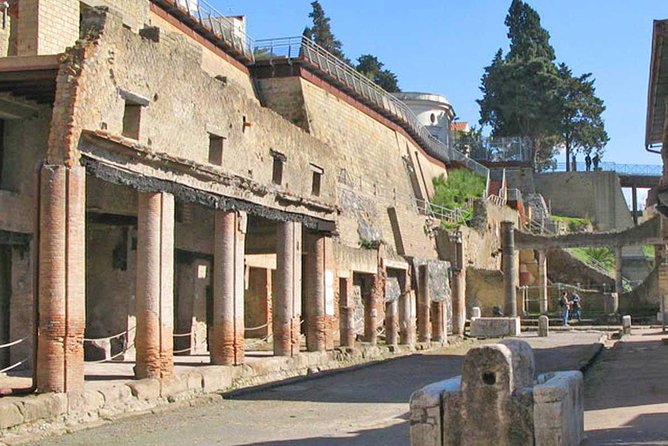
At $25, this is a focused buy: you’re paying for skip-the-line entry plus access to the excavation area. You’re not paying for transportation or guidance.
So the value question is simple:
- If you want to go at a time that works for you and you want to cut down the uncertainty of waiting, the ticket-only format is a fair deal.
- If you expected a guided narration, you’ll feel the gap. You’re walking yourself through the site.
In real-world terms, you’ll likely get the best value if you:
- already know how you like to learn during museum visits (audio, guidebook, or just slow looking)
- are comfortable navigating a historic site without a staff member leading your group
- can arrive prepared with your voucher ready to show
Also, remember the skip-the-line can be uneven depending on the gate process. If the site is quiet, you may not save much time. If it’s crowded, having the ticket is still likely better than buying last minute.
One more practical tip from real use: if you’re traveling during a time when lines can form, don’t rely solely on the idea that the entrance will be friction-free. Build in a little buffer. That one move protects your day.
Who should book this skip-the-line Herculaneum ticket?
This works best for you if:
- you like self-paced travel and you don’t need someone talking the whole time
- you care about mosaics, fresco-style wall decoration, and house interiors
- you want a less crowded, more personal feel than the biggest names in the area
- you’re okay spending time reading your way through a site without live interpretation
It may be less ideal if:
- you want a guide’s storytelling and context every step of the way (guidance isn’t included)
- you dislike any chance of voucher confusion at the gate—there can be some processing delays depending on how tickets are scanned
If you’re a family, it can still be a good fit because the route is broken into lots of short stops. Just keep expectations realistic: kids can get bored when the day becomes “rooms and floors,” especially in hot weather. Bring snacks and hydration on your own.
Final verdict: should you book?
If you’re visiting Herculaneum and you want a flexible, ticket-only experience that focuses on walking through well-preserved Roman rooms, this is a solid choice. At $25, the price feels fair because you’re buying time and access, not a lecture.
I’d book it if you plan to:
- arrive prepared (voucher ready)
- slow down for the named highlights like the House of the Skeleton and the bath area
- use a learning aid (audio or guidebook) since guidance isn’t included
I’d think twice if your main goal is a guided, high-touch experience. In that case, you’ll be happier with a version that actually includes a guide or structured narration.
FAQ
How long is the Herculaneum visit with this ticket?
The duration is listed as approximately 4 hours 30 minutes.
What’s included in the ticket?
It includes skip-the-line tickets to enter the Herculaneum archaeological site.
Is guidance included?
No. Guidance is not included.
Where does the experience start?
It starts at Excavations Corso Resina, 187, 80056 Ercolano NA, Italy.
Where does it end?
It ends back at the meeting point.
What time does it start?
Start time is 10:00 am.
Can I choose an entry time?
Yes. You choose from a selection of entrance times when you book.
Is transportation included from Naples?
No. Transportation to/from the attraction is not included.
Are children allowed?
Children must be accompanied by an adult.
Are service animals allowed?
Yes, service animals are allowed.
Is free cancellation available?
Yes. You can cancel up to 24 hours in advance for a full refund.
If you tell me your travel month and whether you’re coming by train or car, I can suggest a smart entry-time strategy for Herculaneum’s busiest hours.