REVIEW · POMPEII
Visit Pompeii with a local expert guide
Book on Viator →Operated by Guide Turistiche Campania di Febronia Amato · Bookable on Viator
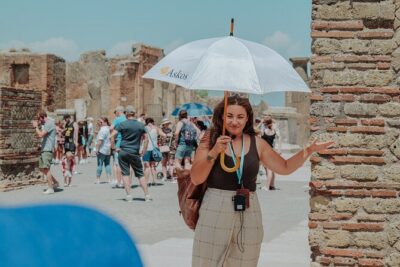
Pompeii clicks when someone explains it well. This is a private 3-hour visit with a certified guide who points out what matters and gives you the how-and-why behind the ruins, not just what you’re looking at. I especially like the small-group feel (up to 10) and the fact that admission tickets are included for key stops like the Foro and Teatro Grande. One consideration: it’s a timed, 3-hour walk, so if you want hours of free wandering, you might feel a bit rushed.
I also like that this tour is built for real understanding. From guides such as Alessia, Soraya, Piero, and even academics like Professor Bruno Pisano (as reflected in past guided experiences through this operator), the common theme is clear storytelling and attentive pacing, including humor and focus so you don’t get lost in a flood of dates. Plan for the practical side too: good weather is required, and the experience starts at 9:00 am.
In This Review
- Key Highlights You’ll Care About
- Why a Local Expert Makes Pompeii Feel Like a Place
- Meet at Piazza Esedra: Simple Start, Good Flow
- Foro de Pompeya: Roman Public Life in One Smart Stop
- Public Places Along the Way: How Pompeii’s Everyday Worked
- Teatro Grande: Dating, Habits, and Why the Theatre Mattered
- Language Choice: Get the Same Tour, In Your Comfort Level
- Value Check: What You Pay, What You Get, and What It Really Means
- Timing and Weather: The Real-Life Constraints
- Who This Tour Fits Best (and Who Might Want More Time)
- Should You Book This Pompeii Guided Visit?
- FAQ
- What’s the price for the Pompeii guided experience?
- How long does the tour last?
- Are entry tickets included?
- Where do we meet for the tour?
- What time does the tour start?
- Is private transportation included?
- What if the weather is poor?
Key Highlights You’ll Care About
- Private group up to 10 means more questions and a better pace.
- Tickets included for Foro de Pompeya and Teatro Grande save time and cost.
- Certified local guidance connects buildings to Roman daily life.
- Two major anchors (public square + big theatre) give Pompeii structure fast.
- Language choice lets you match your comfort level.
- Meets near public transportation at Piazza Esedra, keeping logistics simple.
Why a Local Expert Makes Pompeii Feel Like a Place
Pompeii can be overwhelming on your own. You see stone walls and street lines, but without guidance you can miss the logic—where people gathered, how they moved, and what each space was for. With a certified expert, the site starts to behave like a real town you could almost bump into tomorrow.
I like that the tour is aimed at understanding, not just exposure. The guide approach leans on history plus practical context, so the Foro de Pompeya doesn’t feel like a random ruin, and the Teatro Grande isn’t just a big theatre shape. Instead, you start seeing how public life worked and what habits were tied to those spaces.
There’s also a “human factor” that matters. In guided experiences with this operator, guides like Alessia and Soraya are described as attentive, funny, and strong at managing a group so you stay together and oriented. That kind of coordination is a quiet quality—especially when you’re dealing with crowds in a major site.
Finally, the tour is short enough to stay sharp. About three hours is a good sweet spot: you get meaningful highlights without turning the day into a marathon of standing still and re-reading signage.
You can also read our reviews of more guided tours in Pompeii

Meet at Piazza Esedra: Simple Start, Good Flow
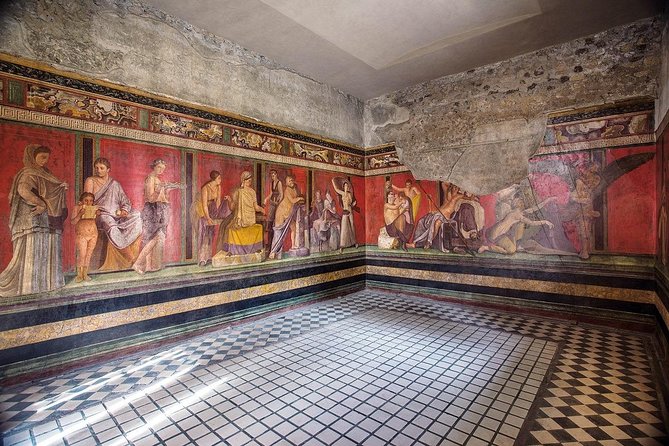
You meet at Piazza Esedra, 80045 Pompei NA, starting at 9:00 am. That early start matters in real life. Pompeii draws crowds, and being at the site early generally helps you get a calmer rhythm as you begin.
The tour also includes a clear return: it ends back at the meeting point, so you’re not stuck figuring out where you’ll end up. If you’re planning a day that also includes Naples or other sites, this keeps your schedule cleaner.
One practical note: private transportation is not included. That doesn’t make the tour “hard,” it just means you should already have your plan for getting to Pompeii and back. The good news is the meeting area is near public transportation, which gives you options.
Foro de Pompeya: Roman Public Life in One Smart Stop
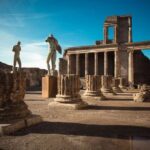
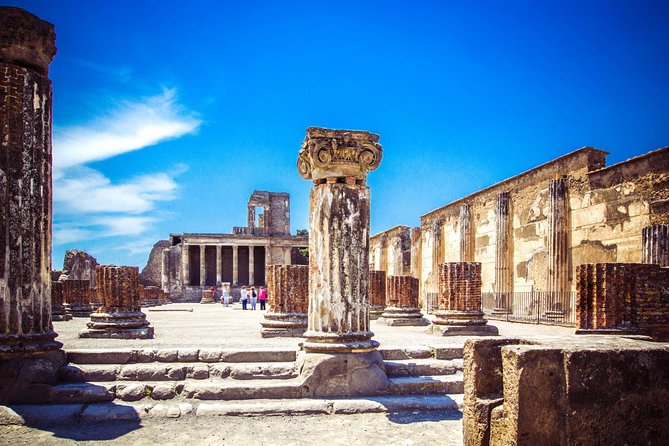
The first stop is Foro de Pompeya. This is where the city performed its public role—think announcements, gathering, civic life, and the social rhythm of the Roman world. The tour spends about 30 minutes here, and admission is included.
What I like about making the Foro an early anchor is that it sets the theme for the rest of your visit. Once you understand the Forum as a civic engine, you’ll interpret other areas more confidently instead of treating them like separate snapshots. The guide can also help you notice patterns: where people would have clustered, how movement likely worked through the space, and why this area mattered beyond its physical remains.
A drawback to consider: 30 minutes is not long. If you’re the type who wants to spend an hour reading every stone detail, you may want extra time after the tour ends. Still, as a first chapter, it’s a strong one because it gives you a framework you can carry with you.
Public Places Along the Way: How Pompeii’s Everyday Worked
Between the main anchors, you’ll see other public places tied to how Romans lived together in a shared city space. The itinerary doesn’t list every single stop by name, but the intent is clear: you’re not just going from one photo spot to another. You’re walking Pompeii in a way that builds a story.
This is where a skilled guide helps you connect dots. For example, once you’ve been told what the Foro represented, it becomes easier to understand how the city handled entertainment, social behavior, and public routines. That’s also where the tour’s length becomes helpful. You’re not spending too long in one spot, so your brain stays flexible and your questions don’t fade.
If you prefer strict, step-by-step explanations with fewer stops, the pacing can still work because it’s designed around a short total visit time. And since it’s private for your group, you can generally ask for clarification without waiting for a larger crowd to slow down.
Teatro Grande: Dating, Habits, and Why the Theatre Mattered
Stop two is the Teatro Grande, with about 50 minutes on site. Again, admission is included.
A big theatre in Pompeii wasn’t just about shows. It was a social machine. It shaped schedules, habits, and public behavior—how people spent time together and what kind of community life they expected. The tour specifically frames this stop around dating and habits, which is a smart combo. You get historical grounding, but you also learn what the theatre meant in daily terms.
What you might take away here is a clearer sense of why buildings were placed where they were. The theatre is visually striking, but it also connects to how Pompeii organized attention. The guide’s job is to make you see the theatre as part of a living routine, not just a monument that happened to survive.
This is also a place where you’ll likely appreciate the pacing. Even if you love ruins, you don’t want to spend the entire day looking down. The theatre gives you structure: seating areas, stage viewpoint, and the human scale of public gatherings. If you came to Pompeii for more than photos, this is often the stop that turns understanding into a real mental picture.


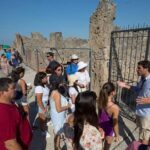
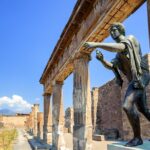
Language Choice: Get the Same Tour, In Your Comfort Level
The tour lets you choose your preferred language. That matters more than it sounds. Pompeii isn’t hard because the ruins are complex—it’s hard because the context is. When you can hear explanations in your own language, you’ll retain the story instead of translating in your head.
It also affects how much you’ll engage. If you want to ask questions and get quick, clear answers, having the tour in your preferred language helps a lot. This kind of clarity is part of why guided tours often feel more satisfying than audio apps or signage alone.
Value Check: What You Pay, What You Get, and What It Really Means
The price is $210.52 per group (up to 10 people) for about 3 hours. For many people, that sounds high until you look at what’s included.
You’re paying for:
- a guide service
- admission tickets included for the Foro de Pompeya and Teatro Grande
You’re not paying for:
- private transportation
So the true question is: does the guide time plus the included tickets make your day easier? For me, the answer is often yes. Pompeii is a place where a guide can save you from dead ends and help you understand what you’re seeing while you’re still at that spot—not later when the details are already fading.
If you’re traveling as a solo person, the per-group pricing can be less favorable than per-person group tours. But because this is private for your group, it can still be great value if you’re splitting costs with family or friends. Also, the short 3-hour format keeps the cost from stretching into a full day.
Timing and Weather: The Real-Life Constraints
This experience requires good weather. If the tour is canceled due to poor weather, you’ll be offered a different date or a full refund.
That matters because Pompeii outdoors is not the kind of place where you can just “power through” in rain. Even if the ruins are covered in places, you’re still walking between areas and spending time standing in exposed zones. So if your trip dates are flexible, aim for a day with more stable weather patterns.
Also, the tour starts at 9:00 am, so make sure you’re ready early. It’s the simplest way to get a smooth start, avoid unnecessary stress, and keep your energy up for the whole route.
Who This Tour Fits Best (and Who Might Want More Time)
This tour is a strong fit if you want:
- a certified local guide
- a focused route with major anchors
- a private experience with room for questions
- included tickets for the big highlights
It’s also a good match if you’re the kind of visitor who can feel history overload quickly. Some people love Pompeii so much that they start to blend everything together. A structured 3-hour visit can be a relief because it gives you a clear beginning, middle, and end.
If you want to read every inscription, linger for long stretches, or create a personal checklist of every building, you might find 3 hours limiting. In that case, consider doing this as your “guided foundation” and then adding extra time on your own afterward.
For families, it can work well too. In past guided experiences with this operator, even teens enjoyed the experience when the explanation came with clarity and a good pace—exactly the kind of energy you want in a short tour.
Should You Book This Pompeii Guided Visit?
If your goal is to understand Pompeii instead of just see it, I’d book this. The private group size, the fact that tickets are included for key stops, and the focus on public life at the Foro plus Roman habits at the Teatro Grande add up to a tour that feels purposeful.
I’d hesitate only if you’re aiming for a long, slow day of independent wandering. This is timed and structured on purpose, and if you want maximum flexibility hour-by-hour, you’ll likely prefer a different approach.
If you can get a good weather window and you want the site to make sense fast, this is a smart way to do Pompeii without wasting time.
FAQ
What’s the price for the Pompeii guided experience?
It costs $210.52 per group (up to 10 people).
How long does the tour last?
The tour runs for about 3 hours.
Are entry tickets included?
Yes. Admission tickets are included for Foro de Pompeya and Teatro Grande.
Where do we meet for the tour?
The meeting point is Piazza Esedra, 80045 Pompei NA, Italy.
What time does the tour start?
The start time is 9:00 am.
Is private transportation included?
No. Private transportation is not included.
What if the weather is poor?
This experience requires good weather. If it’s canceled due to poor weather, you’ll be offered a different date or a full refund.