REVIEW · POMPEII
Pompeii Private Tour with an Archaeologist Guide
Book on Viator →Operated by Askos Tours · Bookable on Viator
Pompeii makes way more sense with a real guide. This private, English-language Pompeii experience pairs archaeologist-level explanations with a tight, efficient route so you can spend your time where it matters—Stabian Baths, the Forum area, and the standout houses—while still having room to ask questions.
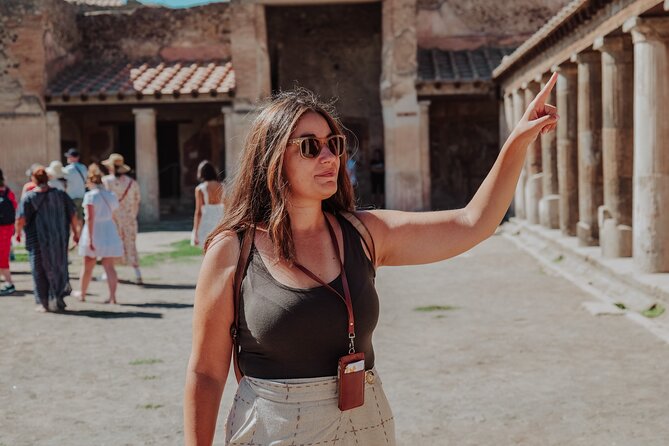
I love the undivided attention. Guides like Rossana, Paolo, and Michele set a relaxed pace, steer you around the densest areas, and actually answer the things you care about (life at home, the purpose of each space, and how to read the ruins). I also love that the stops are practical: you move from homes and public buildings to the big civic center without feeling like you’re wandering aimlessly.
One possible drawback: the tour runs about 2 hours, so if you like to linger over details or you want extra time to roam on your own afterward, you may feel a bit rushed. Several people ended up wanting longer than the standard time window.
In This Review
- Key highlights you’ll feel right away
- Why a private archaeologist tour clicks at Pompeii
- Porta Marina Superiore: your orientation stop before the ruins blur
- Casa dei Vettii and the domestic Pompeii feeling
- Lupanar and the termopolium stops: Roman life on the ground
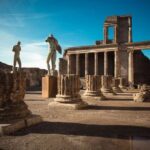
- Teatro Grande, Via dell’Abbondanza, and the Stabian Baths
- Forum Baths, Macellum, and the market-and-meeting Pompeii
- House of Menander, Granaries, and the Foro de Pompeya
- Crowd tactics, pacing, and why guides remember what to point at
- Price and tickets: what $178.45 really buys you
- What to wear and how to plan your 2-hour Pompeii window
- Should you book this Pompeii private archaeologist tour?
- FAQ
- How long is the Pompeii private tour with an archaeologist guide?
- Is this tour private?
- What language is the tour offered in?
- Where do I meet the guide?
- Are Pompeii entrance tickets included?
- What sights are included during the 2-hour walk?
- What is included in the tour price?
- Can I cancel for a refund?
Key highlights you’ll feel right away
- Archaeologist-led, private format with your group only, so questions never get squeezed in at the end
- Crowd-smart pacing that helps you keep moving through a huge site without losing the plot
- Spot-on orientation starting at Porta Marina Superiore, then building toward the Forum zone
- High-impact variety: homes, baths, theatres, markets, and the street leading through the city
- Great for families and mixed ages, since guides often adjust the pace and keep kids engaged
- Flexible energy, from rain-friendly visits to slower routes for people who need a lighter pace
Why a private archaeologist tour clicks at Pompeii
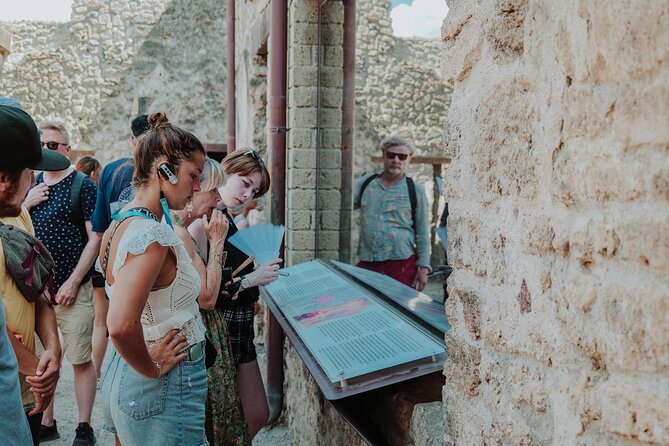
Pompeii is impressive, but it can also feel like a lot of open stone and shaded courtyards—especially when you’re surrounded by other groups. The value of a private archaeologist guide is that you don’t just look; you learn how to look.
You’ll get a guided storyline that connects the stops. At the same time, you can steer the conversation. People mention guides who were excited to share their expertise and who would wait until everyone was ready before explaining the next room or street—small things that make the experience feel smooth instead of frantic.
And because it’s private, your guide can adapt the pace. One family-friendly experience noted that the guide kept kids interested while still packing in plenty of major highlights. Another person with a broken foot appreciated the way the guide slowed down, found spots to sit, and avoided the biggest crunches.
You can also read our reviews of more guided tours in Pompeii

Porta Marina Superiore: your orientation stop before the ruins blur
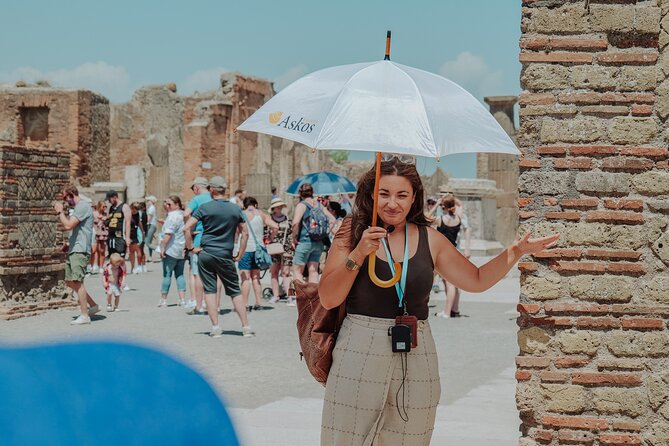
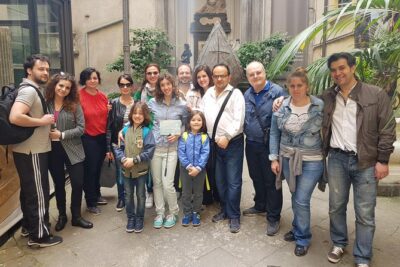
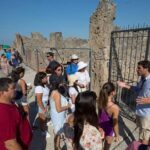
You’ll meet at the start location in Pompeii, then head to the entrance area at Porta Marina Superiore. The guide will be holding a sign that shows Askos Tours, so you’re not playing the guessing game with a crowd of matching lanyards.
This first segment is short, but it matters. Getting oriented at the beginning is how you avoid the most common Pompeii mistake: walking into the site and realizing an hour later that you’ve seen impressive fragments with no connection between them.
You’ll also have your first built-in checkpoint for planning the rest of your route. The tour info says admission ticket coverage is part of the first stop. That said, a few experiences mention an extra park-entry fee—so treat it as something to confirm at booking. If you plan a buffer in your day, you’ll stay stress-free.
Casa dei Vettii and the domestic Pompeii feeling
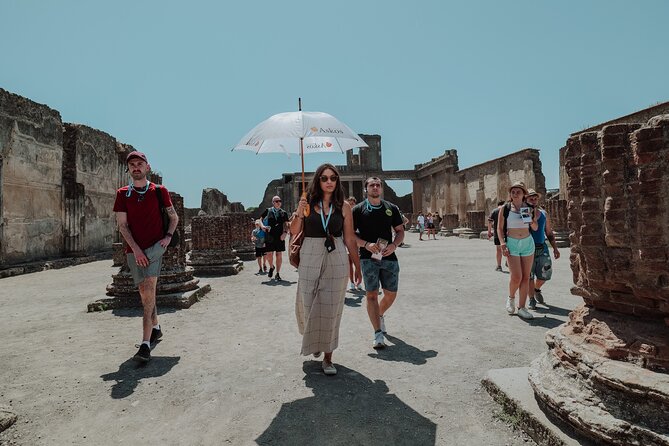
The tour then moves into Casa dei Vettii, a classic home stop that helps you understand Pompeii as a lived-in city rather than a museum on the ground. You’re not just seeing walls—you’re getting help interpreting what different spaces were for and how people moved through their daily routines.
This is also where a great guide makes Pompeii feel personal. Guides can point out details and explain how layout affected real life: where you’d spend time, how rooms relate, and what kind of household this likely was. People repeatedly praise guides who could describe daily life in a way that made the ruins feel less frozen and more human.
If you’re the type who loves asking questions—like what you’re looking at, why a space is arranged that way, or how people ate, worked, and socialized—this house stop is a strong early payoff because the guide can slow down when you want.
Lupanar and the termopolium stops: Roman life on the ground
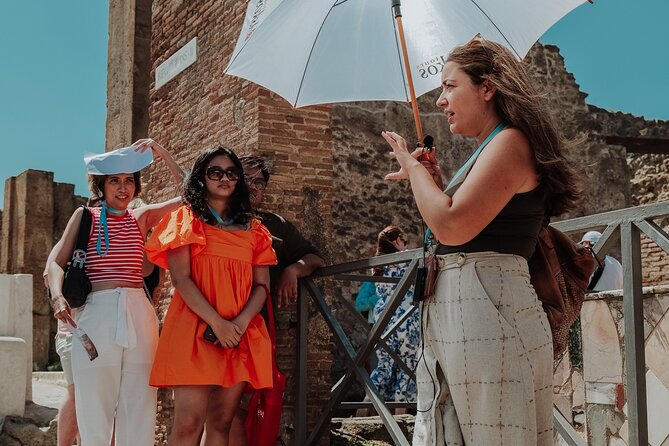
Next comes Lupanar, followed by the House and Thermopolium of Vetutius Placidus. These are the kinds of places that people either zoom past or spend too long staring at without context. A good guide prevents both extremes.
The Lupanar stop adds an important contrast: Pompeii wasn’t only temples and grand forums. It had spaces tied to entertainment and adult life, and a guide can help you read what you’re seeing without turning it into awkward guesswork.
Then the termopolium area gives you a chance to understand street-level habits. Even if you don’t know the term before you arrive, the concept usually lands quickly once your guide explains how this kind of spot functioned. One person highlighted a guide pointing out a version of fast food—an example of how guides translate ancient function into everyday meaning.
These stops also tend to be efficient for learning. You’re usually close to one or two big “wow” elements, so you get information you can remember later, not just a blur of architectural features.
Teatro Grande, Via dell’Abbondanza, and the Stabian Baths
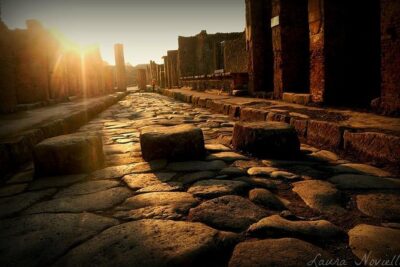
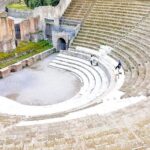
The route keeps shifting gears. You’ll see Teatro Grande (theatres of Pompeii), then take in Via dell’Abbondanza, a key walking street through the city’s core rhythms.
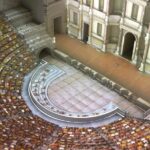
Theatres are useful because they help you understand how public gatherings worked. You get a sense of how people would gather for performances and how that kind of space shaped social life. The street stop, meanwhile, helps you picture movement through Pompeii as a real city—less like rooms in a catalog and more like a place with flow.
Then you hit Stabian Baths (Terme Stabiane), one of the most memorable parts for many first-timers. Baths are an ideal guide stop because they show how routine and community show up in architecture. People also like this moment because it gives a break from houses: the scale shifts, the setting changes, and the explanations often feel more varied.
If you’re visiting in heat, rain, or wind, these kinds of anchors help. One experience specifically noted that even on a rainy day, the guided visit still worked well and the weather added to the atmosphere without breaking the experience.
You can also read our reviews of more private tours in Pompeii


Forum Baths, Macellum, and the market-and-meeting Pompeii
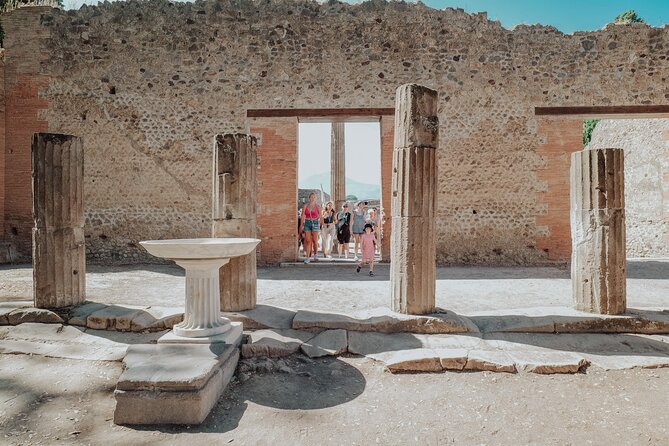
After the baths and street walk, the tour funnels you toward the commercial and civic center. You’ll see Forum Baths, the Macellum (market), and then continue through major Forum-area spaces.
This is where Pompeii becomes about people doing business—buying, gathering, storing food, and using public areas. With a guide, you get help connecting the dots between separate buildings so the Forum zone doesn’t feel like a pile of separate ruins.
The Macellum stop is a big deal because it’s the kind of location that makes ancient economies feel real. Instead of just hearing that markets existed, you see the space designed for it. A guide can also point out how the city’s everyday needs were handled, which turns a “highlight” into a story.
If your group includes teens or younger kids, the Forum-area stops are often where attention holds best, since you can explain daily life with concrete examples rather than only big-picture politics.
House of Menander, Granaries, and the Foro de Pompeya
Near the end, you’ll visit House of Menander, the Granaries of the Forum, and the Foro de Pompeya itself. This cluster is valuable because it shifts from consumption and gatherings to the infrastructure that made it possible.
Granaries are especially useful for understanding the practical side of city life. Once you see the scale and the purpose of storage spaces, it’s easier to imagine how food supply and public organization worked. Your guide can help you make sense of why certain areas sit where they do in relation to the rest of the Forum.
The final Forum stop leaves you with a stronger “big picture” view. People love this because it ties together the earlier stops: domestic life, public entertainment, bathing routines, street movement, markets, and the civic center all connect into one believable model of how Pompeii functioned.
Crowd tactics, pacing, and why guides remember what to point at
Pompeii can be packed, and the ruins are so extensive that first-timers can easily miss the best viewpoints. The most praised aspect of this tour is simple: the guide helps you keep control of your time.
Many people specifically mention guides navigating around crowds. That doesn’t mean avoiding people entirely—it means knowing where to go next, when to pause, and how to keep your group from getting swallowed by slow-moving clusters.
Pacing is another big win. Several experiences praise guides who kept the tour moving at a comfortable speed and waited for the group before explaining the next section. And if you’re the kind of traveler who loves stopping for photos, a good guide will help you do it without losing the informational thread.
You’ll also notice that different guides bring different strengths. One person had Paolo, an archaeologist, who made people’s lives feel understandable through explanation and imagination. Another tour highlighted a guide with excavation experience and architectural background, which can be especially helpful if you’re curious about how ruins were uncovered and studied. If you get someone like Vito or Antonella, expect lots of room for Q&A—plus a guide who encourages thinking like an archaeologist.
Price and tickets: what $178.45 really buys you
At $178.45 per person, this is not the cheapest way into Pompeii. The question is what you’re buying, and the answer is time plus expert attention.
You’re paying for:
- A private format (only your group)
- Guidance by an archaeologist
- A route that hits key spaces in about 2 hours
- The ability to ask questions on the spot rather than reading signage later
Where value gets tricky is entry pricing. The tour details say admission ticket inclusion is part of the first stop, but some experiences report that you may need to pay the park entrance separately (often mentioned around 20 euro per person more). That’s why it’s smart to confirm what’s included right before you go.
If you only have a half-day, this tour can be a smart way to avoid spending it “collecting pretty rooms” with no explanation. If you have more time and you love slow self-guided wandering, you might want a longer guide session or fewer stops—because Pompeii is enormous and two hours goes fast.
What to wear and how to plan your 2-hour Pompeii window
This tour runs for about 2 hours, so your practical choices matter. Wear closed shoes—Pompeii surfaces can be uneven, and open sandals or flip-flops can make walking harder than it should be. Bring a hat or something for sun if you’re visiting in high season, and keep your day flexible if weather changes.
The meeting is straightforward: you start near Via Villa dei Misteri, 1, and you meet your guide at the entrance area holding the Askos Tours sign. The tour ends at the ruins area, and your guide can help with directions back to your accommodation or the nearest train station.
Also note: the tour is offered in English, service animals are allowed, and most people can participate. If you’re with kids, this format often works well because guides can keep attention on the story rather than the crowd noise.
And one more timing tip: it’s commonly booked about 27 days in advance, so if your dates are firm, book earlier rather than later.
Should you book this Pompeii private archaeologist tour?
Book it if you:
- Want maximum meaning per minute in Pompeii
- Care about asking questions and getting answers right away
- Prefer a guide who can manage crowds and keep your route efficient
- Have limited time and want to see the big anchors like the Stabian Baths and Forum zone
Skip or adjust if you:
- Plan to spend most of your day roaming without structure
- Know you’ll want to linger a lot longer than 2 hours (some people leave wishing they had closer to 4)
- Don’t want to handle the possibility of an extra park-entry fee, so confirm details ahead of time
If you’re doing Pompeii for the first time—or even if you’ve been before but want it to click—this is a strong choice because it’s built around the stops that make the city make sense.
FAQ
How long is the Pompeii private tour with an archaeologist guide?
It’s about 2 hours (approx.).
Is this tour private?
Yes. It’s a private tour/activity, and only your group participates.
What language is the tour offered in?
The tour is offered in English.
Where do I meet the guide?
You meet at Via Villa dei Misteri, 1, 80045 Pompei NA, Italy, and at the archaeological site entrance (Porta Marina Superiore). The guide holds a sign with Askos Tours.
Are Pompeii entrance tickets included?
Admission ticket coverage is listed as included for the first stop. However, some experiences mention paying an additional park-entry fee, so it’s smart to confirm what your booking includes.
What sights are included during the 2-hour walk?
You’ll see stops including Casa dei Vettii, Lupanar, the House and Thermopolium of Vetutius Placidus, Teatro Grande, Stabian Baths, Via dell’Abbondanza, Forum Baths, Macellum, House of Menander, the Granaries of the Forum, and the Foro de Pompeya.
What is included in the tour price?
Guidance and assistance by an archaeologist, plus the private tour format.
Can I cancel for a refund?
You can cancel for a full refund up to 24 hours in advance of the experience start time.