REVIEW · POMPEI CAMPANIA
Pompeii Audioguide – TravelMate app for your smartphone
Book on GetYourGuide →Operated by MyWoWo Srl · Bookable on GetYourGuide
If you like exploring on your schedule, Pompeii is better this way. This smartphone audioguide lets you roam with autonomy, using the TravelMate app to hear professionally made stories right on-site. I especially like that you can use it offline (so you are not stuck hunting for a signal) and that it stays available for a long time after activation.
There’s one catch to consider: getting started can feel fiddly at first, and the narration style may not grab everyone the way a lively live guide would. Still, if you want a low-cost, flexible way to understand what you are seeing, it’s a strong option.
In This Review
- Key things to know before you go
- Pompeii at your pace: no paper tickets, just your phone
- Setup and activation: getting from email to play
- Online vs offline listening: choose what matches your day
- The content inside: 16 tracks, about 48 minutes
- Pompeii Introduction: get your bearings fast
- Frescoes: reading images before you read dates
- Grand Theatre (Regio VIII): the roar you can’t hear
- Basilica of the Friars: the public heart
- Houses of Marcus Rufus and the Golden Bracelet (Regio VII): power in domestic form
- Lupanare (Regio VII): uncomfortable, but historically important
- Temple of Apollo (Regio VII): religion you can walk through
- Roman Domus: the everyday version of grandeur
- Thermae (Regio VII): warm-water life and social time
- The quiz section: small learning boost, not a test
- How much is it worth for $9?
- Best for you if…
- Should you book this Pompeii audioguide?
- FAQ
- How much does the Pompeii audioguide cost?
- How long is the guide valid?
- Do I need a meeting point?
- Where do I find my activation code?
- Can I use the audio guide offline?
- Is there a text option in the app?
- What languages are included?
- Is the experience wheelchair accessible?
Key things to know before you go

- No paper ticket pickup: download the app, activate with your code, and start where you are
- Repeatable content: the guide does not expire, so you can revisit another day
- Works online or offline: you can choose the mode that matches your phone signal
- Audio + text: you can read along with the audio files in the app
- Short, focused format: 16 audio tracks totaling about 48 minutes
- Includes a quiz: quick questions help you test what you just heard
Pompeii at your pace: no paper tickets, just your phone
Pompeii can be intense. Crowds, crumbling walls, street names you won’t recognize at a glance, and a lot of “Wait—what am I looking at?” moments. This audioguide helps you cut through that with a simple approach: you use your own smartphone and press play when you want.
The big practical win is no meeting point and no paper tickets to collect. You can download the TravelMate app (TRAVELMATE for Android, TRAVELMATE TM for iOS), find your activation code from your email, then begin immediately wherever you prefer inside Pompeii. For many people, that freedom is the difference between enjoying the ruins and feeling rushed.
I also like that your phone is yours. That means you avoid shared headsets or third-party devices. If you are picky about hygiene, this setup feels reassuring—and honestly, it’s just easier.
You can also read our reviews of more tours and experiences in Pompei Campania



Setup and activation: getting from email to play

To use the guide, you start with the TravelMate app and an activation code. You’ll find it in your email inside the ticket area. The process is straightforward but can be visually specific:
- Open the email and click Show activity details (or Show your tickets here)
- Tap the big barcode inside the orange frame
- A black-and-white barcode window opens
- The 10-digit code is the small number just under the barcode
If you use the GetYourGuide app, the same idea applies: find Show ticket in the App, open the barcode view, then read the 10-digit activation code beneath it. Once that code is in the TravelMate app, you should be ready to start listening.
One word of advice: do this before you get deep into the ruins. Even if it is quick, having time to troubleshoot at the edge of the site saves stress.
Online vs offline listening: choose what matches your day
TravelMate lets you listen online or offline, and that matters in Pompeii. Cell coverage can be hit-or-miss depending on where you are standing, so offline capability is the safety net.
If you plan to use online audio, keep expectations realistic: you may need a decent connection for streaming to behave well. If you want the most reliable experience, download or enable offline audio when you can, then roam without thinking about bars.
I also like that the app lets you read the text of the audio files. That’s useful if:
- you’re standing in a noisy patch,
- you need a quick recap without rewinding,
- or you simply prefer to read while you look.
Earphones are recommended for a better experience, and it’s easy to see why. Pompeii has its own sounds, but clarity is what helps the story land.
The content inside: 16 tracks, about 48 minutes

The guide includes 16 audio content pieces totaling around 48 minutes. That’s a sweet spot for ruins. Long enough to make the place feel connected, short enough that you are not stuck holding your phone the whole time.
The tracks cover key zones and themes, including:
- Pompeii Introduction
- Frescoes
- Grand Theatre (Regio VIII)
- Basilica of the Friars
- Houses of Marcus Rufus and the Golden Bracelet (Regio VII)
- Lupanare (Regio VII)
- Temple of Apollo (Regio VII)
- The Roman Domus
- Thermae (Regio VII)
You may notice the guide doesn’t try to explain everything on earth. Instead, it hits major highlights and gives you a guided lens. If you want the broad strokes with minimal effort, you’ll likely appreciate that focus.
Pompeii Introduction: get your bearings fast
Before you get lost in details, the Pompeii Introduction track helps you understand what the ruins are, and why they are so different from typical “old stones” you’ve seen elsewhere. This kind of starter lesson is valuable because Pompeii is not arranged like a museum floor. You are moving through districts, entrances, and ruins that look similar until someone points out what matters.
If you are visiting for the first time, start with the introduction track early. You’ll feel less like you are wandering and more like you are reading the site in order.






Frescoes: reading images before you read dates

Next up, the guide turns to Frescoes. This is one of Pompeii’s most emotional categories—color that somehow survived, scenes that show everyday life, and artwork that gives the place personality instead of just scale.
A big advantage of having audio here is that you don’t have to memorize names while you look. The sound gives you context, so the painting details make more sense in your mind. And because the app includes readable text, you can slow down and re-check key points without missing the view.
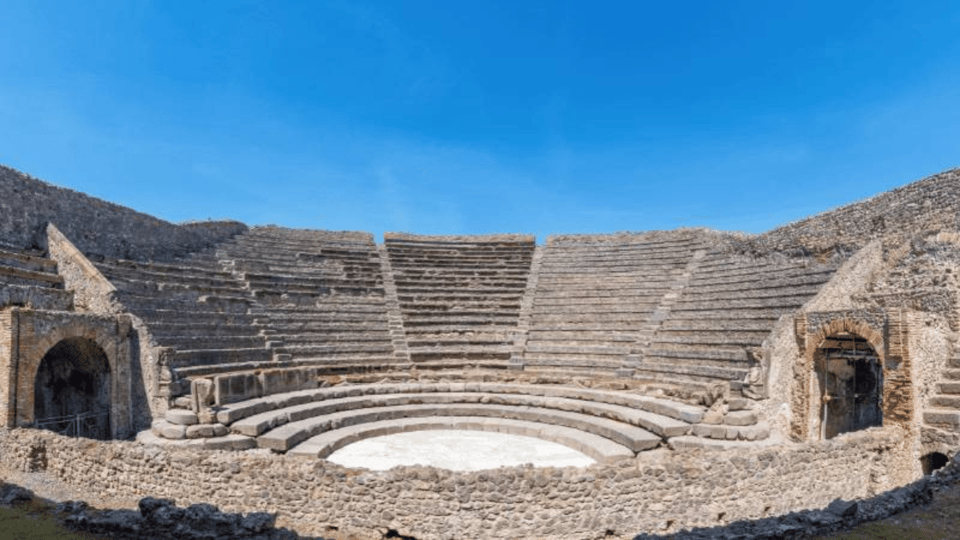
Grand Theatre (Regio VIII): the roar you can’t hear

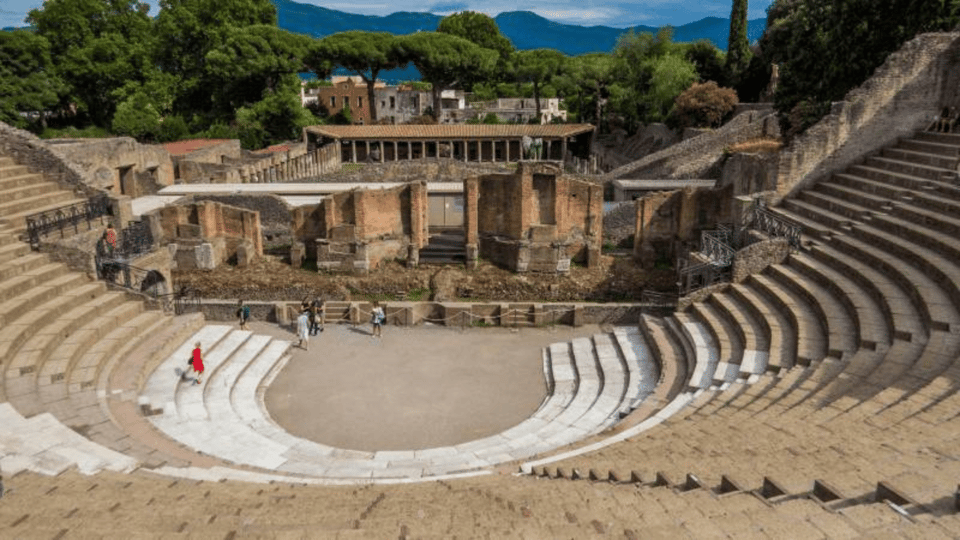
At the Grand Theatre (Regio VIII), Pompeii shifts from daily life to public performance space. A theatre in ruins is more than architecture. It’s a clue to how people gathered, how entertainment worked, and what kinds of events mattered.
What I like about hearing this through an audio guide is pacing. You can pause at the right angles—where you can imagine sightlines—then let the narration explain why the space was built the way it was. With this approach, the theatre feels like a functioning room from the past, not just a curved wall.
Basilica of the Friars: the public heart

The Basilica of the Friars track focuses on a building type that served civic and community functions. Even if you do not care about legal history, basilicas matter in Pompeii because they explain how space was organized for people to meet, trade, and move through the city.
This is a good stop for your brain. It helps you connect the ruins to daily routines rather than treating everything as separate “attractions.”
Houses of Marcus Rufus and the Golden Bracelet (Regio VII): power in domestic form

When the guide reaches the Houses of Marcus Rufus and the Golden Bracelet (Regio VII), you get a taste of wealth and status—how houses weren’t only shelter, but symbols. Pompeii homes tell stories through layout: where you enter, what you see first, and how rooms relate to each other.
A helpful angle with this app is that it keeps you from skipping over house areas because they look similar. Audio cues can keep your attention on the meaningful parts, not just the most photogenic corners.
Lupanare (Regio VII): uncomfortable, but historically important
The Lupanare (Regio VII) is one of those sites you might approach with mixed feelings. It’s also one of the most revealing windows into Roman life—because Pompeii doesn’t only preserve neat postcard moments. It preserved the real, complicated stuff too.
This is where I think the best use of an audio guide is clear: it helps you interpret without turning the visit into a guessing game. You’ll likely understand more than you would by simply looking at the doorway and imagining what happened there.
Do remember that the subject matter may not be everyone’s comfort zone. If you prefer only light, purely scenic stops, plan your approach accordingly.
Temple of Apollo (Regio VII): religion you can walk through
The Temple of Apollo (Regio VII) track brings worship into view in a way that feels physical, not abstract. Temples in Pompeii aren’t just standing monuments; they are structures people entered, dedicated, and treated as part of the rhythm of city life.
If you like learning how places reflect belief, this is a good time to listen closely—then take a minute to observe the space again. With the audio format, you can re-play parts and read along in the app if something isn’t sticking.
Roman Domus: the everyday version of grandeur
The guide also includes a section on The Roman Domus, which is basically the idea of a Roman house at its core. This track can be especially useful if you walked through a house complex and thought: Okay, but what am I seeing and why does it matter?
Audio helps you turn the layout into a map of habits: movement, privacy, and how rooms functioned. It’s one of those stops where the value comes from interpretation, not spectacle.
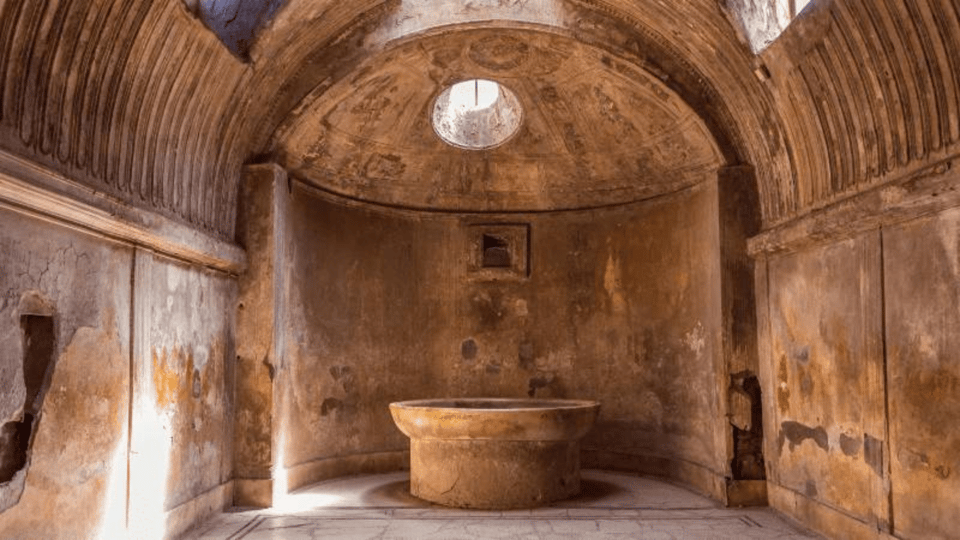
Thermae (Regio VII): warm-water life and social time
Finally, the Thermae (Regio VII) track shifts you into the world of baths. In Roman life, baths were more than hygiene. They were social space, routine space, and sometimes the place where news and gossip traveled.
If you want Pompeii to feel lived-in, thermae are a strong closer. You can stand where people would have moved through the bathing areas and let the narration connect it to daily rhythm.
The audio format again helps you slow down. Baths can be visually confusing from one angle. With sound guiding you, you’ll likely understand the layout better as you walk.
The quiz section: small learning boost, not a test
TravelMate includes a quiz section with short questions about the city. This can be a quick way to lock in what you just heard—especially if you enjoy a bit of gamified learning.
It’s not a replacement for careful listening, but it can be a nice end-of-session activity. If you have a spare moment while recharging your phone, it’s an easy win.
How much is it worth for $9?
At $9 per person, this audioguide is positioned as a budget-friendly way to upgrade your self-guided visit. You are paying for:
- professional audio content
- multiple tracks that cover major highlights
- the ability to play repeatedly for years
- offline listening (when set up right)
- text support inside the app
If you compare it to live-guided options, the value is clear: you control pacing, you avoid group timing, and you keep the guide for future returns. And if you already planned to walk Pompeii on your own, the marginal cost is small.
Still, you should set expectations for style. Some people may find the narration less gripping than they hoped, and the guide is not meant to cover every nook of the site. If you want a teacher-style, story-first experience, you might find yourself wanting more energy from the audio.
Best for you if…
This works well if you:
- like self-guided travel and don’t want to coordinate around a group
- want something you can re-play on a second visit
- enjoy learning through short segments
- are traveling with someone who has different interests (you can split attention without splitting the group)
- want to keep your phone experience private and sanitary
It’s less ideal if you:
- hate app activation steps and prefer plug-and-play everything
- strongly need high-energy narration
- want ultra-detailed coverage of every site marker in Pompeii
Should you book this Pompeii audioguide?
Yes, if your goal is to walk Pompeii with guidance but without the pressure of a schedule. The best reasons to book are the repeatable audio, the offline option, and the fact that you can start immediately with no paper ticket pickup.
I’d book it confidently if you are a first-time visitor who wants major highlights explained in a calm, organized way. If you already know Pompeii well and crave deep, point-by-point coverage, you might feel the tracks are too short—or not lively enough.
FAQ
How much does the Pompeii audioguide cost?
The price is listed at $9 per person.
How long is the guide valid?
It is valid for 1095 days from your first activation.
Do I need a meeting point?
No. There is no meeting point. Download the app and start your experience wherever you prefer.
Where do I find my activation code?
It is in your email. Open the activity details or tickets section, open the barcode view, and find the 10-digit code just under the barcode.
Can I use the audio guide offline?
Yes. You can listen online or offline.
Is there a text option in the app?
Yes. You may read the text of the audio files in the app.
What languages are included?
The audio guide is available in Italian, English, Spanish, German, Russian, Chinese, and French.
Is the experience wheelchair accessible?
Yes, the activity is listed as wheelchair accessible.