REVIEW · POMPEI CAMPANIA
Pompeii & Herculaneum: Skip-the-line & Digital Guide App
Book on GetYourGuide →Operated by inStazione · Bookable on GetYourGuide
Roman ruins, minus the waiting. This Pompeii & Herculaneum day is built for self-guided freedom with skip-the-line tickets for both sites. The trade-off is that it’s not a fully hosted guided day, so you’ll get the most out of it if you enjoy using a phone guide and keeping your own rhythm.
I also like that you’re not stuck in one place: you get two archaeological sites in a single day, so you can compare the vibe of Pompeii with the different feel of Herculaneum. One more thing to plan for: it’s a smartphone experience, so bring headphones and a charged phone, or you’ll lose a big chunk of the value.
In This Review
- Key things to know before you go
- Pompeii and Herculaneum in one day: what this setup really gives you
- Getting your tickets in Pompeii: WhatsApp plus an office pickup
- Skip-the-line at Pompeii: where the day starts
- What to expect inside Pompeii
- Using the smartphone guide so it doesn’t feel like work
- Herculaneum after Pompeii: why the second site can feel different
- A real-world consideration: time and parking
- Price and value: is $72 fair for two sites?
- What you’ll need to bring (and what you can skip)
- Who should book this Pompeii & Herculaneum self-guided day
- Should you book it?
- FAQ
- Is this tour fully hosted with a guide during the ruins?
- Does the ticket include skip-the-line entry?
- Do I need headphones?
- What do I need to prepare for the digital guide?
- Is lunch included?
- Is the tour wheelchair accessible?
Key things to know before you go
- Skip-the-line entry tickets for Pompeii and for Herculaneum
- Smart digital guide app lets you move at your own pace
- Pick up tickets from an office in Pompeii (instructions come via WhatsApp)
- Two sites in one day, so time management matters
- Headphones are required but not included
- Wheelchair accessible (check your needs in advance)
Pompeii and Herculaneum in one day: what this setup really gives you

This is not a sit-there-and-listen tour. It’s a structured self-guided day: you arrive, you walk, you press play, and you choose how long to linger. For me, that’s a big deal at Pompeii and Herculaneum—because both sites reward patience, but also punish slow wandering when you only have one day.
The smart part is that you aren’t just getting an app. You’re getting an app that’s paired with skip-the-line entry at both locations. That combination matters: it saves time at the entrances, but it also keeps you from feeling trapped by a fixed schedule. In practice, you can start strong, then adjust as you go—speed up when you’re on a roll, or pause when something grabs your attention.
The one possible downside is also the nature of self-guidance: if you want a live expert talking in real time, this won’t feel the same. You’ll be steering the experience yourself, guided by your phone.
You can also read our reviews of more guided tours in Pompei Campania



Getting your tickets in Pompeii: WhatsApp plus an office pickup

Here’s the logistics that will affect your day most: you won’t meet a person at a street corner. Instead, you receive the tickets via WhatsApp ahead of time, but you still need to collect your tickets at the provider’s office in Pompeii at the FS train station.
So plan your first move like this:
- Watch for the WhatsApp message the day before (that’s your timing cue)
- Then go to the office near the FS train station to pick up what you need for entry
It’s an important distinction. If you only rely on the WhatsApp content and skip the office pickup, you could find yourself stuck at the entrance. On the flip side, once you do that pickup, you’re set up for skip-the-line at Pompeii and later at Herculaneum.
Also keep in mind a pricing caveat that can matter for younger adults and minors: free or reduced tickets for minors and EU citizens aged 18 to 24 are available at the entrance, but the provider does not offer skip-the-line service for those categories. If that applies to you, it’s worth planning for a full-price ticket if you specifically want skip-the-line both sites.
Skip-the-line at Pompeii: where the day starts

Pompeii is the headline, and for good reason. Once you enter, you’ll be walking through an ancient city shaped by everyday life: streets, temples, and houses. The digital guide is designed to lead you through the main story beats, but the real benefit is that it lets you control the pacing.
You’ll want to treat Pompeii like a choose-your-own-adventure:
- Use the guide to get oriented fast
- Pick a few areas to go deep on
- Don’t try to see everything in one frantic loop
Because this is a one-day deal, the temptation is speed. But Pompeii rewards a slower read—especially when you stop and look at how ordinary spaces have been preserved. Even without a live narrator, your phone guide can keep you from getting lost in a blur of ruins.
What to expect inside Pompeii
The guide is meant to point you at major categories of daily life, including:
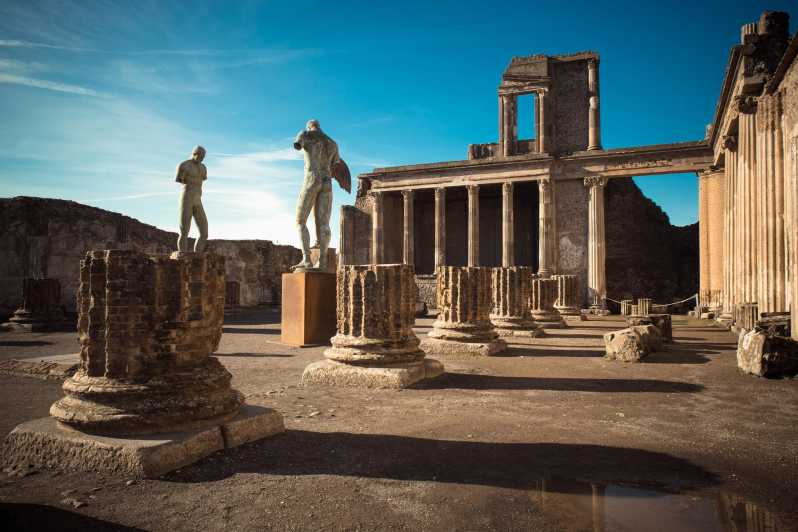
- Ancient streets and city layout
- Temples and public spaces
- Houses that show how people lived
The value of having a digital guide here is that Pompeii can feel like a big open museum. A guide helps you connect the dots instead of just walking past stone walls.
One practical drawback: Pompeii is large. If you keep your stop-and-look time too long early on, you may arrive at Herculaneum feeling rushed.
Using the smartphone guide so it doesn’t feel like work
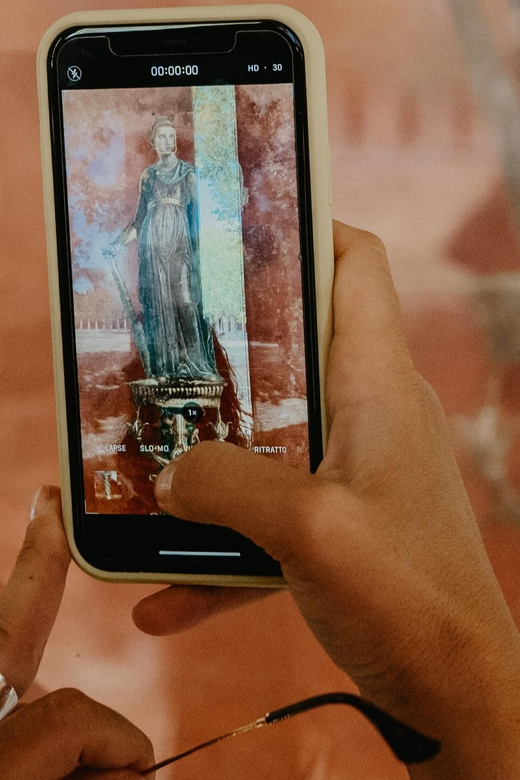
The digital guide app is a real part of the experience, not just a nice-to-have. To get the most, do a quick prep before you start walking:
- Download or unlock the guide before you enter (the day-of setup is already planned)
- Bring your own headphones (they are not included)
- Keep your phone charged—this is a walking day
When you’ve got the guide working, you can do something that’s hard with a group tour: skip ahead when you want context, then go back to linger when something visual catches your eye. That’s especially helpful at Pompeii, where the ruins are spread out and your attention will naturally drift between details.
A small but important tip: if the app tells you where to go next, follow its sequence for a while. Once you understand the basic rhythm, you can loosen up.
Also note that the guide is offered in multiple languages—English, French, Italian, German, and Spanish—so language won’t be the reason you miss details.
You can also read our reviews of more tours and experiences in Pompei Campania





Herculaneum after Pompeii: why the second site can feel different

After Pompeii, you’ll move on to Herculaneum—often less crowded in people’s expectations, but still packed with fascinating preservation. The biggest difference is the feel of the preserved city: Herculaneum is known for the way everyday objects and interiors have survived more remarkably than many visitors expect from an archaeological site.
In your one-day plan, this means you should go into Herculaneum ready to look closely at domestic life and materials. The digital guide helps by pointing you toward:
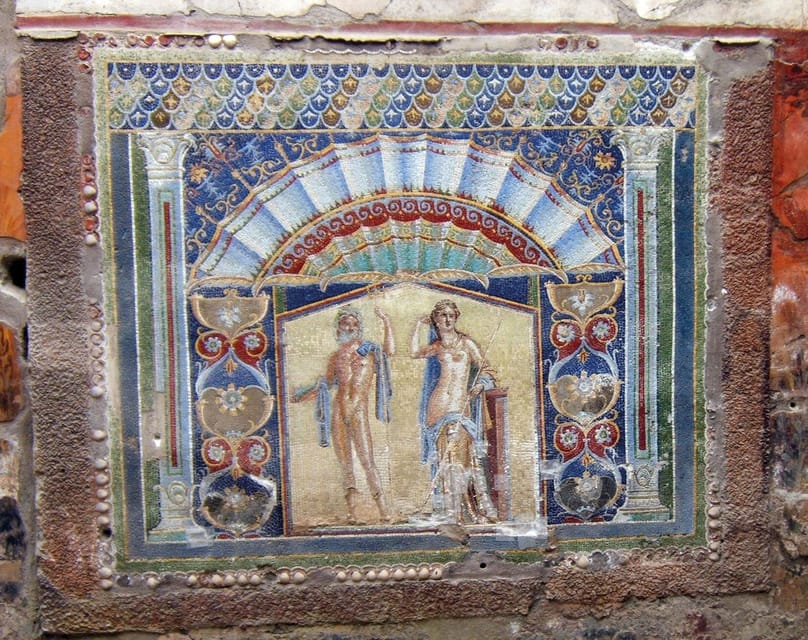
- Remarkably preserved houses
- Mosaics
- The conservation of everyday objects
If Pompeii is about scale and citywide layout, Herculaneum tends to be about texture and lived-in detail. The two sites together can create a stronger picture of Roman life than seeing either one alone.
A real-world consideration: time and parking
One practical thing to watch: Herculaneum doesn’t always play nicely with car logistics. If you’re driving, plan for parking difficulty and build in extra buffer time. Even if you’re not driving, think about transit timing between the sites because your schedule is tight by design.
And here’s the key decision point for your day: if you find Pompeii already feels like enough, you may wish you had more time at Herculaneum. Conversely, if you like interior details and mosaics, Herculaneum can be the part you remember most.
Price and value: is $72 fair for two sites?
At $72 per person, the value comes from two things you’d normally pay for separately:
- Skip-the-line tickets for Pompeii
- Skip-the-line tickets for Herculaneum
- A digital guide app on your smartphone
You’re paying for convenience and time-saving at both entrances, plus ongoing context during the walk. If you were to buy separate skip-the-line tickets or rely on guesswork with maps only, the cost picture changes fast.
Is it a bargain? It’s a reasonable price if you’ll actually use the digital guide and you don’t mind doing the walking on your own. It’s less of a win if you want a live guide speaking to your group, since the experience relies on your phone.
Also watch what isn’t included. You’ll need to handle your own:
- Lunch
- Train/transport
- Headphones (this one matters most day-of)
In plain terms: this tour makes sense if you want Roman ruins with minimal friction at the gates, and you’re happy to do the exploring yourself.
What you’ll need to bring (and what you can skip)
This day is easy to pack for, but don’t get caught missing the essentials.
Bring:
- Headphones (required)
- A charged smartphone
- Comfortable walking shoes (you’ll be on your feet for a long stretch)
You can plan around:
- No lunch included, so either eat before you start or bring something simple to your timing
- No train included, so plan transportation separately
If your phone battery tends to run low, consider adding a power bank. Pompeii and Herculaneum are not the kind of places where you want to stop and hunt for a charger.
Who should book this Pompeii & Herculaneum self-guided day

This experience fits best if you:
- Want skip-the-line entry at both sites
- Prefer controlling your pace over following a group schedule
- Like using a guide app to get context while you walk
- Want to experience both cities in one day, even if it’s a full one
It may not be ideal if you:
- Strongly prefer a live guide with lots of real-time explanation
- Get frustrated when you have to manage audio/phone battery
- Know you’ll want to spend a very long time in Pompeii and then feel you rushed Herculaneum
If you’re a first-timer to Roman archaeology, you’ll likely appreciate the structure of the digital guide. If you’ve visited Roman sites before, you can use the app to focus on what’s most interesting to you.
Should you book it?
If you want a one-day, two-site plan that gets you past the entrance lines and gives you context as you walk, I’d say it’s a good bet. The skip-the-line piece is the main reason to choose this format, and the phone guide is the main reason it doesn’t feel like wandering with no support.
But book it with eyes open: you’re doing the pacing, and you need to bring headphones and a charged phone. If you do, you’ll likely come away with a clearer picture of daily life in Pompeii and the preserved domestic details in Herculaneum—without spending half your day stuck waiting.
FAQ
Is this tour fully hosted with a guide during the ruins?
No. You do not meet anyone personally at a meeting point. Tickets are provided via WhatsApp, and you collect your tickets from the provider’s office in Pompeii. The experience is self-guided with a digital guide app.
Does the ticket include skip-the-line entry?
Yes. It includes skip-the-line entry tickets for Pompeii and for Herculaneum.
Do I need headphones?
Yes. Headphones are mentioned as something to bring, and they are not included.
What do I need to prepare for the digital guide?
You’ll want a charged smartphone, and you’ll also need to download and use the digital guide app.
Is lunch included?
No. Lunch is not included.
Is the tour wheelchair accessible?
Yes, the activity is wheelchair accessible.