Pompeii’s streets still feel busy. This wheelchair-accessible tour is built around a special path that helps you see major ruins without turning your day into a mobility obstacle course, and it includes skip-the-line admission so you can start sightseeing sooner. I also like that the guide-led pacing turns big stone landmarks into human stories, the kind you hear from a pro like Momma.
What really makes this outing work is the way it’s shaped around the site: you follow a route of about 2 kilometers, hit the big-name areas, and learn what life in Roman times was like as you move from space to space. The tour also keeps it tightly focused at around 2 hours, which matters in Pompeii where you can lose the plot fast if you’re left to wander alone.
One caution: the start is at the Amphitheatre area, and getting to the meeting point can be harder than the tour itself if your trip depends on several transit legs. If you’re in a wheelchair (or scooter), I’d plan to ask in advance how you’ll reach the exact entry point your guide uses.
In This Review
- Key things to know before you go
- Pompeii on an accessible route: what that actually means
- Skip-the-line tickets: value beyond saving time
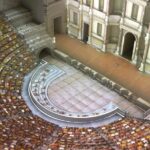
- Your start at the Amphitheatre of Pompeii: get oriented fast
- First stop: Pompeii’s main stories begin where you walk like Romans
- The Theater and public spaces: entertainment and civic life in one route
- Thermal baths: where daily life gets surprisingly human
- Domus, gladiator training, and mills: work-and-home Pompeii
- The Lupanare and the Forum: what you’ll see and how to handle it
- How long you’ll spend there, and why 2 hours can be perfect
- Private group setup: a quieter Pompeii day
- Price and value: is $254.67 per person worth it?
- Who this Pompeii tour fits best
- Should you book this wheelchair accessible skip-the-line Pompeii tour?
- FAQ
- FAQ
- How long is the Pompeii tour?
- What’s included in the ticket price?
- Where does the tour start and end?
- Is this tour private?
- Is the tour suitable for wheelchair users?
- Are service animals allowed?
- Is there any note about transportation access near the meeting point?
- How do tickets work?
- Can I cancel for a refund?
Key things to know before you go
- Skip-the-line ticket included, so you don’t burn your 2 hours waiting in queues.
- A guided route built for accessibility, designed around a roughly 2-kilometer path.
- You’ll see the big Pompeii hits in one run: Forum, baths, theater, domus areas, and more.
- Real guided storytelling, with guides praised for making mobility feel manageable (including Mariano and Momma).
- Private group experience, so your pace and needs are less likely to get steamrolled by strangers.
- Ends where you started at the Amphitheatre meeting point, which helps you keep your day simple.
Pompeii on an accessible route: what that actually means
Pompeii is easy to romanticize from far away: an ancient city frozen in time after Vesuvius erupted in 79 AD. Up close, the reality is rougher. Uneven ground, lots of stairs in key spots, and the sheer size of the archaeological park can make independent exploring frustrating for anyone using a wheelchair or scooter.
That’s why this tour’s “accessible path” approach is the point. Instead of asking you to solve Pompeii on your own, the plan funnels you along a tailored route (about 2 kilometers) aimed at keeping you moving toward the highlights without endless detours.
For me, the best part of this design is the mental shift. You’re not constantly asking, Can I get there? You’re spending your energy learning what you’re seeing.
You can also read our reviews of more tours and experiences in Pompeii.



Skip-the-line tickets: value beyond saving time
Skip-the-line matters more at Pompeii than it does at many other sites, because “waiting” can eat the most expensive part of your day: the limited time you budget for ruins plus the time it takes to manage accessibility needs.
Here, the skip-the-line ticket is included, and the guided tour also includes admission. So the price isn’t just paying for a person to talk; it’s paying for you to reach the ruins faster with the right access in place.
Also, the tour duration is about 2 hours. If you lose 45 minutes to lines, that 2 hours quietly becomes 75 minutes of rushed looking. Skip-the-line protects the actual experience.
Your start at the Amphitheatre of Pompeii: get oriented fast
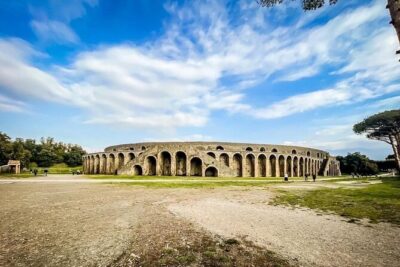
The meeting point is the Amphitheatre of Pompeii, at Piazza Immacolata (80045 Pompei NA). That’s a smart place to begin because it anchors you in one of the more recognizable parts of the ruins. It also gives your guide a base to explain the layout and how the day will flow.
If you’re using a wheelchair or scooter, I’d treat the start as a “check everything” moment. Confirm how your guide wants you to enter, where you’ll stop briefly, and how the group will regroup if someone needs extra time. One reason people feel frustrated on accessible tours is simple: small logistics questions get answered too late.
And yes, there’s at least one accessibility caution from real experience: one wheelchair user couldn’t even reach the start due to a complicated route involving multiple transit steps. That doesn’t mean the tour can’t work for you—it means you should plan your journey to the meeting point with extra care. If your travel plan depends on more than one ride, give yourself cushion time.
First stop: Pompeii’s main stories begin where you walk like Romans
After you meet up, the guided portion is where Pompeii becomes more than scenery. Your guide brings the strong remains to life with anecdotes, secrets, and stories, then walks you through what daily life looked like in Roman times.
You’ll travel along what feel like main streets, meant to replicate the experience of moving through the city the way residents might have. That matters because Pompeii is best understood in motion. If you only stare at isolated buildings, it’s harder to grasp the rhythm of commerce, leisure, work, and domestic life.
You’ll also touch major highlights such as:
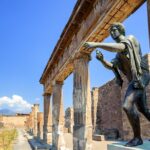
- the Forum (the city’s central civic hub)
- thermal baths (everyday public life with a social side)
- the theater (entertainment culture)
- pleasure-house areas, including the Lupanare
- domus areas and household spaces
- the Gladiators’ Gym
- mills (work and production)
You won’t see every single corner of Pompeii in 2 hours. The tradeoff here is focus. You’re getting a guided “greatest hits” route tailored for accessibility, not a free-roaming museum day.
The Theater and public spaces: entertainment and civic life in one route
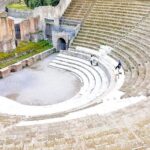
Pompeii’s public areas help you understand the city as a community, not a list of buildings. The theater shows how Romans gathered for performance, while the civic center (the Forum) reveals how political and social life mixed in shared spaces.
What I like about a guided sweep of these areas is the explanation layer. A theater might look like stones to a first-time visitor, but with a guide you start noticing why people came, what they valued, and how the design shaped behavior.
Also, when you’re mobility-limited, public spaces are often the most worth it. They tend to be central to the story of the city, which means every stop you can make has higher payoff.

Thermal baths: where daily life gets surprisingly human
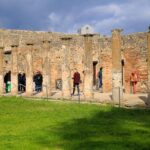
Pompeii’s thermal baths aren’t just “cool to see.” They’re a window into social rhythm. Baths were where people hung out, caught up, exercised, and talked. Seeing these spaces with a guide helps you connect architecture to behavior.
A practical note: bath areas can be busy and can vary in the way paths feel on the ground. If you’re in a wheelchair, you’ll want to pay attention to how the group transitions between spots. A good guide keeps pauses efficient so you’re not stuck waiting during brief access bottlenecks.
This is one place where guide quality really shows. In reviews, people praised guides for taking mobility seriously and making sure scooter users could see what mattered, not just pass by it.
Domus, gladiator training, and mills: work-and-home Pompeii
Pompeii’s charm is that it covers both daily life and spectacle. You’ll visit household-scale spaces (domus) and also see structures tied to public entertainment and work.
The Gladiators’ Gym is a great example of how Pompeii isn’t only about tragedy. It’s also about training, competition, and the cultural pull of performance. Mills add a different flavor: they point to the real effort behind everyday food and production.
I find that mixing homes, entertainment, and practical work gives you a fuller mental map of the city. It helps you stop thinking of Pompeii as one big ruin and start thinking of it as a place where people had routines.
The Lupanare and the Forum: what you’ll see and how to handle it
Some Pompeii stops are famous for the kinds of details people love to hear about. The Lupanare is specifically noted on this tour, known for the erotic frescoes connected to pleasure-house life.
If you’re sensitive to that content, it’s worth knowing up front that the tour includes it as a highlight. You don’t need to make a big deal of it, but you should go in with the understanding that Pompeii doesn’t sanitize. The value is in seeing how the city functioned socially, including the parts most modern visitors expect to be hidden.
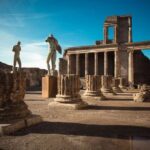
Then you’ll move into the Forum area, which shifts the tone back toward civic life. That contrast is useful. It shows how different social worlds existed side by side, and how Roman culture blended public order with private habits.
How long you’ll spend there, and why 2 hours can be perfect
The tour runs about 2 hours and follows an accessible route around 2 kilometers long. For many people, that’s the sweet spot in Pompeii: long enough to feel like you accomplished something real, short enough to avoid fatigue becoming the main character.
If you’re using a wheelchair or scooter, the biggest comfort factor is pacing. A guided group can regroup as needed, and the tour’s structured flow means you’re not stuck making constant micro-decisions about where to go next.
In reviews, people emphasized that with the right guide—like Momma or Mariano—time can fly because you’re not just looking at stones; you’re getting explanations and context. That’s the kind of tour that prevents the common problem of “we saw stuff but learned nothing.”
Private group setup: a quieter Pompeii day
This is listed as a private tour/activity, meaning only your group participates. That usually changes the experience in three ways:
First, you get flexibility in pacing. If someone needs an extra minute to position a wheelchair, your guide can handle it without the pressure of holding a bigger crowd.
Second, it reduces crowd stress. Pompeii is famous, which means it can be loud and busy even when you aren’t trying to escape crowds.
Third, it makes questions easier. If you want clarity on what you’re seeing, you can ask without feeling like you’re interrupting a big bus tour rhythm.
If you value comfort and control more than a high-energy group vibe, this structure fits nicely.
Price and value: is $254.67 per person worth it?
At $254.67 per person for a 2-hour guided, skip-the-line Pompeii visit, the price isn’t bargain-bin. You should treat it as a convenience-and-access purchase.
Here’s the value math that matters:
- Admission is included.
- Skip-the-line access is included.
- You’re getting a guided route designed for accessibility rather than a generic tour that assumes everyone can do stairs and long walks.
- The experience lasts long enough to cover key highlights, not just a quick photo stop.
If you’re paying for an accessible experience that reduces barriers and saves time, it starts to make sense. If you were confident you could do Pompeii independently at your mobility level, a cheaper ticket might look tempting. But independent access can be time-consuming and unpredictable—especially when you’re managing the logistics of where accessible paths actually lead.
So the best way to judge value is this: if you want highlights + less stress + an expert to connect the dots, the cost is easier to justify. If you’re purely budget-focused and your route is already easy for you, you might decide differently.
Who this Pompeii tour fits best
This tour is a strong match if:
- You use a wheelchair or scooter and want a planned, accessible route through major highlights.
- You prefer guided context over wandering.
- You want skip-the-line entry to protect your time.
- Your group benefits from private pacing.
It may be less ideal if you want maximum freedom to roam at your own rhythm for every possible corner. With a set route and a 2-hour window, you’re seeing the city through a guided lens, not building your own deep custom itinerary.
If you’re traveling with a companion who walks but you don’t, this setup can still work well because the guide’s job is to keep the route functional for the group.
Should you book this wheelchair accessible skip-the-line Pompeii tour?
I’d book it if your priority is seeing Pompeii’s biggest highlights with less stress and a guided explanation layer—especially if accessibility planning is the difference between enjoying the day and feeling stuck.
I’d also book it if you’ve had experiences where you could reach places but didn’t fully understand them. The guide-driven storytelling is a big part of why people report feeling satisfied, not just “we saw ruins.”
Hold off or ask extra questions before booking if you’re worried about reaching the Amphitheatre meeting point smoothly from your transport plan. The tour may be accessible once you’re there, but your journey to Piazza Immacolata is still your first hurdle.
FAQ
FAQ
How long is the Pompeii tour?
It’s approximately 2 hours.
What’s included in the ticket price?
You get a skip-the-line ticket and a guided tour. Admission is included.
Where does the tour start and end?
It starts at the Amphitheatre of Pompeii (Piazza Immacolata, 80045 Pompei NA, Italy) and ends back at the same meeting point.
Is this tour private?
Yes. Only your group participates.
Is the tour suitable for wheelchair users?
The experience is specifically described as wheelchair accessible, with a special accessible path through Pompeii.
Are service animals allowed?
Yes, service animals are allowed.
Is there any note about transportation access near the meeting point?
It notes that the meeting area is near public transportation.
How do tickets work?
The tour uses a mobile ticket.
Can I cancel for a refund?
Yes, free cancellation is available up to 24 hours in advance for a full refund.