Two ancient cities in one focused day.
What makes this tour fun is the private guide who helps you see more than just ruins, plus the Pompeii-to-Herculaneum train that keeps the logistics simple. I love how the day is built for comparisons: you can understand what was the same and what was different when you move from one site to the next.
One thing to plan for: admission fees are not included, so your final cost will be a bit higher than the tour price, and you’ll also need to handle getting yourself to Pompeii.
In This Review
- Key Highlights Worth Knowing
- Why Pairing Pompeii and Herculaneum Works So Well
- The Day’s Flow: Meeting at Porta Marina and Ending in Ercolano
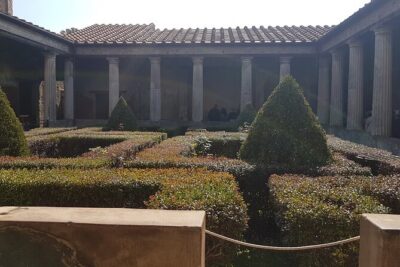
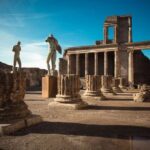
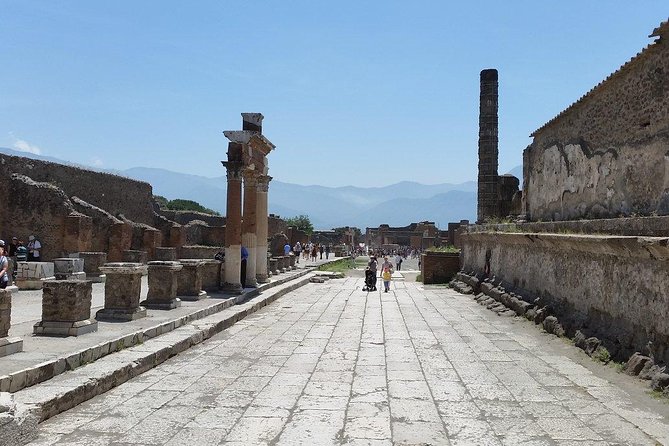
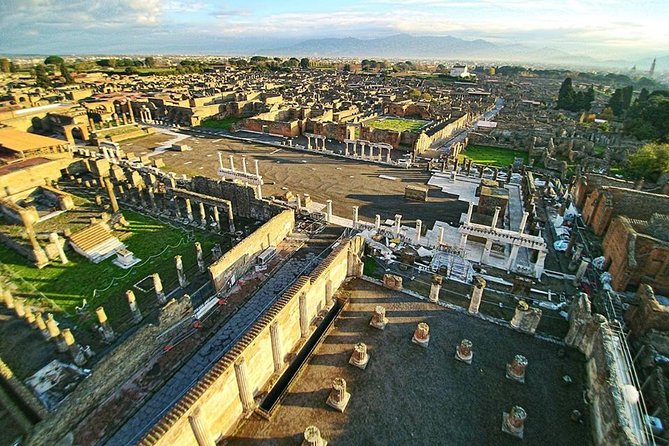
- Pompeii Archaeological Park: What Your Guide Helps You See
- Herculaneum (Parco Acheologico di Ercolano): The Different Feeling You’ll Notice
- How the Train Ride Helps More Than You Think
- Making Sure You Don’t Feel Rushed in a 5–6 Hour Day
- Price and Value: Is $216.86 Worth It?
- What I’d Specially Match This Tour To
- Booking Tips That Come Straight From What Works
- Should You Book This Pompeii and Herculaneum Private Guided Tour?
- FAQ
- How long is the Pompeii and Herculaneum private guided tour?
- Is this tour private?
- What language is the tour offered in?
- Where does the tour start and end?
- What’s included in the price?
- Are admission tickets included for Pompeii and Herculaneum?
- Is transportation to Pompeii included?
- Do I get a mobile ticket or confirmation?
- What is the cancellation policy?
Key Highlights Worth Knowing
- Private group only means your guide can slow down, answer questions, and adjust pacing.
- Two sites, about 2 hours each gives you a full day without turning it into an endless slog.
- Train ticket between Pompeii and Herculaneum is included, saving time and stress.
- Strong English communication shows up in real feedback, including clear meet-point directions.
- Meet in Pompeii, finish in Ercolano, so you don’t have to double back the same way.
Why Pairing Pompeii and Herculaneum Works So Well
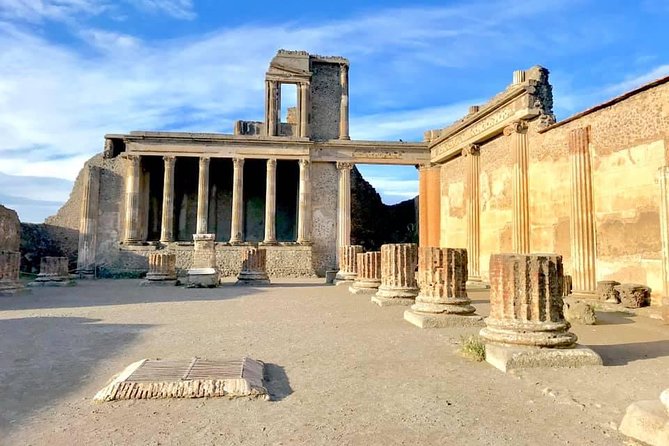
Pompeii and Herculaneum sit on the slopes of Mount Vesuvius, and they were both hit by the same catastrophic event. The result is that you can compare two cities that were destroyed in similar circumstances, but they don’t feel identical when you walk through them.
With a single guided day, you get a natural “before and after” rhythm. First, you look at Pompeii’s big, public spaces and street plan. Then you switch to Herculaneum and notice a different tone—often more about daily life tucked into a tighter setting. That contrast is exactly what makes this pairing click.
And because it’s a private tour, you’re not stuck watching your guide rush off to beat the crowd. You can stop and ask your own questions about art, engineering, or how people lived.
You can also read our reviews of more guided tours in Pompeii

The Day’s Flow: Meeting at Porta Marina and Ending in Ercolano
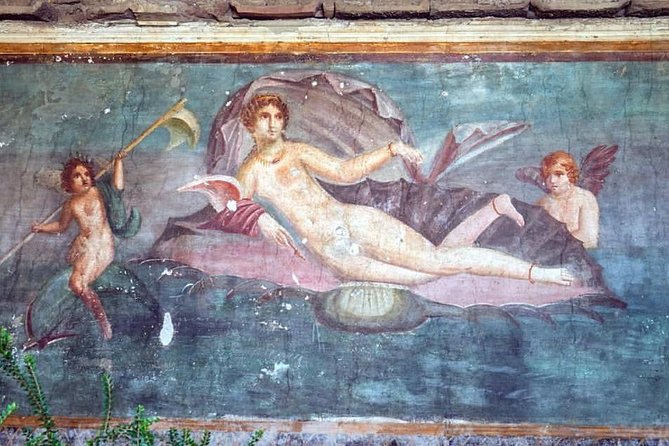
This tour starts at Pompei-porta Marina – scavi (80045 Pompei) and finishes at Ercolano Scavi (80056 Ercolano). That matters more than you might think. Starting in Pompeii keeps the morning straightforward, and ending in Ercolano can be a big help if your next plan is closer to that side of the Bay of Naples.
You’ll also use a mobile ticket, and you get a confirmation at booking. In practical terms: have your phone charged and accessible. A couple of guides in the feedback also emphasized clear directions ahead of time, including WhatsApp-style messages the day before—useful when you’re trying to find the right exact meeting point.
Also note the timing shape: it’s listed as about 5 to 6 hours. Two hours are set aside for each site. That structure is great for most people, but if you’re the type who wants to linger for hours in just one area, I’d treat that time limit as your main scheduling reality.
Pompeii Archaeological Park: What Your Guide Helps You See
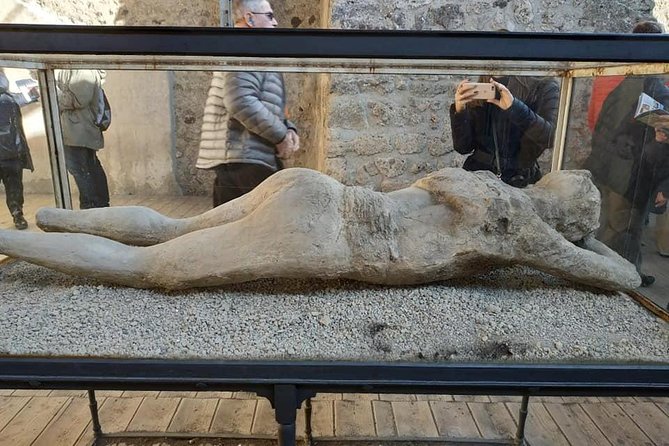
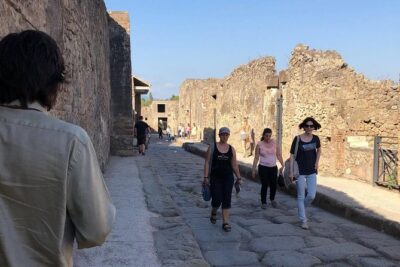
Pompeii is huge, and without help it’s easy to end up just “looking at ruins.” A good guide turns it into a story you can follow.
Here’s what I think makes Pompeii especially rewarding on a private format:
1) You get context for the city, not just snapshots of artifacts.
Your guide can connect what you’re seeing—buildings, streets, and decorative details—to daily life. That kind of explanation is what makes the site feel human instead of just impressive.
2) You can ask targeted questions without the tour feeling like a race.
Pompeii has a lot to digest. The best private tours keep answering your curiosity on the spot. In feedback, guides like Giusy (also seen as Josephina/Josie) and Paolo stood out for taking time, answering questions, and giving real insight instead of a quick checklist.
3) You learn how the city functioned.
One guide’s style was described as focusing on life in the city and even its engineering and inner workings. When someone frames Pompeii that way, you start noticing details you would otherwise miss—how spaces were organized and what objects probably meant in everyday routines.
What to keep in mind: Pompeii admission isn’t included. So you’ll want to budget for the ticket separately and plan your time so you’re not standing around figuring it out mid-day.
Herculaneum (Parco Acheologico di Ercolano): The Different Feeling You’ll Notice
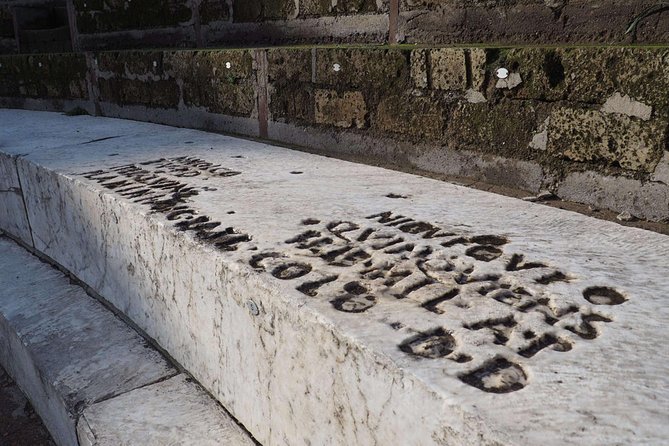
If Pompeii is all about scale and street life, Herculaneum can feel different in a quieter, more intimate way. It’s still Roman life frozen in time, but you tend to experience it with more of a “how people actually lived” feel—rooms, layouts, and the sense of being closer to the original spaces.
Your guide’s role here is huge. They can help you connect the dots between the two sites. That’s why this tour is so good for comparison: you’re not just seeing two stops, you’re learning how the two places relate.
In the feedback, Paolo and others were praised for connecting artifacts and explaining meaning, not just pointing things out. Romolo was also mentioned for keeping the day practical—especially on hot days—by helping ensure the group had what they needed to keep moving.
A small practical note: you’ll have about two hours at Herculaneum. That’s enough time to get a strong overview and still ask questions, but it’s not enough to do everything at a slow museum pace. If you love taking photos of every corner, you’ll need to be selective.
How the Train Ride Helps More Than You Think
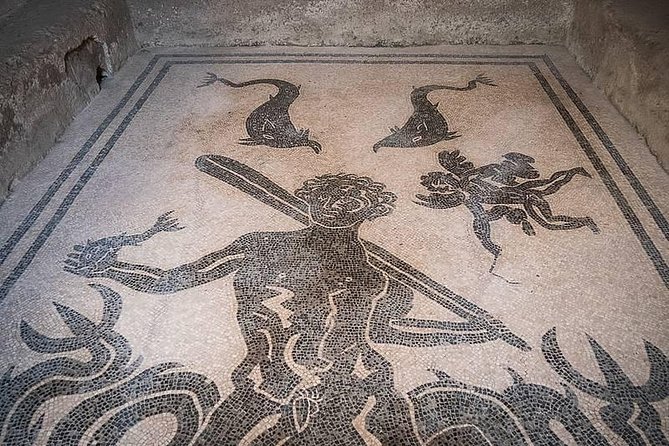
The tour includes a train ticket from Pompeii to Herculaneum. That’s a real value add, because it reduces decision fatigue.
Instead of figuring out buses, schedules, or where to park, you can focus on the day. It also creates a clean transition: you finish Pompeii, then you move to Herculaneum without the awkward “what now?” moment.
In other words, the included train isn’t just transportation. It protects your time. And with a day that’s already tightly planned around the two-site visit, saving time between stops can make the whole experience feel less rushed.
You can also read our reviews of more private tours in Pompeii




Making Sure You Don’t Feel Rushed in a 5–6 Hour Day
A 5 to 6 hour tour can be perfect or it can feel tight, depending on your expectations. The structure here is clear: roughly two hours each site, with flexibility for breaks if needed.
So how do you keep it from feeling rushed?
- Arrive early enough at the meeting point to get oriented fast.
Multiple guides were praised for clear communication ahead of time, but you still want a calm start.
- Ask your guide about an earlier start if crowds or heat are a concern.
One guide (Giusy) was praised for suggesting an earlier meet-up time to keep the tour from feeling rushed. If you’re traveling in peak season, that kind of proactive planning can really help.
- Plan for separate admission tickets and treat them as part of your budget.
Because admission is not included, you don’t want to mentally compare the all-in day cost until you’ve added that in.
Also, the tour is offered in English. You’ll get the explanation you came for, without the language stress.
Price and Value: Is $216.86 Worth It?
At $216.86 per person, the price isn’t cheap on its own. But for Pompeii and Herculaneum, it can still be good value when you look at what you’re actually buying.
Here’s what makes the value calculation work:
- You’re paying for a private guide, which is what turns Pompeii from ruins into a structured story.
- You’re also getting a train ticket from Pompeii to Herculaneum included, which offsets some transport hassle and cost.
- The tour combines both major sites in one day, saving you time versus doing them separately.
The two big cost add-ons or considerations are also clear:
- Admission fees for Pompeii and Herculaneum are not included. Your total day cost will be higher once you add them.
- Transportation to Pompeii isn’t included. You’re responsible for getting yourself to the start point in Pompeii.
So is it worth it? I’d say yes if you want guidance, pacing, and explanation—and you’d rather pay for that than spend your day trying to self-navigate a huge archaeological park.
If you’re a very independent traveler who loves wandering without context, you might find cheaper ways to do it. But if you want the sites to make sense as you go, this format usually earns its keep.
What I’d Specially Match This Tour To
This tour is a strong fit if you:
- Want a private experience rather than a crowded group tour.
- Care about meaning—how Roman life worked, what objects and spaces likely represented, and how the cities compare.
- Prefer a guide who can be flexible and answer questions in real time.
It’s also a good match for families, based on feedback praising how guides adjusted the experience for kids. And for couples or solo travelers, it’s a nice way to spend a long, high-impact day without worrying about transit between sites.
If you’re someone who hates early meet points, keep in mind that this tour can be adjusted to avoid feeling rushed, and some guides even suggest earlier starts.
Booking Tips That Come Straight From What Works
Averages matter. This tour is commonly booked about 120 days in advance. That doesn’t mean you can’t find availability later, but it does suggest demand is real—especially in busy months.
Here are a few practical moves that help:
- Book early if you have a narrow travel window.
- Use the communication channel they provide (WhatsApp-style messages showed up as a helpful habit in feedback).
- Bring your phone battery and charged data for the mobile ticket.
- Expect to buy admission separately, then plan your budget around that.
Guides with strong track records were named in feedback—Giusy/Giusephine/Josephina, Paolo, and Romolo. Their shared theme wasn’t just facts. It was pacing, clarity, and answering questions instead of rushing past the good stuff.
Should You Book This Pompeii and Herculaneum Private Guided Tour?
I’d book it if your main goal is to understand what you’re seeing. Pompeii and Herculaneum can swallow a day even with the best intentions, and the private guide format is what keeps it coherent.
Skip it (or at least reconsider) if you’re trying to keep the whole day as low-cost as possible, because admission fees and your transportation to Pompeii will add to the final bill.
If you’re balancing value with quality, this one earns its place: you get expert guidance, a smooth Pompeii-to-Ercolano transfer by train, and a day designed for comparison—so the cities don’t blur together in your mind.
FAQ
How long is the Pompeii and Herculaneum private guided tour?
It runs about 5 to 6 hours total, with around 2 hours at Pompeii and about 2 hours at Herculaneum.
Is this tour private?
Yes. It’s a private tour/activity, and only your group participates.
What language is the tour offered in?
The tour is offered in English.
Where does the tour start and end?
It starts at Pompei-porta Marina – scavi and ends at Ercolano Scavi.
What’s included in the price?
Included items are the guide service and the train ticket from Pompeii to Herculaneum.
Are admission tickets included for Pompeii and Herculaneum?
No. Admission fees are not included.
Is transportation to Pompeii included?
No. Transportation to Pompeii is not included.
Do I get a mobile ticket or confirmation?
Yes. You receive confirmation at booking, and there’s a mobile ticket.
What is the cancellation policy?
You can cancel for a full refund up to 24 hours in advance of the experience’s start time, free of charge. Changes less than 24 hours before start time aren’t accepted.