REVIEW · POMPEII
Pompeii: Skip-the-line-Ticket with Guided Tour
Book on Viator →Operated by TOURISTATION · Bookable on Viator
Pompeii is history you can walk through. This guided option pairs skip-the-line tickets with an archaeologist-style explanation inside the Pompeii Archaeological Park, so your 2 hours feel focused instead of frantic. I especially like the headsets, which make it easy to hear commentary even while the group is moving. The one thing to watch: the tour route and emphasis can vary by guide, so you should go in ready to follow the plan rather than expecting every single major landmark.
You’ll start at the Pompeii grounds and move through preserved streets and structures that were entombed in volcanic ash after the eruption. I also appreciate the small-group feel (up to 20 people), plus practical extras like a city map and Wi‑Fi that help you keep your bearings. The main drawback is logistics: if you show up late or can’t find the meeting point, you may miss the start and lose time.
In This Review
- Key Highlights Worth Planning Around
- Skip-the-Line Tickets That Actually Save Time at Pompeii
- The 2-Hour Walk at Pompeii Archaeological Park: What You’ll See
- What the pace feels like
- A key note on what isn’t part of the plan
- How the Archaeologist Guide Uses Headsets and Maps
- What you’ll get from the headset setup
- A balanced reality check about guide experience
- Group Size, Language, and Pace: The “Up to 20” Advantage
- Dogs, ID, and a couple of practical rules
- Meeting at Piazza Esedra: The One Logistics Detail Worth Fixing
- Getting there without stress
- What’s Included vs Not, Plus Smart Time Planning
- How I’d build the day
- Price: Is $64.89 a Good Deal?
- Should You Book This Guided Tour?
- FAQ
- How long is the Pompeii skip-the-line guided tour?
- Is the admission ticket included?
- What language is the guided tour in?
- Do we get headsets?
- Where do we meet, and when should we arrive?
- Is Villa dei Misteri included?
- Are there any requirements or rules to know before you go?
Key Highlights Worth Planning Around
- Skip-the-line admission to the Pompeii Archaeological Park with your timed slot
- A 2-hour guided walk with an archaeologist-style commentary
- Headsets included, so you can hear clearly as you walk
- Up to 20 people, which helps the guide keep the group together
- City map + Wi‑Fi, handy for quick orientation and reference on-site
Skip-the-Line Tickets That Actually Save Time at Pompeii

Pompeii gets busy, and that matters because a guided tour is only about two hours. The biggest value here is simple: your admission ticket lets you enter without spending your precious time waiting in line. When you add the guide’s narration, that saved time turns into actual learning and fewer empty minutes just staring at the entrance gates.
The tour price is $64.89 per person, and I think it’s fair when you factor in what you get bundled: the skip-the-line ticket, the 2-hour guide-led route, and the headset system. If you’re visiting on a tight schedule or you don’t want the stress of figuring out entry timing, paying for the structure is a smart move.
Also note the small group size: maximum 20 travelers. That’s not a guarantee you’ll feel like you’re on a private tour, but it usually makes the walk smoother and gives you a better chance to ask questions without being swallowed by a crowd.
You can also read our reviews of more tours and experiences in Pompeii



The 2-Hour Walk at Pompeii Archaeological Park: What You’ll See
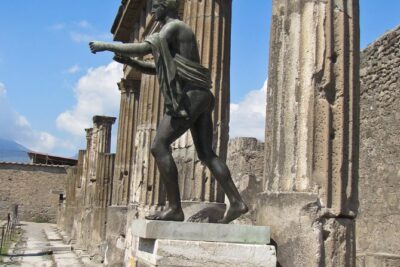
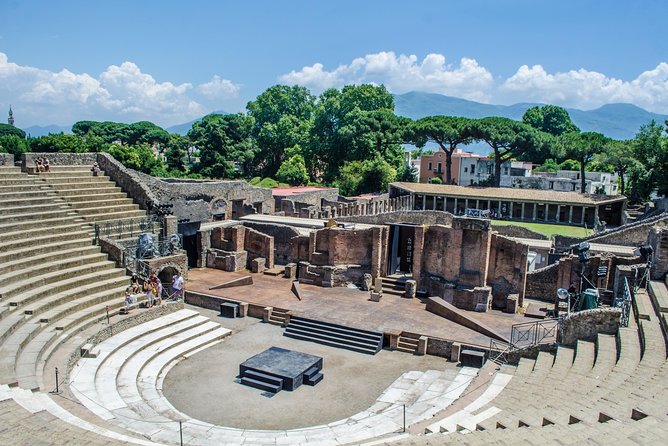
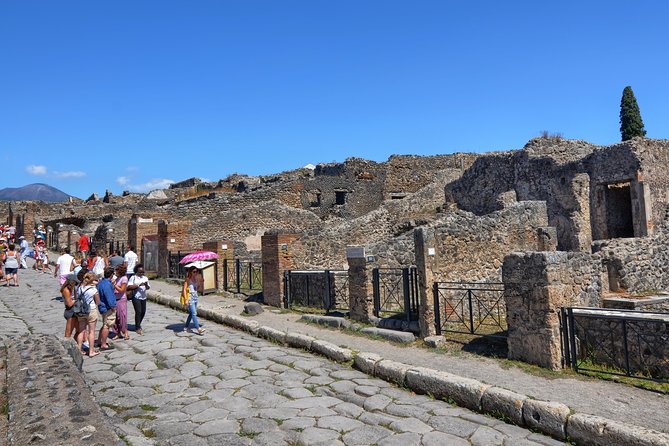
Your whole experience centers on the Pompeii Archaeological Park. Expect a guided stroll through preserved remains—buildings, streets, and archaeological areas—where the eruption froze everyday life under ash. The setting is UNESCO World Heritage, and you’ll get the context for why these ruins matter: Pompeii isn’t just pretty stone. It’s a snapshot of how people built, worked, and lived, preserved in layers of catastrophe.
With a 2-hour format, you should expect a curated route rather than a “see everything” marathon. The tour highlights preserved construction, and the commentary is aimed at helping you interpret what you’re looking at—frescos, practical installations, and street-level archaeology that can otherwise feel like random walls.
What the pace feels like
A two-hour guided walk works best when you’re okay with moving steadily and trusting the guide’s sequence. You won’t have time to wander deeply on your own mid-tour, but you’ll come out with a clearer mental map—then you can choose what to revisit after the group ends.
A key note on what isn’t part of the plan
This tour does not include entrance to Villa dei Misteri. If you’re specifically chasing that villa, plan to add it separately. You’ll still get a lot inside Pompeii proper, but don’t assume the full circuit includes the villa stop.
How the Archaeologist Guide Uses Headsets and Maps
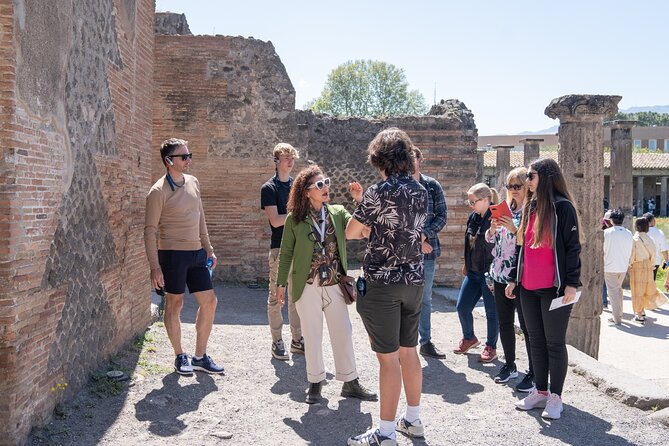
The guide element is the whole point. This experience is led in English and focuses on explaining Pompeii’s remains in a way that connects buildings and artifacts to daily life. The guide uses supplemental headsets, so you aren’t stuck asking strangers to repeat sentences while you’re trying to look at what’s in front of you.
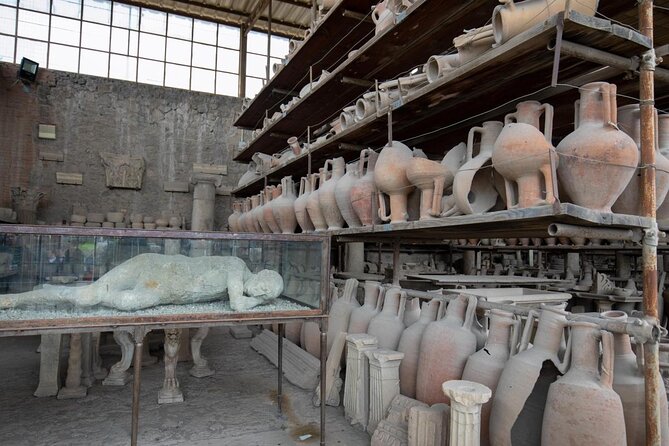
In particular, I like that the tour is built to make details understandable. Based on guide-led moments people highlighted, you may hear about frescoes, bake ovens, and even water-related features (like systems connected to how water was collected or managed). These aren’t just trivia lines; when the guide points them out, you start noticing patterns—where daily routines happened and how the city functioned.
You can also read our reviews of more guided tours in Pompeii





What you’ll get from the headset setup
Headsets matter more than they sound. Pompeii is noisy in the way crowded outdoor sites always are: people talking, footsteps, occasional audio confusion at corners. With headsets, you can stay locked onto the commentary without turning every two steps to hunt for the guide.
You also get a city map and Wi‑Fi as part of the kit. That’s useful if you want to compare what you’re seeing with what you plan to revisit after the tour. You’ll finish back where you started, so having a map can help you decide where to spend extra time next.
A balanced reality check about guide experience
Most of the feedback points to strong interpretation and good explanations. That said, one bad experience shows how much the guide’s style can affect your enjoyment—especially if you want lots of time for questions or you expect specific stops. My advice: if this is your only visit to Pompeii, book anyway for the structure, but go with flexible expectations and treat the tour as a foundation for further exploration.
Group Size, Language, and Pace: The “Up to 20” Advantage
This is designed for a maximum of 20 people, and that’s a practical sweet spot for Pompeii. A big crowd makes it harder to hear the guide and harder to see details close up. A smaller group makes it easier to stay together and keeps the tour from turning into a constant shoulder-squeeze.
The tour runs for about 2 hours (approx.), so it’s best viewed as an efficient orientation. You’ll walk through preserved areas, pause where the guide can point out key features, and keep going without long detours. If you tend to travel slowly, bring patience: Pompeii rewards attention, but this format is about guidance and flow.
Language is English only per the tour details. If you’d prefer a different language, you’ll need to check for alternative tour listings, because you can’t count on switching languages on-site.
Dogs, ID, and a couple of practical rules
You’ll need an ID for all participants. If you’re traveling with kids or forgetful adults (same category), plan ahead.
Small dogs are permitted inside the archaeological area, but they must be on a leash, and carried when inside buildings. If you’re bringing a pet, assume you’ll spend more time coordinating and less time lingering.
Meeting at Piazza Esedra: The One Logistics Detail Worth Fixing
The meeting point is Piazza Esedra, 11, 80045 Pompei NA, Italy. The tour ends back at the meeting point, which is convenient because you don’t need to figure out a second pickup location later.
Here’s the logistics lesson that matters most: arrive 15 minutes early. One of the worst experiences described difficulty finding the meeting point, then no answer when trying to reach the company. That’s exactly the kind of avoidable problem you can dodge with a simple plan: get there early, locate the group gathering spot, and confirm you’re at the right place before your start time.
Getting there without stress
It’s listed as near public transportation, which helps if you’re coordinating from Naples or another nearby stop. Still, in busy tourist areas, GPS can occasionally mislead you. If your phone stalls, ask a nearby info desk or shop staff for help reaching the exact Piazza Esedra address.
What’s Included vs Not, Plus Smart Time Planning

Here’s what you can count on being included:
- Skip-the-line Pompeii ticket to the archaeological area
- 2-hour guided tour
- Headset
- City map
- Wi‑Fi
Not included:
- Villa dei Misteri entrance
- Food and drinks
- Hotel pick-up/drop-off
That mix is good value because it covers the hard-to-handle parts: entry, guidance, and audio. You handle your own food and drinks, so plan accordingly. Even in comfortable weather, walking Pompeii for a couple of hours plus any time you add afterward can make you thirsty fast.
How I’d build the day
If Pompeii is a priority for your trip, think of this tour as your “learning scaffold.” After it ends back at Piazza Esedra, you can return to whatever you found most interesting—frescoes, practical installations, or street-level archaeology. If you came with a shortlist (like villa-related interests), remember the tour won’t cover Villa dei Misteri, so set time aside for that separately.
Also: the tour is non-refundable and cannot be changed for any reason. If your schedule might be shaky due to weather or transport delays, double-check your timing before booking.
Price: Is $64.89 a Good Deal?

For $64.89, you’re paying for three things that are hard to DIY smoothly:
- Skip-the-line entry (time saved)
- A guided route for 2 hours (interpretation)
- Headsets (clarity while walking)
If you’re the type who likes museums but hates guessing what you’re looking at, the guided layer is usually worth it. If you already know Pompeii well and plan to use a self-guided audio guide, you might feel less of the value. But for most first-timers, this package reduces uncertainty: you show up, you enter, you get pointed toward the meaning behind what you see.
One more value note: free admission is available for disabled visitors with certified disability. That can change the math a lot depending on your situation, so it’s worth keeping in mind as you plan.
Should You Book This Guided Tour?
Book this tour if you want a structured, time-efficient first look at Pompeii. The combination of skip-the-line tickets, headsets, and an archaeologist-style guide makes it a strong choice when you only have one short window and you’d rather not spend that window waiting.
Skip it or consider another format if you need a very flexible schedule, want to focus mainly on Villa dei Misteri as part of your core plan, or you tend to prefer fully self-directed wandering. And if you’re prone to last-minute confusion, treat the meeting point address at Piazza Esedra, 11 as your top priority—show up early and get oriented before the start time.
FAQ
How long is the Pompeii skip-the-line guided tour?
It’s about 2 hours (approx.) and it ends back at the meeting point.
Is the admission ticket included?
Yes. Your skip-the-line ticket to the Pompeii Archaeological area is included.
What language is the guided tour in?
The tour is offered in English.
Do we get headsets?
Yes. Headsets are included so you can hear the guide’s commentary.
Where do we meet, and when should we arrive?
You meet at Piazza Esedra, 11, 80045 Pompei NA, Italy. Please arrive 15 minutes before your tour start time.
Is Villa dei Misteri included?
No. Entrance to Villa dei Misteri is not included.
Are there any requirements or rules to know before you go?
You’ll need ID for all participants. Small dogs are permitted in the archaeological area on a leash and must be carried when inside buildings.