REVIEW · POMPEII
Private Pompeii Tour with 3D Virtual Reality Headset – Tour Assistant Only
Book on Viator →Operated by Flashback Journey to Pompeii · Bookable on Viator
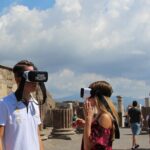
Pompeii looks different when you can see it rebuilt. This private tour pairs a real walk through the ruins with 3D VR history videos that put you in the streets, homes, and shops of the ancient city. I like that you get a short headset training first, so you’re not fiddling around while the magic is happening.
What I also like is the format: a tour assistant keeps things moving while the audio commentary inside the headset does the explaining in your chosen language. The one drawback to plan around is that the assistant isn’t a licensed archaeology guide, so you won’t get deep, on-the-spot site answers beyond what the headset provides.
In This Review
- Key things to know before you go
- How VR changes your Pompeii walk
- The 2.5-hour plan on the ground (and in the headset)
- Inside the headset: languages, videos, and the limits of the tech
- Your tour assistant: helpful, but not a licensed guide
- Comfort, safety, and VR reality checks
- Price and value: what you’re really paying for at $124.02
- Who this tour fits best (and who should skip it)
- Practical logistics: where you start, where you end
- Should you book this Pompeii VR tour?
- FAQ
- FAQ
- How long is the Private Pompeii Tour with 3D Virtual Reality Headset?
- Is admission to the Pompeii ruins included?
- Does the tour include a licensed guide?
- What languages are available for the headset audio?
- What age can children use the VR headset?
- Do I get a headset for the whole group?
- Where do we meet and where does the tour end?
- What if I feel dizzy or unwell while using the headset?
Key things to know before you go
- VR headset training is built in: you get about 5 minutes of instruction before entering the ruins.
- You can watch up to 15 3D videos during the walk, synced to where you are in the park.
- Audio commentary supports 6 languages (English, Italian, German, French, Spanish, Russian).
- The tour assistant can’t answer archaeology questions like a licensed guide can.
- Skip-the-line entrance and admission are included, so you spend less time waiting at the gate.
- Headset limits matter: minimum age is 9, and the manufacturer recommends not using Gear VR for kids under 13.
How VR changes your Pompeii walk
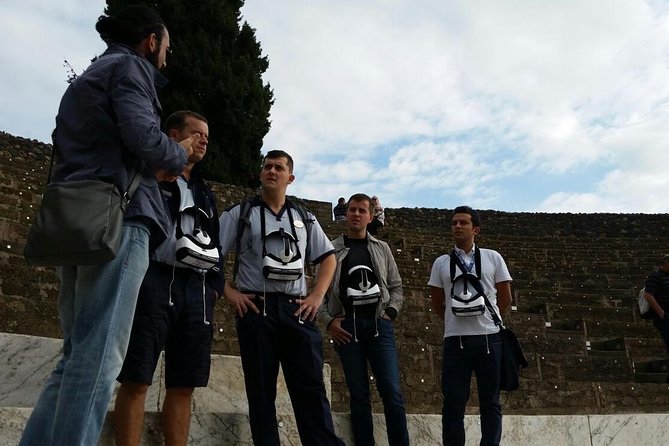
Pompeii is already a wow. Streets, walls, and building outlines sit there like they’re waiting for someone to explain the life that used to happen right on top of them. This experience adds a second layer: you’re not only looking at remains—you’re also watching reconstructed moments right in front of your eyes.
The best part is the timing. You start with a quick lesson on the headset, then you walk through the park with an assistant. At several points you stop, put the headset on, and get 3D recreations that help your brain connect the dots between what you see now and what was happening back then. It’s a smart match for first-timers who feel overwhelmed by the size of the site, and for repeat visitors who want a fresh way to “read” the ruins.
One heads-up: the VR is the star, so if you’re the type who wants a strict, scholar-style walkthrough of every corner, this setup may leave you wanting more. The headset audio helps, but you’re not getting a licensed guide answering any question that pops up mid-walk.
You can also read our reviews of more private tours in Pompeii



The 2.5-hour plan on the ground (and in the headset)
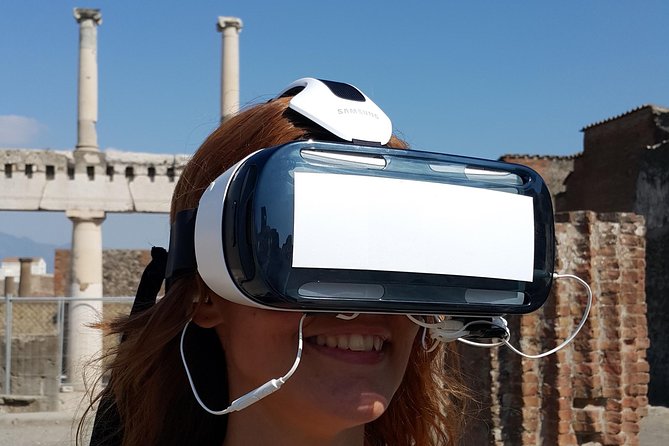
This tour is about 2 hours 30 minutes in total. You choose a morning or afternoon departure, and you’ll spend your time inside the Pompeii Archaeological Park.
Here’s what the flow feels like in practice:
First, you meet at Hotel Vittoria, Piazza Esedra area in Pompeii. Then you get moving toward the ruins. At the start, staff provide a 5-minute training so you know how to handle the headset, how to start/continue the VR content, and what to do if something doesn’t feel right.
Next comes the walk-with-stops portion. A tour assistant leads you along the route and manages the pace. When you reach designated points, you use the headset to watch up to 15 3D VR videos. You don’t just wander with a device—you’re guided to spots where the visual reconstruction makes sense with the physical remains around you.
Finally, you finish at Piazza Immacolata, so the tour is not a strict “walk out the exact way you walked in.” That matters for your timing, especially if you’re pairing this with lunch or a second stop in town.
Inside the headset: languages, videos, and the limits of the tech
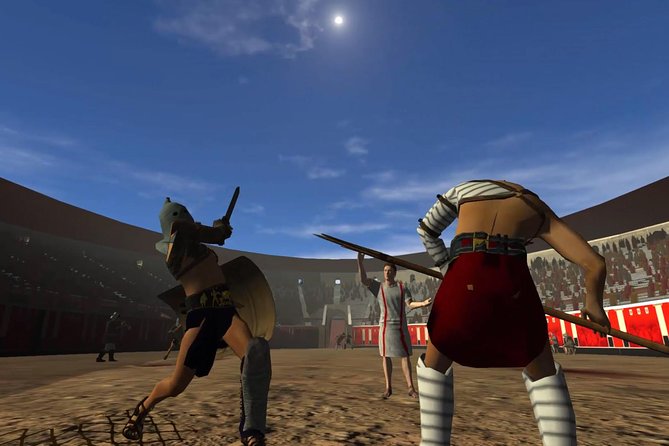
Your headset experience uses Samsung/Oculus Gear VR style equipment. You’ll use one headset per adult and youth (with age rules below). The tour’s audio commentary is available in 6 languages: English, Italian, German, French, Spanish, and Russian.
That multi-language detail is more useful than it sounds. Pompeii is easy to get lost in, and it’s also easy to miss context if you don’t speak the site’s local language. With this format, you can keep moving while the headset does the explaining, so you spend less time catching up and more time actually looking.
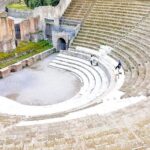
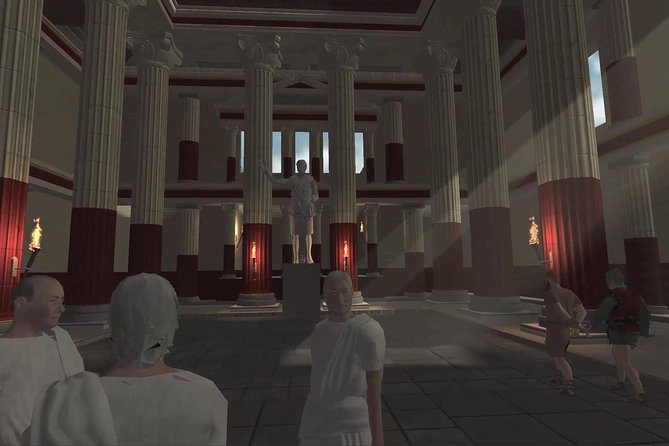
What you watch is also part of the design. The VR recreations cover major categories of the city—temples, homes, shops, theaters, streets, and markets—so you get variety rather than only one narrow slice of “the Pompeii story.” The goal is to help you see how the city functioned, not just identify a few highlights.
One practical drawback: graphics quality is not state-of-the-art. If you’re very picky about how crisp VR looks, you might notice that some visuals feel dated compared with today’s best gaming tech. Still, the core value is the way VR turns scattered stone into a coherent city life you can picture.
Your tour assistant: helpful, but not a licensed guide
The tour assistant (or escort/host) is there to keep your group moving smoothly and help with the experience. They speak only English and Italian.
But there’s an important boundary: the assistant is not a licensed guide, so they can’t answer archaeology questions about the site. That’s not a deal-breaker for most people, but it changes how you should approach the experience.
If you have specific questions—Why is that wall shaped that way? What exactly happened during the eruption at this spot?—write them down and plan to look for answers through your own reading before you go, or through other Pompeii guide options on your trip. During this tour, rely on the headset commentary for the factual context you’ll want most.
This matters even more if you’re traveling with kids. A good assistant can keep things on track and help manage timing, but if the group asks deep questions, you may need to handle the answers outside the tour.
Comfort, safety, and VR reality checks

Pompeii involves walking on uneven terrain, so wear comfortable shoes. This isn’t a “sit and watch” experience. Even if the VR stops are the highlight, you’ll still be moving through an ancient park where footing matters.
Now the VR part: this headset experience comes with clear motion-sickness and health warnings. It can cause dizziness for some people, and symptoms can show up more strongly later. If you’ve ever had severe motion issues with VR (or you’re prone to dizziness in general), take that seriously.
You should also consider the manufacturer-style guidance listed for medical situations and symptoms, including:
- Stop immediately if you experience issues like dizziness, disorientation, blurred/double vision, nausea, or loss of awareness.
- Consult a doctor if you have pre-existing binocular vision problems, psychiatric disorders, a heart condition, a history of seizures, or any epilepsy-linked symptoms.
- If you have a pacemaker or implanted medical device, don’t use the Gear VR without consulting your doctor or the manufacturer—because it can emit radio waves affecting nearby electronics.
Age limits are the other big safety category. The minimum age to use the headset is 9, and the manufacturer recommends it is not recommended under 13. Parents are responsible for decisions for younger kids who are allowed to use the headset, and adults should monitor them closely before and after.
Bottom line: if you know you’re sensitive to VR motion effects, this may not be your best Pompeii option. If you’re generally fine with VR and you’ll be careful, this is a fun and very visual way to learn.





Price and value: what you’re really paying for at $124.02
At $124.02 per person for about 2.5 hours, you’re not just buying “a walk with someone.” You’re paying for a packaged experience that includes:
- Skip-the-line entrance
- Admission ticket included
- VR headset use (one per adult/youth)
- A tour assistant/escort to manage the route and VR timing
Value is strongest when you care about the VR component and want less waiting around. Skip-the-line access can save frustration at a high-traffic site, and the included headset training means you’re more likely to actually enjoy the tech rather than waste time figuring it out.
It’s also private in the sense that only your group participates. That can be a big deal for families and for couples who don’t want to merge into a large crowd while stopping and starting with headsets.
There’s also mention of group discounts, so if you can travel as a larger unit, you may get more bang for your budget.
If your priority is a licensed guide answering archaeology questions in depth, you may feel the price is missing that “expert Q&A” component. But for people who want visual context fast, the package makes sense.
Who this tour fits best (and who should skip it)
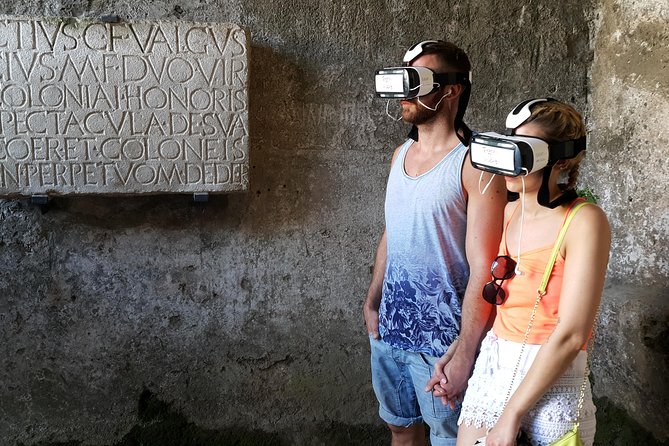
This setup tends to be a great match for:
- First-time Pompeii visitors who want help turning ruins into a recognizable city.
- Families with older kids who are comfortable using VR and can handle the walking pace.
- Tech-friendly travelers who like visual reconstructions and multi-language audio.
- People who want a guided flow without a heavy lecturing style—because you’re learning while you move.
It may be less ideal if:
- You need a licensed archaeology guide for direct, detailed questions.
- You’re likely to feel VR dizziness or you know you’re motion-sensitive.
- You’re traveling with young children who fall into the “under 13” VR caution zone.
One family-style experience shared that the tour felt informative and added a new dimension for a tech-inclined group, while also noting that the VR graphics could improve. That tracks with the overall balance here: the content goal is historical reconstruction, not cutting-edge visual fidelity.
Practical logistics: where you start, where you end
You’ll start at Hotel Vittoria, Piazza Esedra, 80045 Pompei NA. The tour ends at Piazza Immacolata, 80045 Pompei NA.
Two small details that help you plan:
- The meeting spot is near public transportation, so you don’t have to build your whole day around a private transfer.
- The tour expects you to travel light. Minimize bags, pocketbooks, and backpacks, and you can wear a lightweight shoulder bag if needed.
Also, this runs in safe weather conditions. Still, Pompeii is outdoors, so dress for the conditions and remember that you’ll be walking over uneven ground.
Should you book this Pompeii VR tour?
I’d book this if you want a structured Pompeii experience where VR does the heavy lifting of context. The VR headset training, multi-language audio, and included skip-the-line entry make it feel like a real “visit tool,” not just a gimmick.
I’d hesitate if you’re hunting for a licensed archaeology deep-dive. The tour assistant can help you enjoy the flow, but they can’t answer site questions like a licensed guide would. And if VR tends to make you queasy, check the safety guidance carefully.
One more practical note: you can cancel for free up to 24 hours in advance for a full refund, so there’s some cushion if your plans shift.
FAQ
FAQ
How long is the Private Pompeii Tour with 3D Virtual Reality Headset?
It’s approximately 2 hours 30 minutes.
Is admission to the Pompeii ruins included?
Yes. Admission is included in the tour.
Does the tour include a licensed guide?
No. The tour assistant/escort is not a licensed guide, so they can’t answer archaeology questions.
What languages are available for the headset audio?
The VR headset commentary is available in English, Italian, German, French, Spanish, and Russian.
What age can children use the VR headset?
Children must be at least 9 years old to use the headset. The manufacturer also recommends that it not be used by children under 13.
Do I get a headset for the whole group?
You get one VR headset per adult and youth.
Where do we meet and where does the tour end?
The tour starts at Hotel Vittoria, Piazza Esedra, 80045 Pompei NA, and ends at Piazza Immacolata, 80045 Pompei NA.
What if I feel dizzy or unwell while using the headset?
You should discontinue use immediately if you experience symptoms listed in the safety guidance, including dizziness, nausea, disorientation, or visual abnormalities.