REVIEW · POMPEII
Private Tour with Official Guide through the wonders of Pompeii.
Book on Viator →Bookable on Viator
Pompeii feels different with a guide in your ear. This private tour moves at a human pace through the big sights and the small details that connect theater, baths, temples, and everyday street life. You get an English-speaking official guide plus a park map and bottled water, so you’re not left guessing what you’re looking at.
I love how the route balances showy landmarks with quieter homes—then gives you the context to see what mattered to people in Roman Pompeii. I also like the tour style: one guide in particular, Paolo, is praised for sharp explanations and a good sense of humor, and even for pointing out photos worth taking.
One consideration: the Archaeological Park Pompeii ticket is not included, so budget for that in addition to the tour price (and bring a little flexibility for crowds at peak times).
In This Review
- Key highlights that make this tour work
- Entering Pompeii With an Official Guide and a Real Plan
- Where you meet
- Teatro Grande and the Odeon: Pompeii’s Stage Culture
- Casa dei Vettii: Frescoes, Mosaics, and How Rooms Were Built to Impress
- What to watch for
- Casa del Fauno and Casa degli Amorini Dorati: From Old Villa Roots to Golden Loves
- Suburban Baths and Terme Stabiane: Pompeii’s Social Life in Tile and Stone
- Odeon to Foro di Pompeya: The Civic Heart Beats
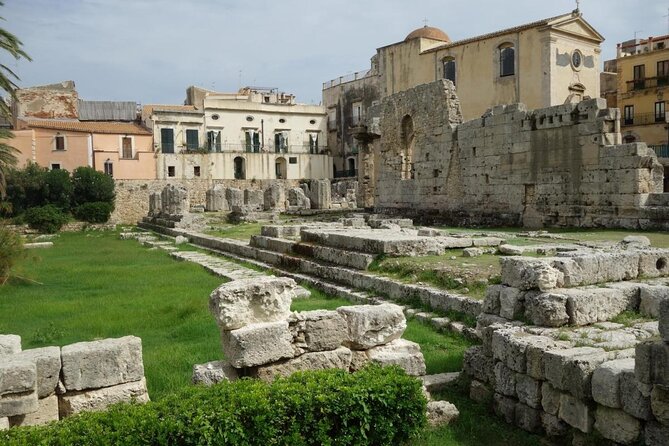
- Tempio di Giove Capitolino and Temple of Apollo: Religion as Urban Layout
- Casa del Poeta Tragico and Via dell’Abbondanza: The City Through Art and Street Life
- Thermopolium Stop: One Taste of Everyday Pompeii
- Price and What You Get for $102.35 per Person
- Pacing, Photos, and Crowd Reality
- Language and Comfort: English, Service Animals, and Getting There
- Who This Private Pompeii Tour Fits Best
- Should You Book This Pompeii Private Tour?
- FAQ
- Is this Pompeii tour private?
- Where does the Pompeii tour start?
- How long is the tour?
- Is the Archaeological Park Pompeii ticket included?
- Is the tour offered in English?
- Can I cancel for a full refund?
Key highlights that make this tour work
- Official guide, English language, private group: you’ll get tailored explanations without waiting for a big bus crowd.
- Teatro Grande to Odeon: you see Pompeii’s performance spaces as a system, not random ruins.
- Villa stops with art you can actually read: frescoes, mosaics, and the way rooms were laid out.
- Baths near the walls: Suburban Baths and Terme Stabiane show how social life and hygiene mixed.
- Forum + temple row: you get the civic and religious “center” feeling fast.
- Daily life on Via dell’Abbondanza and a thermopolium: you end in the places locals used.
Entering Pompeii With an Official Guide and a Real Plan
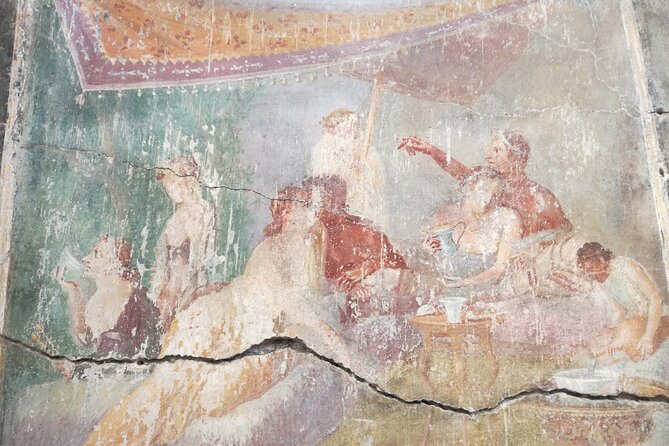
Pompeii can be overwhelming fast. Streets crisscross, buildings look similar at first glance, and it’s easy to spend the whole visit saying things like, I think this is important… and then moving on. This private tour is built to stop that problem. You follow a guided walk through a tight set of highlights, each one chosen to explain how Pompeii worked.
What makes it practical is the structure. You’re not just dropped at a starting point and told good luck. The tour includes an official guide, a map of the Archaeological Park Pompeii, and bottled water, which matters when you’re walking in Italian sun. You also get a mobile ticket option tied to the experience, which helps on arrival days.
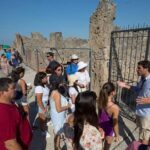
And since it’s private, the pacing is yours. The stops are short enough to keep momentum, but long enough for questions and looking closely. In one set of feedback, the guide was described as very patient when people wanted extra time around the ruins, and that kind of flexibility is exactly what you want at Pompeii.
You can also read our reviews of more guided tours in Pompeii

Where you meet
You start at Via Villa dei Misteri, 1, 80045 Pompei NA, Italy, and the tour ends back at the same meeting point.
Teatro Grande and the Odeon: Pompeii’s Stage Culture
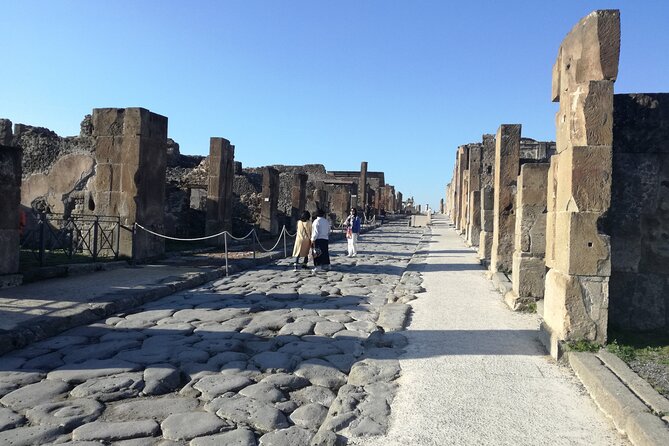
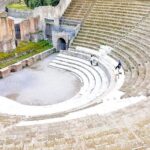
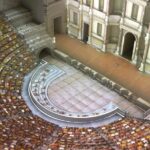
The tour kicks off with Teatro Grande, Pompeii’s major theater. Even if you know nothing about ancient drama, you’ll recognize the scale. This is where you can feel the point of the place: public performances tied to civic identity, not just entertainment.
Why this stop matters for your understanding: theaters in the ancient world weren’t isolated venues. They were part of a city’s rhythm—when people gathered, how they behaved, and how messages traveled. With a guide, you’re not just seeing stone seats. You’re learning the logic behind the layout.
The walk later brings you to the Odeon (Teatro Piccolo), a smaller stage linked to the singing tradition. It’s a good pairing with Teatro Grande because it shows variety. The big theater teaches scale; the Odeon teaches precision and how performance culture could live in different forms.
In feedback about the guide style, Paolo is praised for explaining origins of words in a fun way, and that kind of verbal link helps the ruins feel less distant. A lot of the time, the best payoff at Pompeii is hearing how language and life connect back to what you’re standing in.
Casa dei Vettii: Frescoes, Mosaics, and How Rooms Were Built to Impress
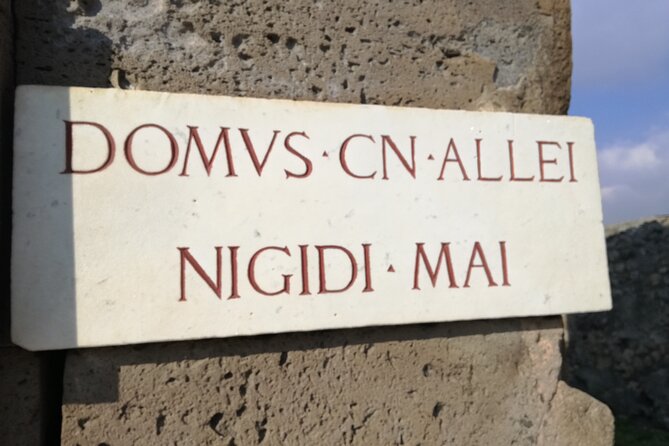
Next up is Casa dei Vettii, a house known for its art and architecture. This is the kind of stop where a good guide changes everything. Without context, a fresco might look like paint on a wall. With context, you start noticing what the artists were trying to do—shape perception, mark status, and turn movement through the home into a guided experience.
You’ll get around 20 minutes here, which is a sweet spot for art-focused stops. Not so short that you skim, and not so long that your attention fades. The guide also helps you slow down just enough to see patterns, motifs, and the way space is organized.
What to watch for
Look at the surfaces as you move through. Pompeian homes were designed for effect—corridors, thresholds, and wall zones mattered. A guide’s job here isn’t to list dates like a textbook. It’s to help you read the space like a living place.
You can also read our reviews of more private tours in Pompeii




Casa del Fauno and Casa degli Amorini Dorati: From Old Villa Roots to Golden Loves
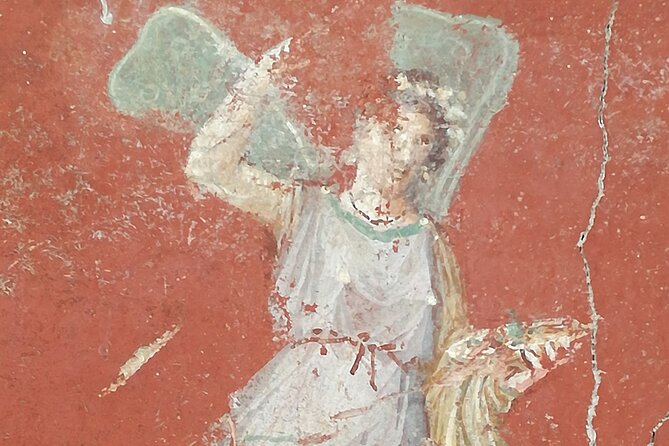
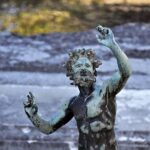
Then you’ll step into Casa del Fauno, one of the older villas in Pompeii. This stop is important because age changes how you interpret the architecture. When you see older elements, you start understanding how the city evolved in taste and in building methods.
The tour continues to Casa degli Amorini Dorati, where the focus is sheer visual impact. The name alone points to what people notice here, and the guide time gives you a chance to look past first impressions. These are the rooms that make Pompeii feel startlingly personal—art wasn’t only for temples or public buildings.
Two quick practical notes:
- Bring your phone ready, but don’t let it replace looking. Pompeii rewards slow attention.
- If you care about details, ask questions. More than one guide is noted for pointing out small elements that you might miss on an audio track or quick walk.
Suburban Baths and Terme Stabiane: Pompeii’s Social Life in Tile and Stone
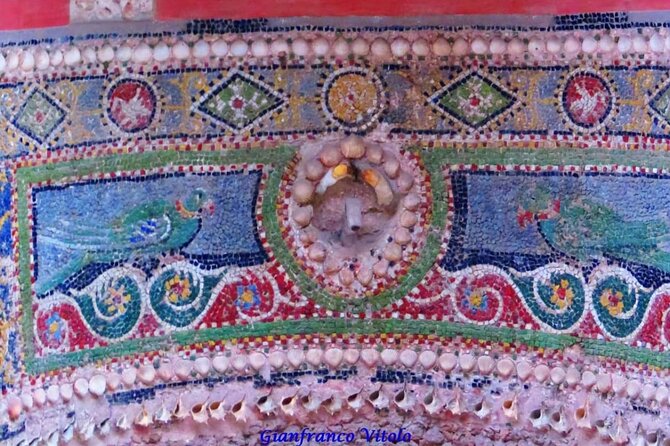
Most people think of ruins as houses and temples. The bath stops change that. They show Pompeii as a working city with shared routines—cleaning, chatting, gossiping, and relaxing.
The tour visits Suburban Baths first, a spa built near the walls. Then it goes to Stabian Baths (Terme Stabiane), the larger complex. These are not just “places to wash.” Baths were a key public space.
Why these stops are valuable:
- You see how water systems and architecture shaped daily life.
- You get a sense of who used the spaces and how time would have felt in a city like Pompeii.
- You learn that Roman culture treated bathing as part of social identity, not only hygiene.
In feedback about the guides, Paolo is described as careful with questions and patient with slower pacing, which is helpful here. Bath complexes can feel confusing at first, with rooms and corridors blending together. A guide helps you connect the dots—what each space likely meant and how people moved through it.
Odeon to Foro di Pompeya: The Civic Heart Beats
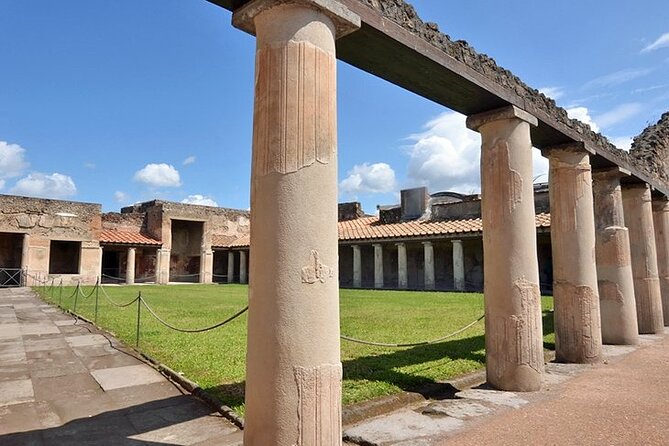
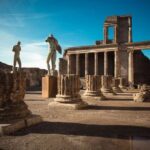
After the baths, the tour turns civic. Foro di Pompeya is the main square, and it’s where you can finally see Pompeii as a functioning center. You’ll get about 20 minutes here, and the guide helps you understand what kind of activity the forum would have held.
You’ll notice the difference between the forum and the quieter homes. In a house, art and design serve your status and comfort. In the forum, public space creates community. It’s the city’s social stage, just in a different format than Teatro Grande.
If you like the “how people lived” side of ruins, the forum is a turning point. It’s where the city becomes more than architecture—you start picturing motion, conversation, and public events.
Tempio di Giove Capitolino and Temple of Apollo: Religion as Urban Layout
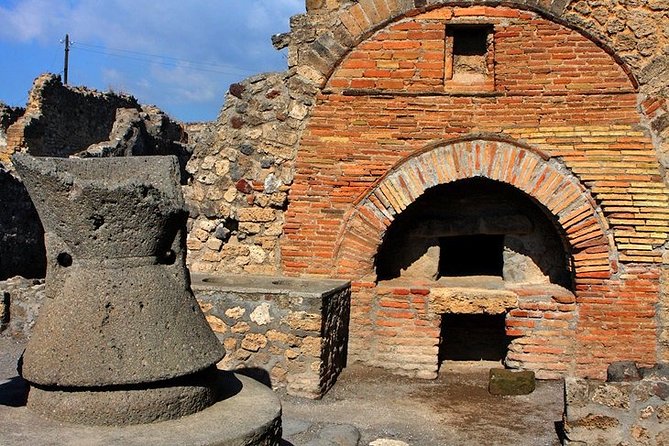
Next is the sacred side with Tempio di Giove Capitolino—often described as the temple of the temples—and then the Temple of Apollo.
You might only get 10 minutes at each stop, but that can work well because temples are often easy to read from the right angle. The guide’s value here is interpretation: what the religious focus meant, and how temple placement signals power and shared belief.
Apollo matters because he connects to the idea of the sun and the Roman pantheon’s structure, and that kind of framing helps you understand why this matters in a city plan. Even if you’re not a classics person, temple stops can be oddly satisfying once you see them as part of everyday geography.
Casa del Poeta Tragico and Via dell’Abbondanza: The City Through Art and Street Life
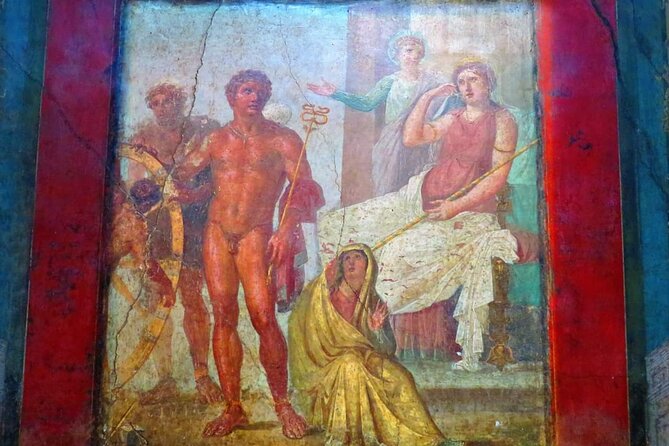
The tour brings you to Casa del Poeta Tragico, known for a famous mosaic. This is a short stop—about 5 minutes—but the impact can be huge because mosaics are often visually direct. You get the sense of how art could preserve stories, identities, and taste in a way that still reads centuries later.
Then you’ll walk along Via dell’Abbondanza, the main street. This is one of those spots where you start feeling the city as a system: commerce, movement, and architecture that funnels you forward.
The street stop also pairs well with the earlier villas and baths. Homes show private life. Baths show shared routine. The main street shows the city’s pulse: people moving toward jobs, errands, and meeting points.
Thermopolium Stop: One Taste of Everyday Pompeii
Finally, you’ll stop at Thermopolium Regio VI, Insula VIII, 8, a restaurant space from the time. A thermopolium is the kind of site that makes Pompeii feel human. You’re not only looking at what wealthy families owned—you’re looking at where everyday people likely bought quick food.
The stop is brief—around 5 minutes—but it does an important job. It stops the tour from becoming purely about monuments. You finish with the feeling that Pompeii had daily routines and small choices, not just grand public moments.
Price and What You Get for $102.35 per Person
The price is $102.35 per person, and it covers more than just “a guide standing next to you.” You get:
- A tourist guide (English)
- A map of the Pompeii archaeological area
- Bottled water
What’s not included:
- The Archaeological Park Pompeii ticket
- Tips
So the real value equation is this: you’re paying for time, clarity, and guidance through a difficult site. Pompeii is large, signage can be uneven, and it’s easy to waste hours without learning anything. A good guide compresses that learning curve into a focused 2 to 3 hours.
If you’re coming for the highlights only, that’s also good news. This tour doesn’t try to cover everything in the park. It picks the places that help you understand what you see, then moves on.
Pacing, Photos, and Crowd Reality
Expect a guided walk with short stops—some around 10 minutes, some around 20, plus bath and forum segments. It’s paced enough to keep you moving, but short stops also mean you’ll want to pay attention and not get too absorbed in one corner.
One practical upside from guide-style feedback: the guide allowed time for photos and was patient when people wanted to take their time. That’s a big deal. At Pompeii, the difference between a fun visit and a frustrating one often comes down to whether someone respects your pace while still keeping the group on track.
Language and Comfort: English, Service Animals, and Getting There
The tour is offered in English. It’s also a private tour/activity, so you’re not squeezed into a larger group.
Service animals are allowed, and the meeting point is near public transportation. The tour lists that most people can participate, which usually means the pace is manageable for a wide range of visitors, but it still involves walking through uneven stone areas typical of Pompeii.
If you’re sensitive to cobblestones or heat, bring what you need: sun protection, water (you have bottled water from the tour), and a mindset of short pauses and frequent viewing.
Who This Private Pompeii Tour Fits Best
This is a great match if:
- You want structure in a site that can otherwise feel like a maze.
- You care about art and architecture (frescoes, mosaics, and villa layouts).
- You like the “how people lived” angle: baths, the forum, the main street, and a thermopolium.
- You prefer a private format where questions don’t get lost.
It’s also a solid option if you’ve got limited time on the Amalfi Coast side of your trip. The start time is set for 12:30 pm, and the tour window is a manageable 2 to 3 hours.
If you’re hoping for a long, unstructured wander with no guidance, you might find this too organized. But if you want meaning, not just walking, this route is designed for that.
Should You Book This Pompeii Private Tour?
Book it if you want a fast, focused way to understand what you’re seeing—theaters, villas, baths, temples, and daily-life stops—with an English official guide who can connect details to the bigger picture.
Consider skipping (or adding extra time on your own) if you’re the type who wants to linger for hours without instruction. This tour is built to cover key areas within a short window, so you may still want a second, unguided visit if you want to chase every photo angle.
FAQ
Is this Pompeii tour private?
Yes. It’s a private tour/activity, so only your group participates.
Where does the Pompeii tour start?
You meet at Via Villa dei Misteri, 1, 80045 Pompei NA, Italy.
How long is the tour?
It runs about 2 to 3 hours.
Is the Archaeological Park Pompeii ticket included?
No. The tour includes the guide, a map, and bottled water, but the Archaeological Park Pompeii ticket is not included.
Is the tour offered in English?
Yes, it’s offered in English.
Can I cancel for a full refund?
Yes. You can cancel up to 24 hours in advance for a full refund. After that window, the amount paid is not refunded.