REVIEW · POMPEII
2 Hours Pompeii Group Tour with Archaeologist Guide and Skip the Line
Book on Viator →Operated by ELIANA SANDRETTI · Bookable on Viator
Pompeii in two hours is doable. This guided route is built for seeing the main attractions fast, with skip-the-line entry so you spend less time stuck at ticket counters. I like how the pacing stays tight while the guide turns sites into real scenes from Roman life. I also like that it’s a small-group visit, capped at 15 people, so you actually get time for questions. One thing to keep in mind: it’s an overview tour, so you won’t get the slow, in-depth museum-style experience at every single corner.
The payoff is a clear “greatest hits” sweep: gladiators, laundries, theaters, luxury homes, baths, and the forum area. If you hate walking between sites or you’re looking for long free time to wander, the 2-hour format may feel rushed. But if you want momentum and context, this tour is a strong fit.
In This Review
- Key highlights you can count on
- Entering Pompeii fast: meeting at Ristorante Suisse and the skip-the-line edge
- A smart 2-hour “greatest hits” route (and what it leaves out)
- Gladiators and laundry: Vicolo di Gladiatori and the Fullonica di Stephanus
- Temple of Jupiter in the forum: the religious heart you can actually picture
- From Odeon to Teatro Grande: Pompeii’s theaters and performance culture
- Luxury home and a famous brothel: Casa del Menandro and the Lupanar
- Justice, markets, and the shop-lined street: Pompeii’s civic pulse
- Stabian Baths and Pompei 3D: bathing culture plus a visual punch
- What the guides actually do (names you may hear): Mariagrazia, Eliana, Luciana, Luisa
- Price and tickets: is $132.03 good value for this 2-hour format?
- Should you book? My take on who this Pompeii tour fits
- FAQ
- How long is the Pompeii group tour?
- What’s the meeting point for the tour?
- Is skip the line included?
- What does the entrance ticket cost?
- How much is the tour price?
- What language is the tour offered in?
- How big is the group?
- Is there a mobile ticket?
- Is the tour good for most travelers?
- Are service animals allowed?
- Does weather affect the tour?
Key highlights you can count on
- Skip-the-line ticket help to avoid the long ticket-office queue
- Archaeologist-style guidance focused on what you’re looking at right now
- Small group size (up to 15) for a more personal pace
- Iconic Pompeii stops packed into about 2 hours
- Stops built around daily life: work, worship, entertainment, and justice
- A mix of ruins and visual support with Pompei 3D Bodies of Pompeii
Entering Pompeii fast: meeting at Ristorante Suisse and the skip-the-line edge
You meet at Ristorante Suisse in Piazza Esedra (Piazza Esedra 10/13). The tour itself runs about 2 hours, and the operator helps you get in faster by including skip-the-line ticket entry.
Why this matters: Pompeii can eat up your time before you even start seeing things. A skip-the-line setup is most valuable when you’re on a tight schedule or when the site is busy. You’re not just buying tickets at the gate; you’re showing up with help so the clock starts on the ruins instead of the line.
You’ll also want to plan for the entrance ticket separately. The entrance fee is 18 euros for adults, and minors are free if they bring an identity card.
You can also read our reviews of more guided tours in Pompeii

A smart 2-hour “greatest hits” route (and what it leaves out)
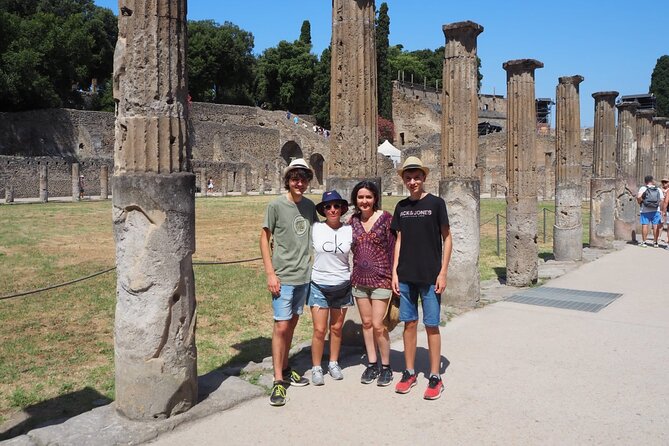
This tour concentrates on major sites that give you a quick sense of Pompeii’s layout and culture: training and labor, public worship, performances, elite homes, entertainment, and civic life. The stop list is designed so you’re moving through the parts most people recognize, without needing to piece together everything yourself.
The tradeoff is simple: because it’s only about 2 hours, you’re not going to slow down for long reads of frescoes, detailed chapel-by-chapel religious history, or extended time in each building. Instead, you’ll get guided orientation—get your bearings fast—and then the guide helps you understand what you’re seeing before you move on.
If you’re a first-timer and you want a grounded overview, that’s exactly what this format delivers. If you’re a repeat visitor who already knows the big monuments, you may prefer a longer, more self-paced visit.
Gladiators and laundry: Vicolo di Gladiatori and the Fullonica di Stephanus
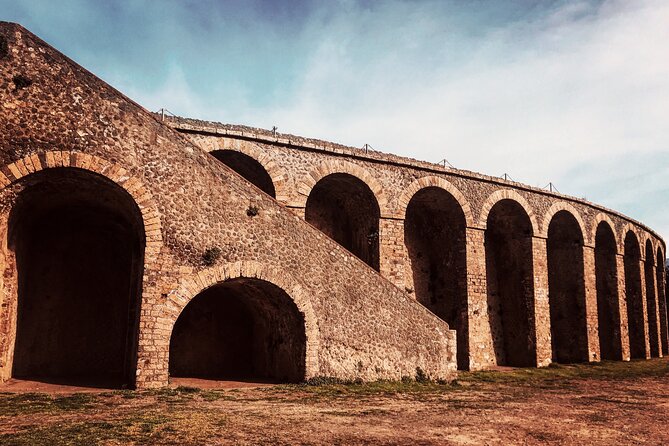
The tour starts with Vicolo di Gladiatori, including the Gladiators’ Barracks area. This is one of Pompeii’s most evocative settings because it brings you close to a world of training and public spectacle. Even with a short stop, the key value is perspective: you’re not just looking at old stones—you’re getting the social meaning of the space.
Next is the Fullonica di Stephanus, Pompeii’s most famous laundry. This stop is a great reminder that Pompeii wasn’t only temples and big villas. You learn how Romans washed clothes and what materials they used—exactly the kind of everyday detail that makes the ruins feel human instead of abstract.
A practical note: these early stops work well because they set a theme. Gladiators tell you about entertainment and discipline. The laundry tells you about work and routine. Together, they help you switch your brain from “ancient buildings” to “ancient lives.”
Temple of Jupiter in the forum: the religious heart you can actually picture
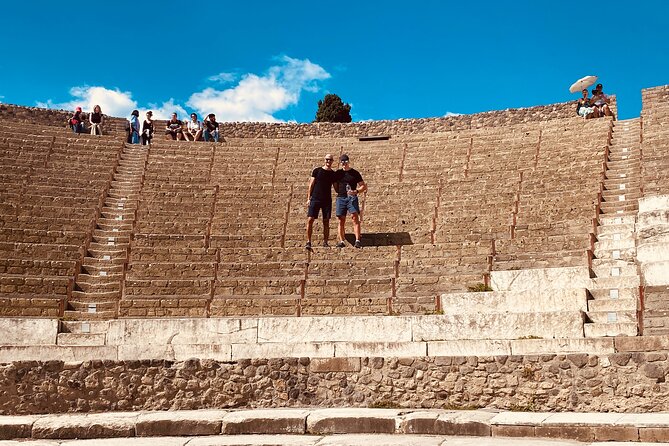
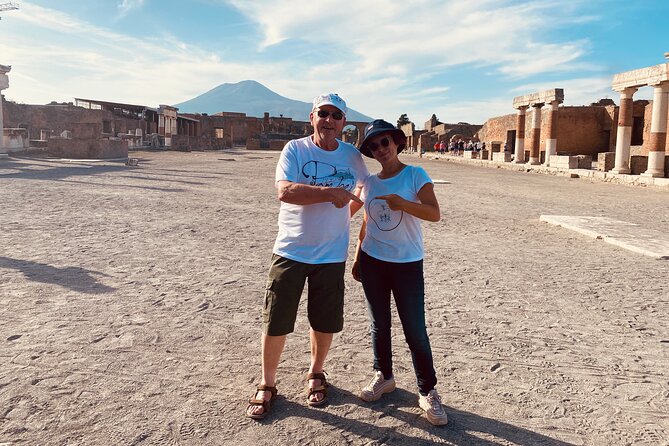
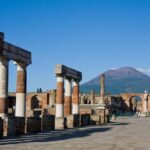
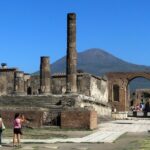
You then visit Tempio di Giove Capitolino in the large forum area. The focus here is the cult of the deities and how the forum connected religious activity with morning routines. The temple still serves as a symbol of the city, even as you look at what remains today.
This stop is especially useful if you’re trying to understand Pompeii’s rhythms. Forums weren’t just for politics or commerce; they also tied into belief and public ritual. Even in a brief visit, the guide’s job is to help you connect the location to how people moved through daily life.
Later in the route, you’ll also see other sacred spaces, including the Temple of Venus (noting that it was partly destroyed during the Second World War) and the Temple of Apollo area. That arc gives you a wider view of how worship showed up across Pompeii.
From Odeon to Teatro Grande: Pompeii’s theaters and performance culture
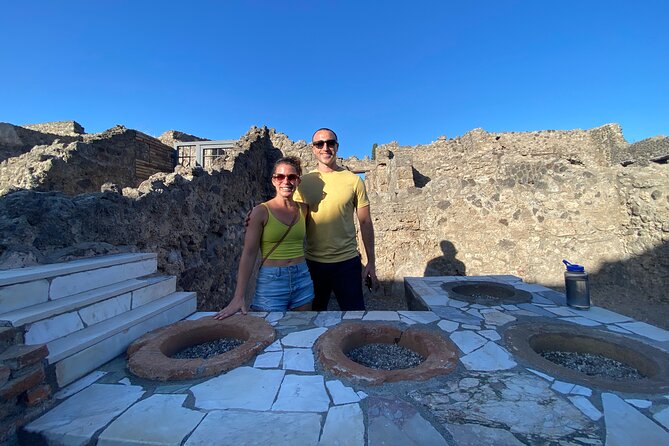
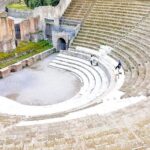
Two theater stops stand out because they show different “sizes” of public entertainment. First is Odeon – Teatro Piccolo (a musical events theater). It’s interesting because musical instruments were found there, and those items are currently located in the Antiquarium. You don’t need a background in archaeology to appreciate the logic: Pompeii found sound-related evidence in a place built for performance.
Then you move to Teatro Grande, Pompeii’s largest theater. This one matters because it’s tied to major local funding—renovations supported by the Gens Holconia. The stop is short, but it reinforces a big idea: entertainment architecture in Pompeii wasn’t random. It reflected the city’s social structure and resources.
If you like going beyond the postcard version of Pompeii, the theater stops are a strong use of your 2-hour window.
You can also read our reviews of more tours and experiences in Pompeii


Luxury home and a famous brothel: Casa del Menandro and the Lupanar
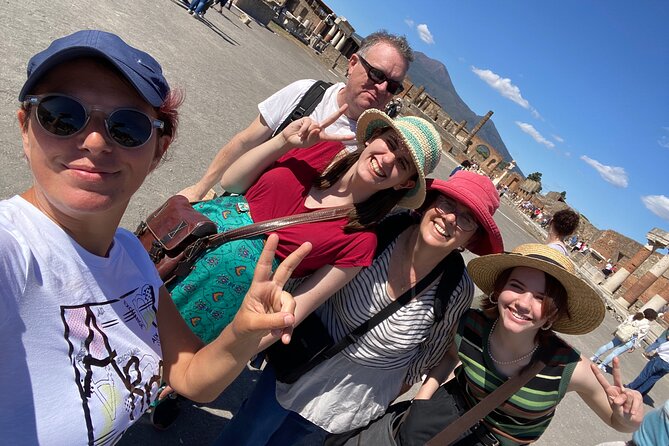
Next up is Casa del Menandro, a luxury residence known for its frescoes, decorations, and sculptures. This is one of the most effective stops for understanding social class. The message is clear: Pompeii had everyday life for many, but it also had homes that were built to impress.
Then you visit the Lupanar, one of the best-known brothels in the world. The standout detail here is that you can see original frescoes with scenes connected to kamasutra themes. This stop can be surprising if you expected only “romantic ruins.” It’s also valuable because it shows a side of Pompeii that was part of real urban life, not just elite ceremony.
If you’re traveling with kids or you’re sensitive to adult themes, take note: this stop is part of the route. The guide can help contextualize it in a historical frame, but the subject is still explicit in what you’ll see.
Justice, markets, and the shop-lined street: Pompeii’s civic pulse
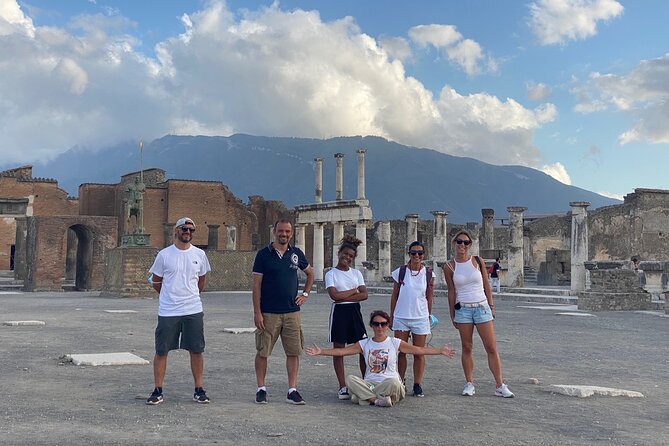
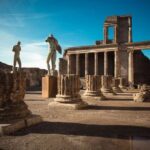
The tour then moves into the civic world. You’ll visit Pompei La Basilica, the place where justice was administered near the main square. This is a good stop for understanding how the city functioned as a community, not just as a collection of buildings.
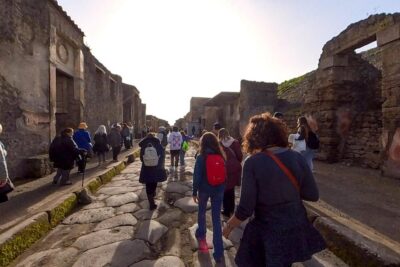
From there you pass through a street full of shops, described as the main street of the archaeological site. It’s a simple idea, but it works: you see how commerce and movement likely shaped daily routines.
You’ll also stop at the city market near the large forum, where large purchases of goods could be resold in shops. That detail helps you picture Pompeii as an active economic network, not a static relic.
Finally, the forum-area sequence gives you the context to connect earlier stops—religion, entertainment, elite homes—back to the civic systems that held the city together.
Stabian Baths and Pompei 3D: bathing culture plus a visual punch
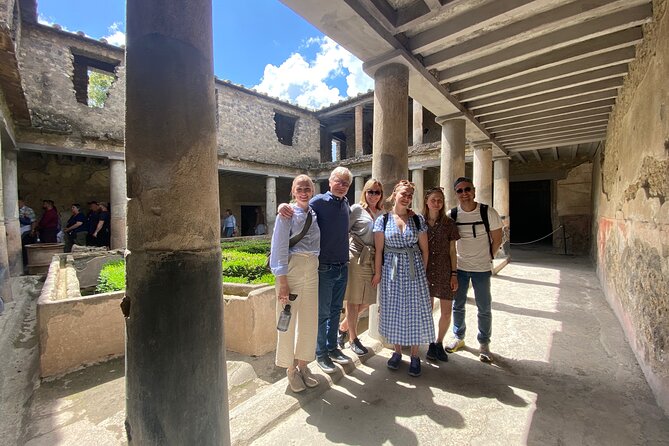
Later comes Stabian Baths (Terme Stabiane), one of the earlier bath complexes in Pompeii. The focus is on casts and frescoes, plus what the baths meant as a social routine. Even with a quick stop, this is one of those places where you instantly understand why people built public spaces around hygiene and gathering.
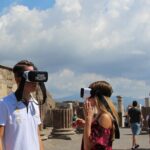
Then there’s Pompei 3D: Bodies of Pompeii. It’s a short stop, but it adds a visual layer to what you’re seeing in the stone remains. If you’ve ever felt “I get the architecture, but I want more human context,” this kind of on-site 3D element can help you connect the dots.
Put together, baths plus 3D create a nice balance: physical daily life you can picture, plus a visual tool that helps explain what’s otherwise hard to imagine.
What the guides actually do (names you may hear): Mariagrazia, Eliana, Luciana, Luisa
The strongest theme in the feedback is how much the guide storytelling changes your experience. Guides such as Mariagrazia are described as engaging and able to bring Pompeii to life, with stories that range from fun moments to more somber ones. The goal isn’t just facts—it’s making the ruins feel like a lived environment.
Eliana is highlighted for a deep archaeological approach and for handling group flow in a way that helps you avoid heavy crowd clashes while still seeing a lot of the site. There’s also a standout example of care: in one situation, a participant’s father felt ill, and the guide went above and beyond by helping arrange medical attention and later a taxi back so the group could keep going with reduced worry.
Other named guides—Luisa and Luciana—are also praised for being fun and patient, including with families. One review emphasizes that guide support made it easier to understand what you saw, especially for younger kids.
One more key point: because the group stays small, you’re more likely to get your questions answered during the route instead of saving everything for the end.
Price and tickets: is $132.03 good value for this 2-hour format?
The tour price is $132.03 per person, and it includes several things that affect real-world value:
- Skip-the-line help to buy tickets on site
- An authorized tourist guide and assistance throughout
- A group limited to a maximum of 15 people
- Access to the main attractions on this route
- A specialized archaeological guide
What’s not included is the entrance ticket (18 euros for adults; minors free with an identity card), plus food and drinks and transport.
So what does that mean for your wallet? For most adults, you should plan on paying the tour price plus the site entry fee. That extra ticket cost is normal for Pompeii, but the tour package tries to “earn back” that total by saving you time at the ticket office and by adding expert interpretation while you walk through the ruins.
For first-time visitors, that’s where the value tends to land. You’re buying a guided plan that helps you interpret major landmarks in a short window—especially helpful if you don’t want to spend the morning figuring out which places matter most.
Should you book? My take on who this Pompeii tour fits
Book this tour if you want:
- A fast, organized overview of Pompeii’s key sights in about 2 hours
- Skip-the-line entry support so your time goes to ruins, not queues
- Expert guidance with archaeologist-style explanations and lively storytelling
- A small-group pace (up to 15), where you can ask questions
Skip it (or consider a longer option) if you:
- Want lots of unstructured time inside each building
- Don’t want adult-themed content, since the route includes the Lupanar
- Prefer a custom route that you choose block by block rather than following a set list
If you’re deciding between “seeing a lot” and “seeing a lot with context,” this package leans hard toward the first two: you’ll cover major ground and understand what you’re looking at as you go.
FAQ
How long is the Pompeii group tour?
The tour lasts about 2 hours.
What’s the meeting point for the tour?
You meet at Ristorante Suisse, Piazza Esedra (10/13, 80045 Pompei NA, Italy).
Is skip the line included?
Yes. The tour includes skip the line to purchase tickets on site, which helps you avoid the long ticket-office queue.
What does the entrance ticket cost?
The entrance ticket costs 18 euros per person for adults. Minors are free, but they must bring an identity card.
How much is the tour price?
The price is $132.03 per person.
What language is the tour offered in?
The tour is offered in English.
How big is the group?
The tour has a maximum of 15 travelers.
Is there a mobile ticket?
Yes. Mobile ticket is included.
Is the tour good for most travelers?
Most travelers can participate.
Are service animals allowed?
Yes, service animals are allowed.
Does weather affect the tour?
Yes. The experience requires good weather. If it’s canceled due to poor weather, you’ll be offered a different date or a full refund.