REVIEW · POMPEII
2 Hours Private Tour in Pompeii with Archaeologist
Book on Viator →Operated by Napoli e dintorni - Archaeological tour guide · Bookable on Viator
Pompeii is big, but this tour stays focused. You get a licensed archaeologist guiding the walk, turning famous ruins into real evidence of daily life. I also like the private-group format (up to 15), which makes it easier to keep track of families and questions without feeling rushed.
The route hits several top areas in about two hours, so you’ll feel like you covered serious ground. One heads-up: entrance to the archaeological park isn’t included, and the tour can be shortened if you arrive late or you’re delayed.
If you want Pompeii in smaller bites, with someone who can explain what you’re looking at and why it matters, this is a strong fit. Just be ready to plan for the park ticket and enjoy a fast, well-guided highlight plan.
In This Review
- Key Things to Know Before You Go
- A Private Pompeii Tour With a Licensed Archaeologist
- Getting In and Staying On Time for 2 Hours
- The Route: Palestra to Necropolis in One Tight Walk
- Stop 1: Palestra Grande (Pompeii’s Biggest Gymnasium)
- Stop 2: Roman Amphitheater (Entertainment and Power)
- Stop 3: Praedia di Giulia Felice (A Glimpse Into Private Wealth)
- Stop 4: House of Venus in the Shell (Frescoes That Make the Past Feel Close)
- Stop 5: Casa di Ottavio Quartione (Frescoes Plus Outdoor Life)
- Stop 6: Orto dei Fuggiaschi (Where the Eruption’s Victims Were Found)
- Stop 7: Necropoli di Porta Nocera (Cemetery Life Outside the Walls)
- Tickets, Walking, and Practical Comfort
- Price and Value: What $267.46 per Group Really Buys
- Who This Tour Fits Best
- Should You Book This Tour?
- FAQ
- How long is the Pompeii private tour with an archaeologist?
- What is the price for this tour?
- Is this a private tour?
- Does the tour include entrance to the archaeological park?
- Where does the tour start?
- Do I need to bring anything like a ticket?
- What stops are included in the 2-hour route?
- What happens if I’m late to the meeting point?
- What if the weather is bad?
Key Things to Know Before You Go
- Archaeologist-led interpretation: not just narration, but technical, site-based explanations tied to excavation context
- Tight 2-hour highlight walk: Palestra Grande to the necropolis, with stops designed for maximum impact
- Private group of up to 15: ideal if you’re traveling with kids, friends, or mixed mobility within the group
- Admission not included: you’ll need to handle the Pompeii park ticket separately
- Mobile ticket: confirmation comes by booking, and you’ll use a mobile ticket for the experience
A Private Pompeii Tour With a Licensed Archaeologist
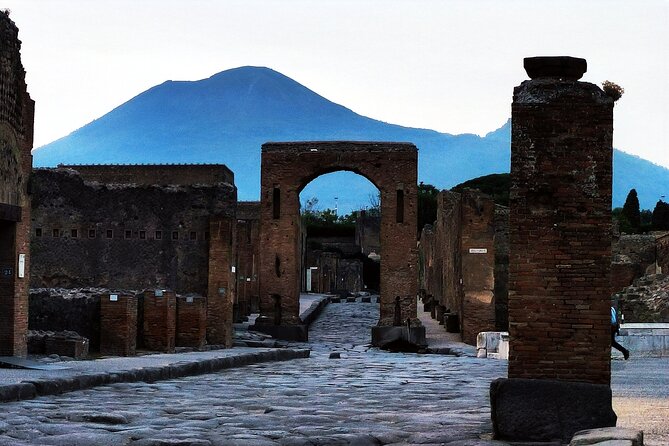
Pompeii can feel like a quiz you didn’t study for. Streets, buildings, and plastered walls all blend together fast—especially when crowds crowd your space. This is the kind of tour that makes Pompeii stop being overwhelming because the guide is an archaeologist (not just a general city guide).
In the accounts tied to this experience, the archaeologist-guide is often Francesco, and the big takeaway is how he handles real questions on the spot. That matters because Pompeii isn’t just pretty ruins. It’s a frozen moment in time, and the details you’re seeing—frescoes, building layouts, even where people were found—have meaning. An archaeologist can connect the dots quickly, so you’re not just “seeing highlights,” you’re understanding what those highlights represent.
There’s also a practical advantage: because this is private, you’re not stuck trying to follow a crowd while holding your place in a maze of streets. You’re still walking, but you’re walking with a plan.
You can also read our reviews of more private tours in Pompeii



Getting In and Staying On Time for 2 Hours
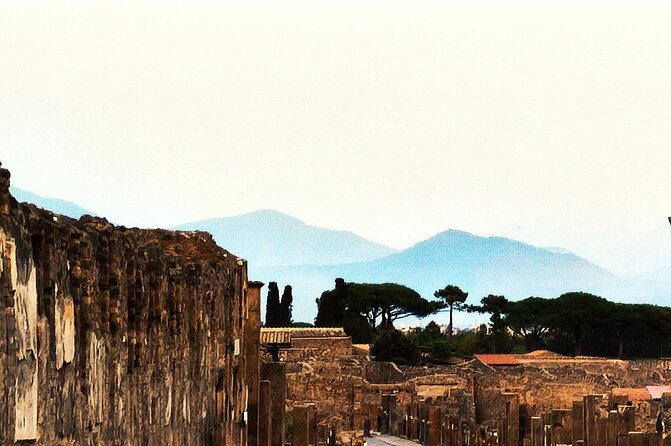
This tour runs about 2 hours, and that timeframe is part of the design. You’ll move between seven stops, each scheduled for a short segment (many are around 15 minutes). That’s a good thing if you like learning without fatigue. It can also be a reality check if you’re the type who wants to linger long and read every wall.
The tour is based at Via Roma 101, 80045 Pompei NA, Italy, and it ends back at the same meeting point. That loop helps you avoid the hassle of figuring out transit at the end.
Two more practical points you should know before you go:
- If you’re delayed by the customer, the tour may be reduced in duration. So aim to arrive early.
- Good weather is required. If it’s canceled due to poor weather, you’ll be offered another date or a full refund.
Also, this is a service-animal friendly experience, and the listing notes that most travelers can participate. If you have mobility concerns, it’s smart to ask in advance how much walking is expected for your group day.
The Route: Palestra to Necropolis in One Tight Walk
The itinerary is structured like a sprint through Pompeii’s most teachable areas: public life, entertainment, wealth and domestic decoration, evidence of the eruption, and then the outside edges of the city. Here’s what each stop is really doing for you.
Stop 1: Palestra Grande (Pompeii’s Biggest Gymnasium)
You start at the Palestra Grande, described as the largest gymnasium in Pompeii. This is a great opener because it introduces a Roman theme you’ll keep seeing across the site: community spaces. You’re not only looking at walls—you’re seeing how people trained, socialized, and passed time.
Why this stop works early in the tour: it gives you a framework. When you later see amphitheaters and private homes, you’ll start connecting “where people spent their hours” instead of treating each building like a standalone postcard.
Tradeoff: since it’s only about 15 minutes, you’ll want your questions ready. If you like deep back-and-forth, you might have to choose the most important questions for each stop.
Stop 2: Roman Amphitheater (Entertainment and Power)
Next comes the Roman Amphitheater, one of the best-preserved in its category and among the oldest of its kind. Even if you’ve seen amphitheaters elsewhere, Pompeii gives a sharper focus because the ruin is so intact and close to the daily-life story.
This stop is especially valuable if you want to understand Roman entertainment as a social tool. The amphitheater wasn’t just for spectacle; it was also about order, crowd movement, and the idea that the city organized public events for its people.
Quick caution: amphitheater areas can be crowded, and your time here is short. The benefit is that a good guide helps you focus—so you don’t spend the first half of your 2 hours just trying to position yourself for photos.
You can also read our reviews of more tours and experiences in Pompeii


Stop 3: Praedia di Giulia Felice (A Glimpse Into Private Wealth)
Then you shift into the Praedia di Giulia Felice, described as one of the largest private houses in Pompeii. “House” here doesn’t mean just a family home. These large private properties often function as a mix of spaces, wealth signals, and status display.
This stop tends to land well because it answers a key Pompeii question: who owned what, and what did success look like in physical space? If you’ve ever wondered why Roman elite life leaves such strong architectural fingerprints, this is where you start seeing it.
Tradeoff: the tour duration doesn’t allow for a slow wander. You’re there to understand what the place was designed to do.
Stop 4: House of Venus in the Shell (Frescoes That Make the Past Feel Close)
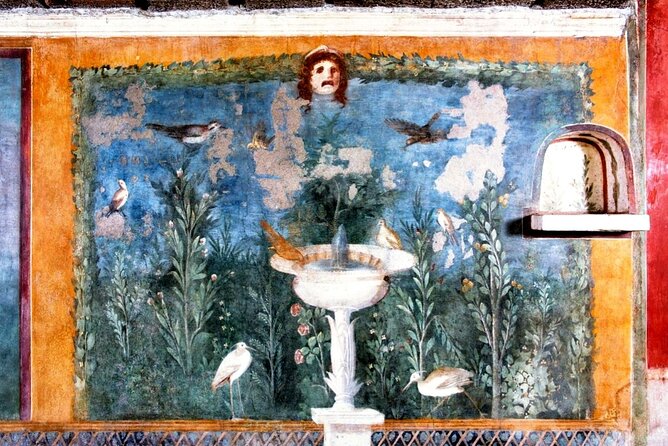
Now comes a visual moment: the frescoes in the House of Venus in the Shell. Frescoes are the kind of feature that can either impress you or overwhelm you depending on context. With an archaeologist guiding you, you’re more likely to notice the choices—what was painted, where it was placed, and what it suggests about taste and daily life.
This is also one of those stops where time feels tighter than you’d like. Fifteen minutes can be enough for the main features, but if you love wall art, you’ll be tempted to linger.
Stop 5: Casa di Ottavio Quartione (Frescoes Plus Outdoor Life)
Next is Casa di Ottavio Quartione, where you can admire magnificent frescoes and an outdoor biclinium. A biclinium matters because it points to how people ate and entertained outside the strict indoor space.
In Roman domestic life, dining wasn’t just about food. It was part of social identity. Seeing the outdoor dining area while you’re also looking at frescoes gives you a fuller picture of how art and everyday routines worked together.
Tradeoff: the tour is balanced across seven stops, so you won’t get a long “museum pace” experience here. It’s a highlights-and-explanations structure.
Stop 6: Orto dei Fuggiaschi (Where the Eruption’s Victims Were Found)
Then you reach Orto dei Fuggiaschi, where the excavations found 13 victims of the eruption. This is the stop that turns learning into something heavier. It’s not just architecture; it’s human evidence.
Why it’s valuable: it keeps Pompeii from turning into a purely aesthetic place. You get the reminder that these buildings survived because people didn’t have time to step away from their lives.
Consideration: because this stop is emotionally intense, it can feel like a lot if you’re traveling with very young kids. If your group is sensitive, decide ahead of time how you want to handle this moment.
Stop 7: Necropoli di Porta Nocera (Cemetery Life Outside the Walls)
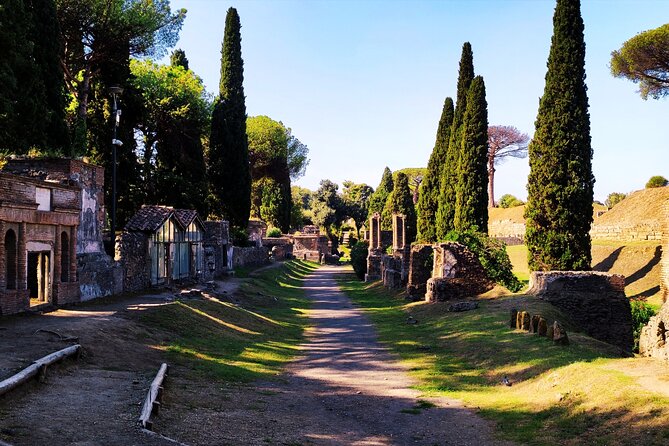
Finally, you cross the city walls for the outer area: the Necropolis of Porta Nocera, described as one of the largest cemetery areas of Roman Pompeii.
This ending is smart because it expands your Pompeii view beyond the “frozen city” mindset. Cemeteries remind you that Pompeii was also a living system: people came and went, and burial practices connected families to long-term memory.
This stop is also longer than some others: about 30 minutes, giving you a bit more time than the indoor-style stops.
Tradeoff: you’ll still be on a schedule. If you love slow exploration, this necropolis segment will make you want more time.
Tickets, Walking, and Practical Comfort
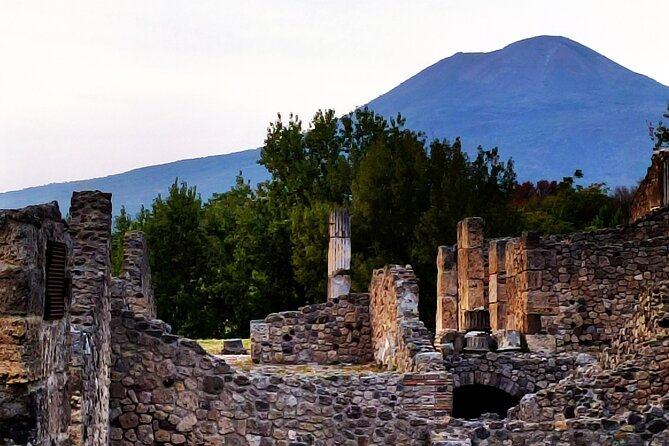
Here’s the key logistical point: entrance fee to the archaeological park isn’t included. In practice, that means you should plan for your park ticket in advance so you don’t lose precious minutes on arrival.
One helpful detail from the guide behavior you’ll see in the experience’s accounts: there are cases where the archaeologist-guide Francesco has gone out of his way to help groups manage ticket issues, even standing in line when some admission wasn’t ready. That’s not something you should count on, but it tells you the culture here is “help you make it work,” not “sorry, figure it out.”
You’ll want comfortable shoes. Pompeii isn’t a gentle stroll. Even when each stop is brief, the walking between them adds up in heat and uneven ground.
Mobile ticket is included as part of how this experience is delivered, and confirmation happens at booking. The meeting point is clearly set at Via Roma 101, and you end back there—so plan your day around staying near that area after the tour.
Price and Value: What $267.46 per Group Really Buys
The price is $267.46 per group, up to 15 people. That might sound high if you think like an individual. But think like a group.
With private tours, you’re paying for access to an expert and control over pacing. In a place like Pompeii, the value isn’t just “seeing” buildings—it’s cutting through confusion fast so you can focus on the most meaningful evidence.
This tour also does something pricing can’t show on a website: it turns the 2 hours into a structured learning path. Many visitors show up with a list of famous spots. What they often miss is what those spots reveal about Roman daily life and the eruption’s aftermath. An archaeologist-guided route helps you get more “why” per minute than self-guided wandering.
Is it worth it? If you’re the type who wants Pompeii explained (and you don’t have a full day), yes. If you want to meander, read everything, and spend lots of time photographing one area, you might prefer a longer tour or a self-paced visit.
Who This Tour Fits Best
I’d point this tour at a few traveler types:
- Families who want a short, structured Pompeii experience with a guide who can handle questions
- Small groups who don’t want to fight crowds for orientation
- Anyone who wants archaeology context, especially at the eruption-related stop
- People with limited time in Pompeii who still want the main highlights
If your group includes some people who want to move quickly and others who want more explanation, private format helps a lot. You can keep everyone together, and the guide can adjust to your questions rather than following a rigid script.
Should You Book This Tour?
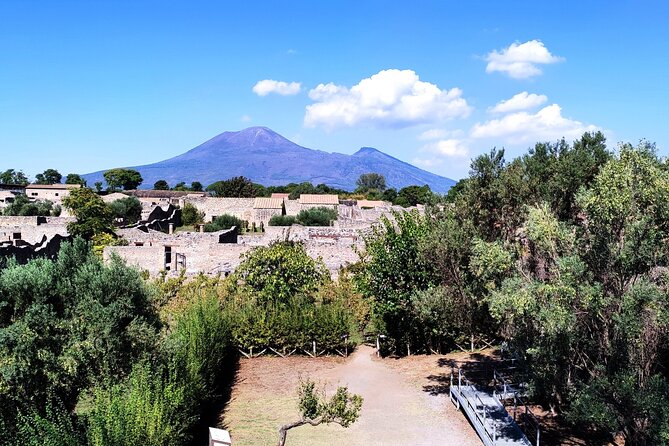
Book it if you want Pompeii in a clear, expert-guided snapshot. The combination of licensed archaeological guidance, a focused 2-hour route, and a private group format is exactly what makes this feel efficient without feeling like you’re speed-running the ruins.
Skip it (or consider a longer alternative) if you know you’ll be disappointed by short stop times. Pompeii deserves time, and a sprint can leave you wishing you had one more hour for the frescoes or the outdoor areas.
If you’re ready for a well-planned highlight tour, this is a smart way to get the most meaning out of a limited window—especially with an archaeologist like Francesco helping you see what’s actually in front of you.
FAQ
How long is the Pompeii private tour with an archaeologist?
It’s scheduled for about 2 hours.
What is the price for this tour?
The price is $267.46 per group, up to 15 people.
Is this a private tour?
Yes. It’s private, and only your group participates.
Does the tour include entrance to the archaeological park?
No. Entrance fee to the archaeological park is not included.
Where does the tour start?
It starts at Via Roma, 101, 80045 Pompei NA, Italy.
Do I need to bring anything like a ticket?
The experience uses a mobile ticket, but you still need to have the archaeological park entrance sorted separately since it’s not included.
What stops are included in the 2-hour route?
You visit Palestra Grande, the Roman Amphitheater, Praedia di Giulia Felice, the House of Venus in the Shell, Casa di Ottavio Quartione, Orto dei Fuggiaschi, and Necropoli di Porta Nocera.
What happens if I’m late to the meeting point?
If the delay is caused by the customer, the guided tour may be reduced in duration.
What if the weather is bad?
The tour requires good weather. If it’s canceled due to poor weather, you’ll be offered a different date or a full refund.