REVIEW · POMPEII
Naples: Pompeii & Herculaneum Day Trip – Small Group Tour
Book on Viator →Operated by Worldtours · Bookable on Viator
Two ruins, one well-run day in Naples. This small-group tour strings together Pompeii and Herculaneum with round-trip transport and skip-the-line entry, then adds a winery visit so the day feels more complete than a rushed museum hit. You also get a guide at each site, so the chaos of big ruins turns into something you can actually follow.
What I love most is the combination of skip-the-line tickets and two focused guided walks. One set of guides I heard about by name included Anna and Ravioni, plus others like Carmen and Paola, and the common thread was clear, human explanations rather than a fast read-and-run.
The main drawback is time: you cover only a slice of Pompeii’s scale and the whole day can feel rushed, especially in summer heat. Still, if you go in knowing it’s a highlights visit, the payoff is huge.
In This Review
- Key points at a glance
- Naples to Pompeii and Herculaneum: small-group comfort that actually helps
- Pompeii Archaeological Park: what you can realistically see in about two hours
- Herculaneum Parco Archeologico di Ercolano: why the smaller site feels easier to love
- Lunch between the ruins: the set-menu reset you’ll thank yourself for
- Winery visit and wine-tasting reality check (and the Vesuvius note)
- Price and logistics: does $160.09 feel like good value?
- What to bring and how to handle the heat and walking
- Who this Pompeii and Herculaneum tour is best for
- Should you book this Naples day trip?
- FAQ
- How long is the Naples to Pompeii and Herculaneum day trip?
- What time does the tour start?
- Is pickup in Naples included?
- Are admission tickets and skip-the-line entry included?
- How much time do we spend at Pompeii and at Herculaneum?
- Is lunch included?
- Does the tour include Mt Vesuvius crater?
- Can I cancel for a refund?
Key points at a glance
- Skip-the-line at both archaeological sites so you spend time walking, not waiting
- Two guided sections with a guide at Pompeii and a guide at Herculaneum
- Realistic time blocks (about 2 hours at Pompeii and about 1.5 to 2 hours at Herculaneum)
- Herculaneum backpack lockers and practical prep for getting around
- Lunch included if selected, often a set-menu pasta-style meal
- Wine tasting may vary by departure, so verify the tasting plan on your day
Naples to Pompeii and Herculaneum: small-group comfort that actually helps
The day starts with an 8:00 am start and round-trip transportation between Naples and the ruins. You’ll either be picked up at selected city-center meeting points or use the listed start point at Fortuna Village Pompei (Via Plinio, 80045 Pompei). Either way, the point is simple: you don’t have to wrestle with buses, schedules, and transfers before you even reach the ancient stones.
This tour also keeps the group size to a maximum of 40 people, which matters more than it sounds. In places like Pompeii, lots of people usually means lots of stopping, lots of re-grouping, and lots of wasted time. A smaller group keeps your guide moving and gives you space to ask questions when something doesn’t make sense.
I also like the practical rhythm here. The guide meets you outside the site entrance for both stops, which means you’re not wandering around guessing where the tour starts. From the way the logistics work, you can expect a fairly smooth day even if you’re not the kind of person who loves planning every minute.
One more detail that shows up in the experience: you’ll do a full day, about 8 hours total. That’s long enough to feel like a proper trip, but not long enough to fully soak up every corner of Pompeii. Treat it as a guided sprint through the most important areas, not a do-everything archaeology marathon.
You can also read our reviews of more tours and experiences in Pompeii


Pompeii Archaeological Park: what you can realistically see in about two hours
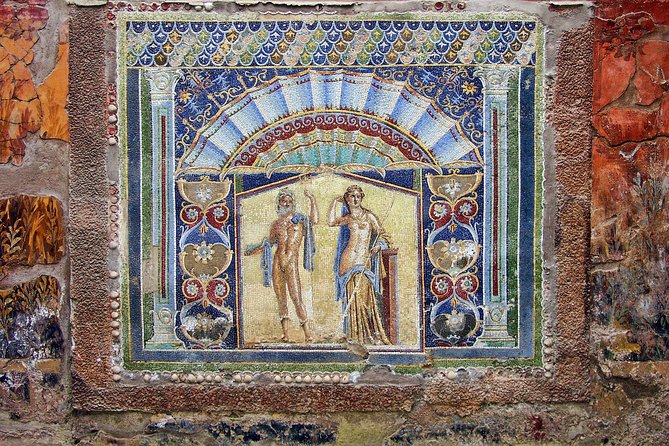
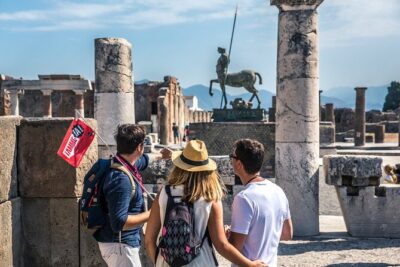
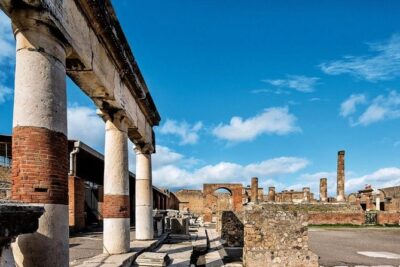
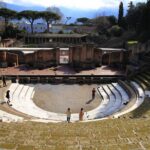
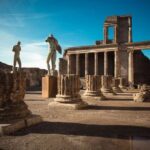
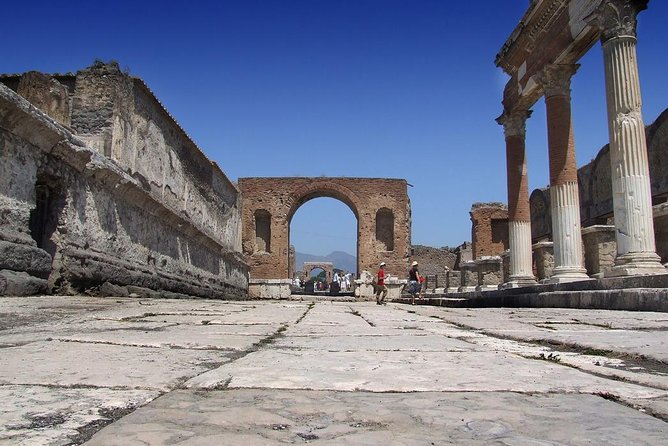
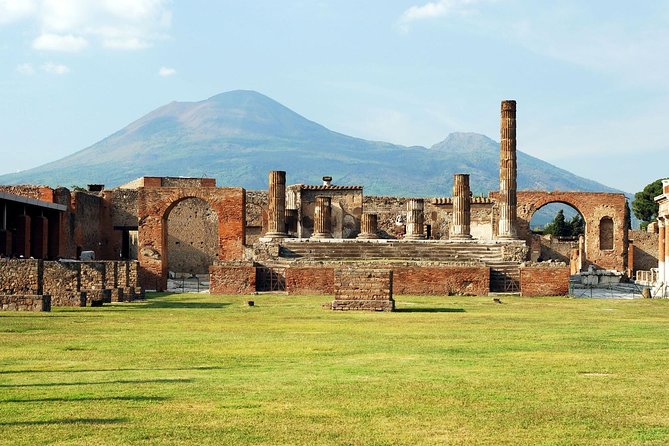
Pompeii is huge. That’s not a soft statement; it’s the entire challenge. With this tour, you get a guided walk inside the park for about 2 hours, and the guide’s job is to help you find the threads that connect the whole city.
This is where the guide quality really matters. In multiple accounts, the guides were strong at explaining what you were looking at and helping the group choose priorities. You’ll often hear language like seeing only a small fraction of Pompeii, and that’s accurate. The scale is the lesson: you’re not trying to tick off everything. You’re trying to understand the layout and hit the major highlights.
You also benefit from skip-the-line tickets. Pompeii draws major crowds, and even arriving early doesn’t always mean easy entry. Bypassing the worst lines gives your group more usable time inside, which is the difference between a “nice stroll” and an “I get it now” experience.
What to keep in mind: Pompeii’s paths and surfaces can be uneven, and you’re outside for a big chunk of the day. That means pace is not just a preference—it’s a physical reality. Even with a guide, you’ll want to slow down slightly, hydrate, and wear shoes you trust on rock and gravel. One of the smartest things you can do is accept that your 2 hours are for the big picture, not for a deep personal tour of every street.
If you want a clue that you’re being managed well, watch how the guide handles time. Guides like Anna (mentioned by name) were praised for humor and storytelling that made the ruins click. That kind of presentation helps when you know you can’t see everything, because you’re still leaving with understanding, not just photos.
Herculaneum Parco Archeologico di Ercolano: why the smaller site feels easier to love
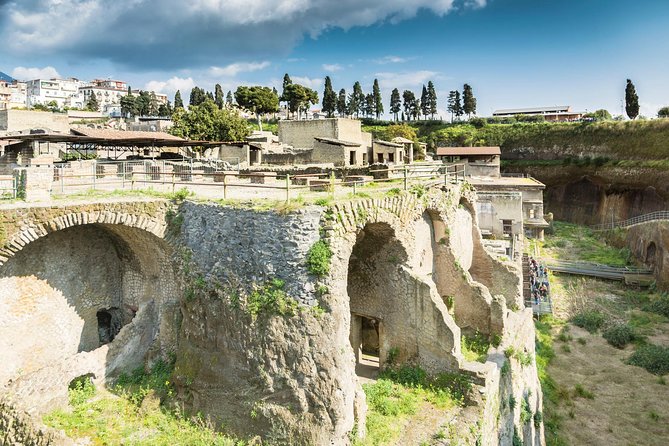
Herculaneum works like the “second chapter” of the story. The tour gives you about 1.5 hours to 2 hours inside the park, and the vibe is different from Pompeii. The entire point is to compare: you’ll walk streets and see excavated areas that feel more intimate and easier to process within limited time.
The tour guide meets you outside the entrance, then leads you through the site with an eye toward what looks different from Pompeii. That contrast is useful because it stops both places from blending together in your memory.
One practical advantage shows up in how Herculaneum is managed. Backpacks need to be placed in lockers at Herculaneum, and the site facilities are described as smaller than Pompeii’s. So before you go in, plan to travel light. A daypack is fine, but if you bring a huge bag, you’ll spend mental energy dealing with storage instead of enjoying the ruins.
Herculaneum’s time also tends to feel satisfying. Some people describe feeling like they saw what there was to see here by the end, which is exactly what you want on a one-day trip. If Pompeii sometimes feels overwhelming in your head, Herculaneum is the antidote: smaller, more focused, and easier to keep track of while you walk.
Also note the heat reality. One group described enjoying themselves even with very hot conditions, which suggests the guide pacing can handle summer well. Still, it’s wise to assume you’ll be exposed, so you’ll want sun protection and water (more on that below).
Lunch between the ruins: the set-menu reset you’ll thank yourself for
Lunch is included if you select it, and it’s served between the two ruins. In practice, this is the break that keeps the day from turning into pure survival mode. You’ll get a set menu, often described as pasta-based, with meals like spaghetti plus dessert such as tiramisu. There are also mentions of bruschetta alongside pasta and a simple, sufficient style rather than a fine-dining production.
I like this setup because it makes the timing predictable. After Pompeii’s walking, you don’t want to spend time searching for a restaurant that can handle your schedule. This tour keeps the flow moving.
Food quality reads as solid but not fancy. One comment called the lunch fairly entry level yet sufficient. That’s a fair expectation. Think of lunch as fuel and a chance to cool down, not as the culinary highlight of Naples.
There’s also a nice detail: allergy awareness. One account specifically praised how the lunch stop handled a family member’s food allergies. If you have dietary needs, that’s a good sign to ask about options when you book, but the tour has at least shown it can be attentive.
Winery visit and wine-tasting reality check (and the Vesuvius note)
After Herculaneum, the tour includes a winery visit and tasting before returning to Naples. That’s part of why the day feels more rounded than a straight ruins-only schedule.
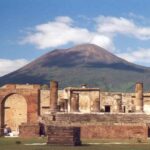
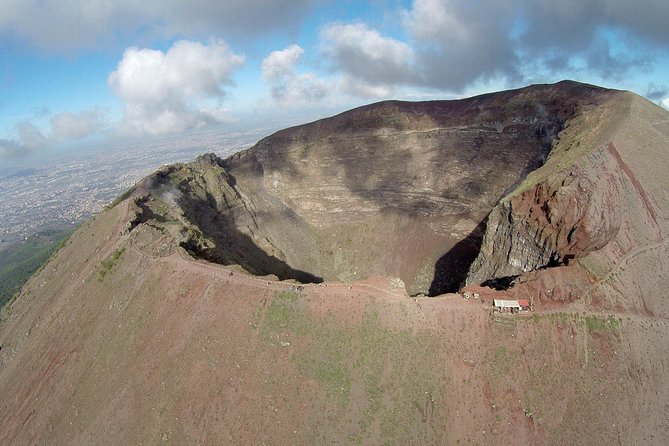
At the same time, a couple of details can confuse expectations. First, Mt Vesuvius crater is not included in the itinerary. So if you’re imagining a crater viewpoint, plan for a different day trip for that.
Second, wine tasting can be a bit inconsistent in wording or execution. One experience mentioned that the original wine testing at the base of Vesuvius was not offered or commented on. Another comment said there was no wine tasting. That doesn’t mean every departure skips tasting, but it does mean you should confirm what’s actually planned for your exact date and pick-up time.
My advice: treat the winery stop as part of the schedule and the tasting as a bonus that may or may not be the full show. If wine is a big reason you picked this tour, message ahead or check the day-of details so you’re not relying on a specific tasting format.



Price and logistics: does $160.09 feel like good value?
At $160.09 per person, this tour isn’t a budget bargain. But it does include several expensive-to-organize pieces in one bundle: round-trip transport from Naples, skip-the-line tickets for both Pompeii and Herculaneum, entrance fees for both sites, and local guides at each location. Lunch is also included if you select it.
That combination is what makes the price feel fair for a one-day plan. If you tried to assemble this on your own, you’d pay for transport between Naples and the ruins, then pay for tickets, then likely still end up using some kind of guide or audio plan to get through Pompeii’s scale. Here, the guide is built in, plus the entry lines are handled.
Also, the day is managed. You’re starting at 8:00 am, and the tour is about 8 hours total. That gives you a predictable structure, with two guided blocks and a lunch break, instead of a free-form day where you lose time to logistics.
One more “value” point: the small-group size. A larger crowd often means less time for questions and more time waiting. With a cap around 40 people, you’re more likely to get the kind of guided flow that makes ruins understandable.
So for value, I’d sum it up like this: if you want both Pompeii and Herculaneum in one day and you don’t want to play transport roulette, this price can make sense.
What to bring and how to handle the heat and walking
You’re outdoors for much of the day, and you’ll move over uneven ground. Bring walking shoes you can trust, and don’t rely on sandals unless you enjoy discomfort as a hobby. One review called out uneven surfaces specifically, which is exactly what you should prepare for.
Also bring sun gear. People recommended hats because both sights can feel exposed, and that’s believable in southern Italy. Add sunscreen and water. If you only do one thing, do the water.
For bags: Herculaneum lockers handle backpacks, but the site facilities are described as smaller. Pack so you’re not carrying a lot through bottlenecks. If you can keep your bag minimal, you’ll spend less time in storage and more time inside the ruins.
And if you care about tour language, note that experiences can vary by departure. One account mentioned one guide in English with weaker language skills, while the second segment in Spanish was great. That doesn’t tell you what your guide will be like, but it does suggest you should be ready for the possibility that language and teaching style vary between Pompeii and Herculaneum.
Who this Pompeii and Herculaneum tour is best for
You’ll love this tour if you’re the type who wants a clear plan and a guide to help you prioritize. Pompeii alone can feel overwhelming, and the tour design fixes that by giving you a structured route.
It’s also a great fit if you want two different “angles” on the Roman ruins story in one day. Pompeii’s scale and Herculaneum’s more compact feel create a natural comparison, and the guides are set up to walk you through those differences.
If you’re the kind of person who wants to read every inscription slowly and wander without pressure, you might find the time blocks feel short. The tour is a highlights visit by design, not an all-day deep study. And if wine is a major priority, you should confirm your tasting expectations since tasting details can vary.
Should you book this Naples day trip?
Book it if you want an organized, small-group way to see Pompeii and Herculaneum without dealing with public transit stress. The skip-the-line entry plus two guided sections is the key value, and the lunch break makes the day feel human instead of punishing.
Don’t book it if you’re dreaming of a full, unhurried Pompeii day or if Mt Vesuvius crater is non-negotiable for you. This tour does not include the crater, and the Pompeii coverage is intentionally limited by time.
If your goal is to get oriented fast, ask questions, and walk away with a real understanding of what you just saw, this is a strong choice.
FAQ
How long is the Naples to Pompeii and Herculaneum day trip?
The duration is about 8 hours.
What time does the tour start?
The start time is 8:00 am.
Is pickup in Naples included?
Yes. Pickup is offered from selected meeting points in the city center, and the tour starts and ends in Naples.
Are admission tickets and skip-the-line entry included?
Yes. Admission fees for Pompeii and Herculaneum are included, along with skip-the-line tickets to both archaeological sites.
How much time do we spend at Pompeii and at Herculaneum?
Pompeii is about 2 hours, and Herculaneum is about 1.5 hours to 2 hours depending on pacing.
Is lunch included?
Lunch is included only if you select it. It’s described as a set menu.
Does the tour include Mt Vesuvius crater?
No. The crater visit of Mt Vesuvius is not included.
Can I cancel for a refund?
Yes. You can cancel up to 24 hours in advance for a full refund.