REVIEW · POMPEII
The Ultimate Ruins of Pompeii and Herculaneum Private Day Trip
Book on Viator →Operated by Withlocals · Bookable on Viator
Pompeii feels different when you skip the queue. This private day trip is built around fast entry into Pompeii and a guided walkthrough that turns stones into stories. You’ll see big-name spaces like an ancient theatre, baths, a brothel area, and the forum, then switch to the quieter, less-crowded world of Herculaneum.
I especially like the value of having admission tickets included (no ticket-buying scramble) and the fact you can pick a morning or afternoon start time. One drawback to plan for: hotel pickup and drop-off aren’t included, and you’ll need to handle getting to the meeting point and the logistics of the train hop between sites.
In This Review
- Key things to know before you go
- Why this private Pompeii and Herculaneum combo works
- Entering Pompeii with preferential access (and less time lost)
- Pompeii’s “best-of” route: what you can expect in two hours
- Switching worlds: the short train hop to Herculaneum
- Herculaneum Hotel & Maison: a more intimate kind of ruin
- That possible extra stop (and why routes can vary)
- Price and logistics: what you’re paying for, and what you still manage
- Morning vs. afternoon starts: how to choose
- What kind of traveler this suits best
- Guide quality: the real differentiator
- Should you book this private Pompeii and Herculaneum day trip?
- FAQ
- How long is the Pompeii and Herculaneum private day trip?
- Where does the tour start and end?
- Are the entrance tickets included?
- Do I need to buy train tickets between Pompeii and Herculaneum?
- Can I choose a morning or afternoon departure?
- What’s the cancellation policy?
Key things to know before you go
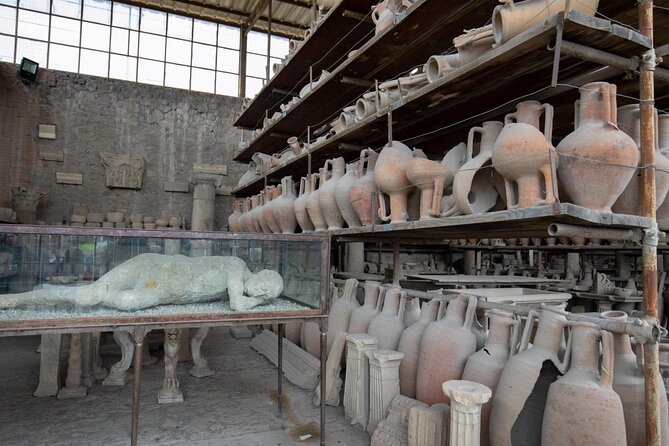
- Fast ticket line at Pompeii: Your guide helps you enter through the quicker route instead of waiting in the sun.
- Two focused guided walks: About two hours in Pompeii, then about two hours in Herculaneum.
- A train ride between towns: You’ll take a short train transfer (around 30 minutes) to reach the second ruin site.
- Tickets are included on both sites: Mobile ticket included, so day-of ticket hassle is kept low.
- You’ll likely get a strong story-driven guide: Names that show up in past groups include Dario, Barbara, Roberto, and Raffaele.
Why this private Pompeii and Herculaneum combo works
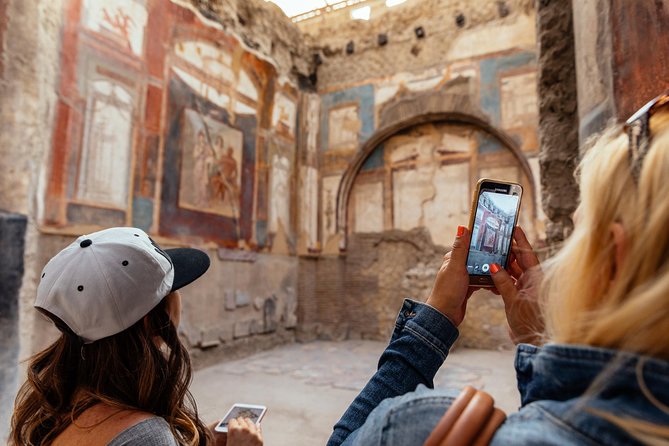
Pompeii and Herculaneum are both tied to one catastrophic moment, but the ruins don’t feel the same. Pompeii is bigger, louder, and more crowded. Herculaneum is smaller, and the ruins often feel more personal—shops, private spaces, and sightlines that make you think about everyday routines.
That’s where this trip fits. Instead of you wandering and guessing what you’re looking at, you get a licensed local guide pacing you through the site with a clear storyline. The itinerary is also structured to keep you moving through both places in a single day: Pompeii first, then a short train ride to Herculaneum.
And because it’s private, you can ask more direct questions and follow your interests. If you’re into Roman buildings, street life, or how people used baths and markets, this setup tends to pay off.
You can also read our reviews of more private tours in Pompeii



Entering Pompeii with preferential access (and less time lost)

Pompeii is the kind of place where your day can quietly disappear into waiting lines. The biggest “practical win” here is that you go in with preferential access, using the fast ticket line with your guide rather than lining up like everyone else.
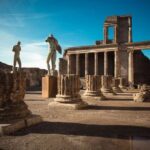
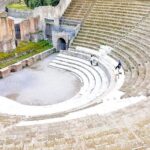
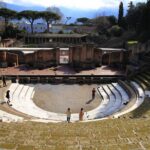
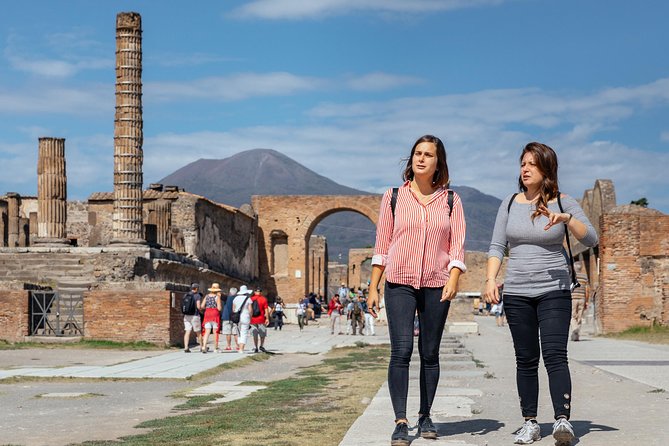
You’ll start at the Pompeii Archaeological Park, and the guide takes you through what’s most worth your time. The Pompeii portion is about two hours, and it’s not just random highlights. The walk is described as covering some of the most famous surviving areas, including:
- an ancient theatre
- baths
- a brothel area
- the forum
…and other standout spaces depending on your guide’s route.
This matters because Pompeii rewards the right sequence. If you jump around without context, it’s easy to miss how the city is laid out—street flow, public vs. private spaces, and the rhythm of daily life.
Pompeii’s “best-of” route: what you can expect in two hours
Two hours doesn’t sound long for Pompeii. But the value comes from the focus. A good guide doesn’t try to cover everything. They help you see the most meaningful parts and connect them to Roman life.
Here’s what that typically looks like in this style of tour:
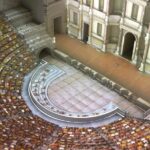
- Theatre time: You’ll get a sense of public entertainment and how crowds gathered.
- Baths and social space: You’ll likely be shown how bathing worked and why it wasn’t just about cleanliness.
- Forum and civic life: You’ll get context for politics, commerce, and the public face of the city.
- Side areas tied to daily routines: The tour wording specifically points to an ancient theatre, baths, a brothel, and the forum among other areas.
Even the best ruins in Pompeii can feel like “wow, walls” if you don’t know what they were for. The guides highlighted in past groups—Dario, Barbara, Roberto, and Raffaele—are repeatedly described as turning the period into a living story. For example, one guide (Dario) is noted for sharing period details in a way that ties the eruption of Mount Vesuvius to what people were experiencing in daily life. Another guide (Roberto) is mentioned for answering technical questions, including topics like archaeology methods and geology.
You also have an implicit advantage: because this is private, the guide can adjust pacing and attention. If you want more time at a specific space, your host can typically work with it better than a fixed group route.
Switching worlds: the short train hop to Herculaneum

After Pompeii, you’ll take a train to Herculaneum, described as about a 30-minute journey. That transfer is part of the experience, because it breaks the day into two distinct chapters.
Pompeii often feels like you’re moving through a large open-air museum. Herculaneum tends to feel more grounded, with ruins that are closer together and often easier to connect to daily life. The tour sets you up for that contrast.
Also, the Herculaneum crowds are usually lighter than Pompeii. Even if you’ve been to one before, it helps to treat Herculaneum as its own town, not just a second stop on the same ticket.
Herculaneum Hotel & Maison: a more intimate kind of ruin
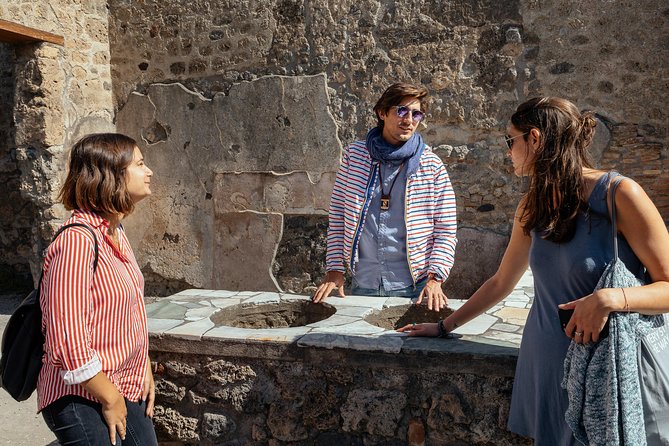
Your second guided walk is also about two hours, focused on Herculaneum’s remaining streets and buildings. The tour description points to a mix of:
- ancient stores
- private houses
- sacred sights
- and a panoramic view of the historic remains
What I like about this part is how it shifts your mental model. In Pompeii, it’s tempting to think in “monuments.” In Herculaneum, you start noticing how households were organized, where people likely worked or shopped, and how public and religious spaces showed up in the day-to-day map of the town.
This is also where a strong guide makes a difference. Roberto is described as passionate and able to answer deep questions, even from science-minded visitors. That’s the kind of hosting that turns an area like a private house or a sacred site into something you can actually picture in your head.
If you’re the type of person who likes details—how materials were used, what certain rooms were for—this is the portion of the day where you’re most likely to feel “I’m getting it.”
You can also read our reviews of more tours and experiences in Pompeii



That possible extra stop (and why routes can vary)
The plan notes that depending on your host and route, you might include an additional stop beyond the two main ones. The exact third stop isn’t specified in the info provided, so you should treat it as a potential bonus rather than a guaranteed extra.
The practical takeaway: if you want a specific must-see, message your host ahead of time (or ask on arrival). Since you’re private, they’re more able to work with preferences.
Price and logistics: what you’re paying for, and what you still manage
The price listed is $461.98 per person, for an experience lasting about 5 hours. That’s not pocket change, so you should look at what’s covered.
What the tour includes:
- Private tour
- Local guide
- Tickets for Pompeii & Herculaneum
- Mobile ticket
- English-speaking host
- Group discount option (depending on your situation)
What isn’t included:
- Hotel pickup and drop-off
That last part is important. The tour starts at Via Villa dei Misteri, 80045 Pompei NA, Italy, and it ends back at the same meeting point. So you should expect to get yourself to the start location and handle your return.
As for inter-site transportation: Herculaneum is reached by train as part of the itinerary description (around 30 minutes). You’re not told that the tour includes a packaged door-to-door transport service.
A balanced way to frame it: you’re paying for guided time, fast entry, and admission coverage. You’re not paying for a full concierge-style transport bundle from your hotel in both cities.
If you like structure and hate waiting, this private format can feel worth it. If you want everything wrapped up end-to-end—including hotel transfers—you’ll want to be extra clear on what’s included before you book.
Morning vs. afternoon starts: how to choose
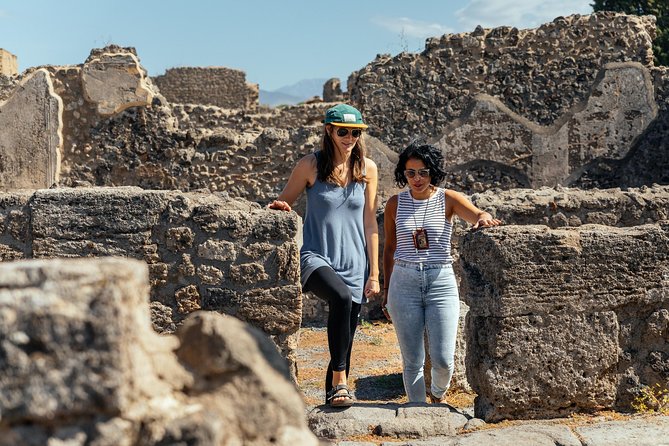
You can choose morning or afternoon start times. I’d base the choice on your priorities:
- Pick morning if you want to get Pompeii done earlier, before the day wears on.
- Pick afternoon if you’d rather move more slowly and pair the ruins with a lighter earlier plan.
Because the schedule is tight (Pompeii + train + Herculaneum in a single day), your start time affects how “comfortable” the walking feels.
Also, weather in this part of Italy can turn fast. One past group mentioned torrential rain and that the guide still had to move on due to another scheduled tour. Bring a packable rain layer so you’re not stuck making hard decisions on your feet.
What kind of traveler this suits best
This tour is a strong match if you:
- want private pacing rather than a large group shuffle
- care about context (what you’re seeing and why it matters)
- want both Pompeii and Herculaneum in one day
- prefer that tickets are handled via included admission and a mobile ticket
It may be less ideal if you:
- expect full hotel-to-hotel logistics
- hate doing any part of the transportation planning yourself
- are highly inflexible about staying in one place if weather changes quickly
Guide quality: the real differentiator
All the sites in the world won’t help if your guide is just listing facts. This experience leans into story. Past hosts mentioned names like Dario and Barbara, with praise for being helpful on meeting points and train instructions (including communication via WhatsApp for at least one guide).
That’s a practical advantage. If you’re coming from another city (say, Naples or Rome), having a guide who can help you get to the meeting point and back out—at least with clear guidance on trains—can reduce stress.
Just remember: communication support can vary by guide and by day, so don’t assume every message will arrive exactly the same way. But it’s a good sign when it shows up in the experience pattern.
Should you book this private Pompeii and Herculaneum day trip?
Book it if you want:
- fast entry to Pompeii
- a guided plan with enough time for real explanation
- tickets handled for both sites
- a private format where your questions get answered
Skip it or consider an alternative if you:
- need hotel pickup/drop-off as part of the package
- want all transport fully arranged end-to-end
- expect the tour to pause indefinitely when plans are tight (especially in bad weather)
If you’re weighing value, here’s the simplest way to think about it: you’re paying for time saved (preferential access) and for guidance that makes the ruins readable. For many people, that combination is exactly what turns a day at Pompeii and Herculaneum from seeing sights into understanding a world that vanished.
FAQ
How long is the Pompeii and Herculaneum private day trip?
It runs for about 5 hours (approx.), with around 2 hours at Pompeii and around 2 hours at Herculaneum.
Where does the tour start and end?
The tour starts at Via Villa dei Misteri, 80045 Pompei NA, Italy and ends back at the same meeting point.
Are the entrance tickets included?
Yes. Tickets for Pompeii & Herculaneum are included, and you’ll have a mobile ticket.
Do I need to buy train tickets between Pompeii and Herculaneum?
The itinerary says you’ll take a train for the transfer (about 30 minutes). The info provided does not list train tickets as separately included, so you should plan on handling the train logistics.
Can I choose a morning or afternoon departure?
Yes. You can choose from convenient morning or afternoon start times.
What’s the cancellation policy?
This experience is non-refundable and cannot be changed for any reason.