REVIEW · POMPEII
Pompeii: Exclusive Private Walking Tour with an Archaeologist
Book on Viator →Operated by Hili Travel s.r.l. · Bookable on Viator
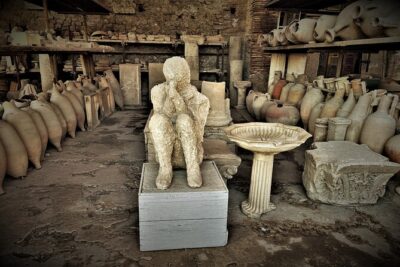
Pompeii makes more sense with a guide. This exclusive private walking tour with an archaeologist strings together the big moments of the city, from elite homes to public baths and the main square. I especially like the archaeologist-led storytelling, and I also like the small-group feel that keeps the pace human.
One watch-out: the Pompeii entry ticket is not included, and the meeting point can be a little tricky if you arrive late. Plan to start on time, and double-check the guide details before you set off from Coffee Shop Vittoria, Via Mare.
In This Review
- Key things to know before you go
- Pompeii in 2 hours: a smart route that keeps the story straight
- Casa del Menandro: the rich-house stop that sets your expectations
- Stabian Baths (Terme Stabiane): public bathing as a social system
- Lupanar: reading the erotic paintings without losing the bigger picture
- Casa del Fauno: Hellenistic grandeur in a Pompeii setting
- Teatro Grande and the rhythm of public life
- Via dell’Abbondanza and the For o: the city’s spine and center
- Guides, pacing, and what makes it feel truly private
- Price and value: $421 per group, and how to judge if it’s worth it
- Tickets and the one logistical wrinkle: Pompeii entry is separate
- Who this Pompeii tour suits best (and who should consider another option)
- Should you book this Pompeii private archaeologist tour?
- FAQ
- Is Pompeii entry included in this tour?
- How long is the private walking tour?
- What stops does the tour include?
- Is this tour private?
- What languages are offered?
- Where do we meet, and where does it end?
- How many people are in a group?
- Do I get a mobile ticket?
- What is the cancellation policy?
- Is it suitable for most travelers and are service animals allowed?
- Quick verdict
Key things to know before you go
- Private, English-speaking archaeologist guide for your group (up to 12).
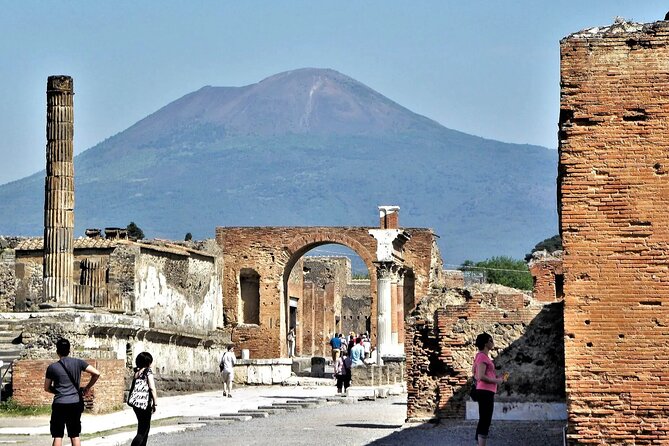
- 2 hours, 7 stops that focus on major Pompeii highlights instead of wandering randomly.
- Pompeii ticket not included even though the tour covers guided access to the planned stops.
- A route built for flow, moving from homes to baths, then into the civic and entertainment core.
- Meeting at Coffee Shop Vittoria on Via Mare, and you’ll end right back there.
Pompeii in 2 hours: a smart route that keeps the story straight
If you’ve ever toured Pompeii on your own, you know the problem: there’s so much to see that it can turn into a checklist. This tour is designed to prevent that. You’re not meant to cover every street or every house. You’re meant to understand how Pompeii worked—who lived where, how people spent time, and what the city’s center looked like.
The timing also matters. At about 2 hours, the pace is steady but not rushed. You get enough time at each stop to notice important layout and purpose, then move on before you get stuck in the weeds. It’s a great choice if Pompeii is one stop on a busier trip around Naples, Sorrento, or the Amalfi Coast.
You can also read our reviews of more walking tours in Pompeii



Casa del Menandro: the rich-house stop that sets your expectations
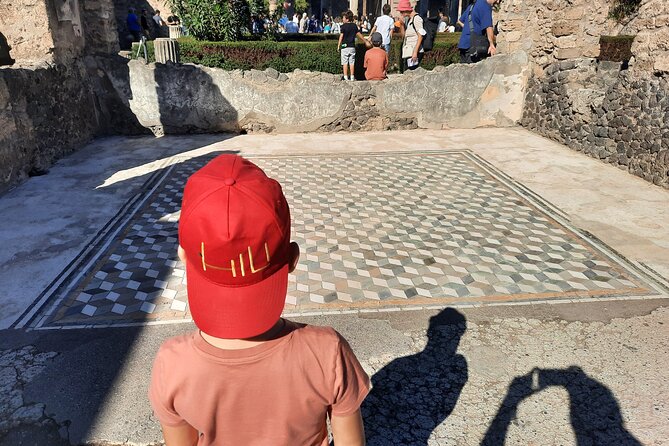
You start at the Casa del Menandro, also known as the House of Menander. This is one of Pompeii’s grand residences, praised here for its architecture, decoration, and the contents inside. It also covers a huge area—about 1,800 square metres—so it’s not a “small taste” of wealth. It’s a real glimpse into how the wealthy shaped the look and feel of a neighborhood.
What I like about starting here is that it gives you a baseline fast. After this, when you see public spaces later, you’ll better understand the contrast. You’ll also have an easier time following the archaeologist’s explanations because you’ll already know what “high status” looks like in Pompeii—space, layout, and decoration.
A practical note: this is a walking tour, so you’ll want to be ready for outdoor surfaces and uneven ground. Take it slowly at the first stop; once you’re warmed up, the rest of the route usually feels smoother.
Stabian Baths (Terme Stabiane): public bathing as a social system
Next up are the Stabian Baths, the oldest and largest of Pompeii’s five public bath complexes. Construction dates are given here to around 125 BC, which helps you frame the baths as a long-running part of city life—not just something built once and forgotten.
This is one of those stops where the archaeologist’s job really shows. Baths aren’t only about hygiene. In Roman cities, they were social hubs. They also reflect how the city invested in shared spaces. When you’re guided through a site like this, you’re better able to connect the rooms and functions to everyday routines.
One potential drawback: because public baths are a complex site type, the stop is only about 20 minutes. That’s enough to get the main idea, but it won’t replace a slow, full independent visit if you want to spend extra time comparing details.
Lupanar: reading the erotic paintings without losing the bigger picture
The Lupanar is a brothel in ancient Pompeii, and the highlight here is the erotic paintings on the walls. Even if you’re not interested in the adult subject matter, this stop is valuable because it shows how Pompeii documented daily life—commercial, private, and public—right alongside the more “respectable” buildings.
With a guide, I like how this kind of site becomes less awkward and more informative. The archaeologist can explain the context of the building type and why these kinds of messages survived. You’re not just looking at images; you’re learning what they were doing in the city’s culture.
Just be aware of the tone. This is the only stop that may feel edgy depending on your comfort level. If you’re traveling with kids or someone who’s sensitive to sexual content, it’s worth thinking ahead. The tour still spends a set amount of time here (about 30 minutes), but it’s the stop most likely to stand out for the wrong reasons for some people.
Casa del Fauno: Hellenistic grandeur in a Pompeii setting
Then you move to Casa del Fauno (House of the Faun), described here as a grand Hellenistic palace. The build period is given as the 2nd century BC, during the Samnite period around 180 BC, and it’s noted as being framed by a peristyle.
This stop works as a second “anchor” after Menander. If Casa del Menandro helps you see elite domestic life, Casa del Fauno adds another layer: different influences, different styles, and how Pompeii’s wealth didn’t look identical across every home.
The peristyle mention is key. A peristyle isn’t just a fancy architectural word. It signals a particular way of organizing space around a central outdoor area. With a guide, you can actually connect that layout to how people moved through the house and how rooms were arranged for daily use and display.
You can also read our reviews of more private tours in Pompeii





Teatro Grande and the rhythm of public life
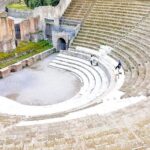
After the houses, you step into entertainment and crowds with Teatro Grande. This is identified as the biggest theatre in Pompeii.
You’ll feel the shift immediately: you’re no longer inside a private world. A theatre shows the city as a gathering place. It also helps you understand how entertainment reinforced civic identity. Even in a short stop (about 10 minutes), a guide can point out how scale and design reflect the role of public events in daily life.
If you’ve got a short attention span, don’t worry. This tour is built with quick “stop-size hits” like this. They’re designed to keep momentum without turning the whole experience into one long slog.
Via dell’Abbondanza and the For o: the city’s spine and center
Next comes Via dell’Abbondanza, described here as the best preserved street in Pompeii. This is one of those stops that’s easier to appreciate when you’ve already visited a house and a bath complex. You start to see the city as a system: residential zones connected to services and public gathering points.
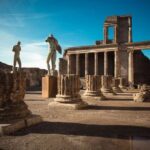
After that, you reach the Foro de Pompeya, the most important square of the city. This is the civic heart. A square is where power, commerce, and public identity collide. With an archaeologist guiding you, this isn’t just a pretty open space. It becomes a reference point for everything you’ve seen: who had access, where major activities likely centered, and how the city’s layout supported public life.
The route ends where it began, back at the meeting spot near Coffee Shop Vittoria on Via Mare. That matters because it keeps the “where am I going next?” stress low. You can stop thinking in logistics mode and start thinking in “what does it mean?” mode.
Guides, pacing, and what makes it feel truly private
This tour is exclusive private time for your group, with a maximum of 12 people. In Pompeii, that size limit changes everything. It means the archaeologist can adjust explanations to the group you have, not to some one-size-fits-all crowd.
The reviews also point to a pattern: the best sessions are funny, focused, and clear. Several guides—Leonardo, Clelia, Lello/Lilo, Ines, and Paolo—are named as standouts for making people picture Pompeii life before the eruption. Humor and charisma keep you engaged when you hit the “architecture details” part of the story.
Still, there’s one real consideration. Some people noted issues with guide-finding at the meeting point, and one comment flagged a guide tone that felt a bit strict. That’s not something you can fully predict, but you can reduce the risk by showing up early and making sure you have the right guide name and company details in hand.
Price and value: $421 per group, and how to judge if it’s worth it
The price is $421.03 per group, up to 12 people, with about 2 hours of guided time. That’s a very different pricing model than per-person tours.
Here’s how I’d think about value:
- If you’re traveling as a couple or a small group, the per-person cost rises, but you still get the archaeologist benefit and the shortcut to understanding.
- If you’re splitting the cost among 4–8 people, the math gets much easier. At that group size, you’re effectively paying for a high-quality guided “course” through Pompeii’s key areas.
- If you hate waiting in lines or getting lost inside the site, a private guide can reduce wasted time. One write-up you’re likely to hear about this kind of tour is that entry flow can feel faster than doing everything yourself, depending on timing and the guide’s approach.
Also look at the booking lead time: this one is commonly reserved about 57 days ahead on average. That’s a sign of demand, not a guarantee. But it does mean you should plan ahead if you’re going in peak season.
Tickets and the one logistical wrinkle: Pompeii entry is separate
The guide and tour are included, but the entry ticket to the archaeological area is not included. In other words, you’ll need to sort out Pompeii admission separately so you can actually walk into the planned stops with your archaeologist.
Also, this is a mobile-ticket experience. You’ll want your phone charged and ready, because that’s how your ticket gets handled.
Meeting point is clearly set: Coffee Shop Vittoria, Via Mare, 80045 Pompei NA, Italy. The tour ends back there. If you’re using public transport, it’s listed as near public transportation, which helps. You still should arrive a few minutes early to avoid the kind of confusion one person described when the guide wasn’t easy to find.
Who this Pompeii tour suits best (and who should consider another option)
I’d point you here if:
- You want an archaeologist-led visit that turns Pompeii into a story you can follow.
- You like compact routes when you only have a short window of time.
- You’re traveling with teens or adults who want context, not just photos.
- You prefer small-group attention over a bus-sized shuffle.
I’d think twice if:
- You want to spend a half-day or full day wandering at your own slow pace.
- You already have your heart set on spending lots of time inside multiple houses beyond what fits into a tight itinerary.
- Separate entry tickets are a deal-breaker for you.
The upside is that this tour is built to help you get value out of limited time. The downside is that it can’t replace a longer, self-guided day if you want to go room by room for hours.
Should you book this Pompeii private archaeologist tour?
If you want the easiest way to understand Pompeii’s big picture in about 2 hours, I think this is a strong pick. The combo of an archaeologist guide, an exclusive group size, and a route that hits houses, baths, a brothel, a major theatre, a key street, and the central square is exactly the kind of structure that makes Pompeii feel less overwhelming.
Book it if you’re willing to handle the separate entry ticket and you’ll arrive early to connect with your guide at Coffee Shop Vittoria. Skip it or look for a different format if you want long, open-ended exploration with no set stops.
FAQ
Is Pompeii entry included in this tour?
No. Entry ticket to Pompeii is not included. The tour includes the guided experience with an archaeologist.
How long is the private walking tour?
It runs for about 2 hours.
What stops does the tour include?
The tour includes Casa del Menandro, Stabian Baths (Terme Stabiane), Lupanar, Casa del Fauno, Teatro Grande, Via dell’Abbondanza, and Foro de Pompeya.
Is this tour private?
Yes. It is a private tour/activity, and only your group participates.
What languages are offered?
The tour is offered in English.
Where do we meet, and where does it end?
You start at Coffee Shop Vittoria, Via Mare, 80045 Pompei NA, Italy, and the activity ends back at the meeting point.
How many people are in a group?
The tour price is per group, up to 12 people.
Do I get a mobile ticket?
Yes. The tour includes a mobile ticket.
What is the cancellation policy?
Free cancellation is available. You can cancel up to 24 hours in advance for a full refund.
Is it suitable for most travelers and are service animals allowed?
Most travelers can participate, and service animals are allowed.
Quick verdict
If you’re the kind of traveler who wants Pompeii to make sense fast, this private archaeologist tour is a smart buy—especially if you’re splitting the group cost and you’re ready to manage Pompeii admission separately.