REVIEW · POMPEII
Pompeii Unveiled: 3-Hour Private Tour In-Depth Discovery
Book on Viator →Operated by Visita Con Me · Bookable on Viator
Three hours in Pompeii can feel like magic. You get a private in-depth route, in English, that moves from public spectacle to everyday rooms, ending at the Forum and that Vesuvius line of sight. It’s built for real looking, not just walking.
My favorite part is the stop-by-stop pacing. You see the big-name sites (amphitheatre, baths, Forum), but you also get the details that make Pompeii stick, like how the Palestra Grande preserves training life and how gardens frame some of the prettiest houses. The other big win is the guide: names like Annarosa and Mariarosa show up in past experiences, and the common thread is clear, question-friendly storytelling that fits your group’s rhythm.
The main drawback to think about is cost creep. The price is $361.23 per group (up to 8), and the Pompeii site entrance is listed as not included, even though the stops themselves mention admission tickets—so you’ll want to double-check what your voucher covers before you arrive.
In This Review
- Key highlights if you like Pompeii with a plan
- Pompeii in 3 Hours: a tight route that still feels personal
- Starting at the Roman Amphitheatre (Anfiteatro Romano) for instant context
- Palestra Grande: where exercise met everyday life
- Casa di Ottavio Quartione: a scenic Pompeian house with a garden that changes the mood
- Pompei Casa Dei Ceii: a small domus with a standout hunting scene
- Stabian Baths (Terme Stabiane): the “rest” stop that’s actually part of the story
- The Forum and the Vesuvius view: where Pompeii becomes a whole city
- Price and logistics: what you need to budget and plan
- The guide factor: why this tour feels different from a self-guided walk
- Who this Pompeii Unveiled tour is best for
- Should you book Pompeii Unveiled?
- FAQ
- How long is the Pompeii Unveiled private tour?
- How many people can be in the group?
- What language is the tour offered in?
- Where does the tour start?
- Where does the tour end?
- Is the Pompeii site entrance ticket included?
- What’s included in the tour price?
- What’s the cancellation policy?
- Is the tour suitable for most travelers?
- Is public transportation nearby?
Key highlights if you like Pompeii with a plan
- A private group of up to 8 for less waiting and more time to ask questions
- Six focused stops in ~3 hours so you feel the city without racing your feet
- Palestra Grande + charred remains displays for a memorable look at daily life
- Garden-centered houses like Casa di Ottavio Quartione and Casa dei Ceii
- Stabian Baths to change pace and read the ruins as a living routine
- Forum viewpoint with Vesuvius for photos that feel earned, not accidental
Pompeii in 3 Hours: a tight route that still feels personal
A 3-hour Pompeii tour works best when it’s organized like a guided story with stops that build on each other. This one does that: you start with the Roman amphitheatre, move into athletic training and domestic spaces, then shift to bathing before finishing at the Forum. It’s a sensible arc, and it helps you connect what you’re seeing instead of treating each ruin like a separate postcard.
The tour runs for about 3 hours with a private guide, and your group is capped at up to 8 people. That small size matters. You’re not trapped in a crowd shuffle, so you can linger for a second to look closer—then move on before you get stuck behind someone else’s slow pace.
Language is listed as English, which is great if you want explanations without translation delays. If you’re traveling with kids or multigenerational family, this length is also forgiving; it’s long enough to feel like a real visit, but short enough to keep attention from slipping.
You can also read our reviews of more private tours in Pompeii



Starting at the Roman Amphitheatre (Anfiteatro Romano) for instant context
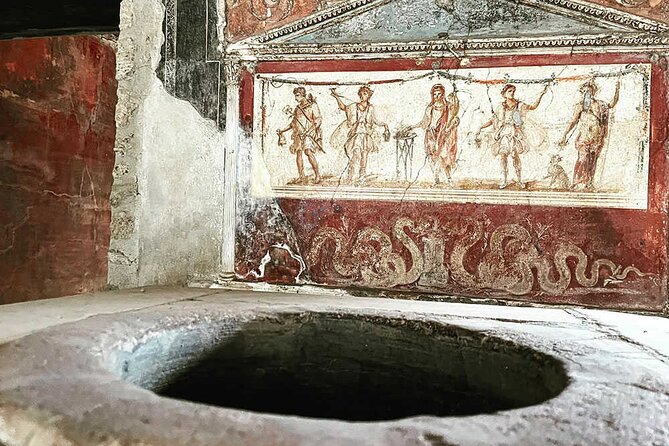
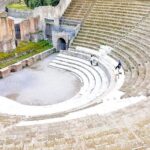
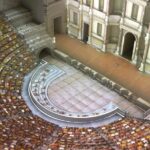
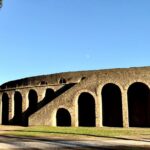
You begin at the Anfiteatro Romano, and that’s a smart first move. The amphitheatre is described as the oldest known from Roman times in this area, and it could hold up to 20,000 spectators from Pompeii and neighboring towns. Even if you’ve seen amphitheatres elsewhere, Pompeii’s one comes with a twist: you’re meeting public life right where people gathered—long before you step into homes.
This stop is also useful for orientation. Standing in a place designed for noise, crowds, and spectacle makes it easier to understand why Pompeii felt like a busy community, not just a set of rooms buried in time. A good guide will also help you notice how the space is shaped for viewing and movement, so you’re not only looking at stones—you’re picturing behavior.
One practical note: amphitheatres tend to be exposed. Bring water and plan for sun, especially if your visit time is hot. This tour allocates about 30 minutes here, so you’ll get the big ideas without losing the rest of the day to one stop.
Palestra Grande: where exercise met everyday life
Next is the Palestra Grande, the big gymnasium where ancient Pompeians trained. This is more than a pretty ruin; it’s a window into routines. The tour highlights three showcases with charred organic remains found in Pompeian houses, displayed here as part of what researchers recovered.
What I like about this stop is how it bridges the gap between public and private life. In an amphitheatre, you think about crowds. In a training gym, you think about bodies, habits, and the daily work that built health and status. The charred remains display is the kind of material that makes the story feel immediate—handled carefully, explained clearly, and framed so you understand what you’re looking at rather than just staring at shock value.
The 30-minute timing is also right. This is the sort of stop where you might want to read every label. With a guided pace, you get the key points, then you move on before the rest of Pompeii starts to feel like one long museum sprint.
Casa di Ottavio Quartione: a scenic Pompeian house with a garden that changes the mood
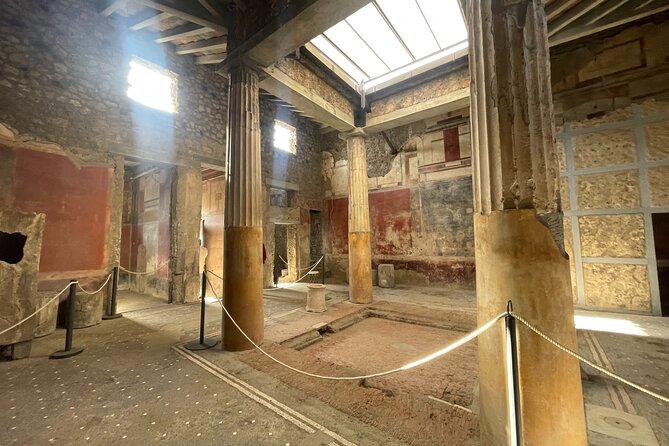
Casa di Ottavio Quartione is described as one of the most scenic houses in Pompeii, with a breathtaking garden. And honestly, a garden is a powerful contrast in Pompeii. After the hard edges of public buildings and training spaces, the home’s outdoor space gives you a different lens: light, privacy, and how people organized everyday life around living space.
This is the kind of stop where a guide earns their fee. A good explanation helps you see the house as a social map: where people gathered, where visitors would be received, and how the layout supported both work and relaxation. Since the tour keeps each house stop to about 30 minutes, you won’t get lost in details that don’t matter for your understanding. You’ll get the essentials that make this house feel like it had owners, not just walls.
If you care about design and atmosphere, this is one of your better bets. If you’re more into large-scale ruins and less into domestic architecture, you may still find this stop valuable because the garden setting makes the entire city feel less like a site and more like a lived place.
Pompei Casa Dei Ceii: a small domus with a standout hunting scene
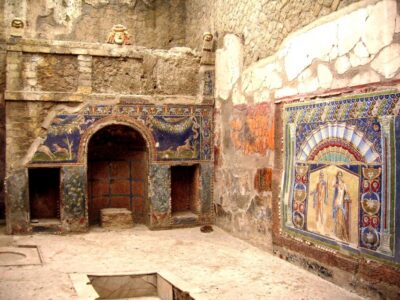
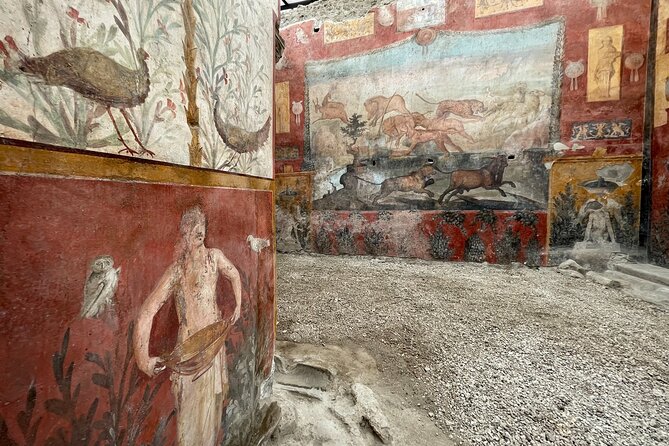
After Quartione, you head to Pompei Casa Dei Ceii. This one is described as a small but colourful Pompeian domus, with a fine hunting scene on the back wall of the garden. Even with limited time, this stop can hit hard because it gives you a clear visual theme: what people admired, what they wanted to project, and how art functioned inside home life.
Gardens in Pompeii often act like outdoor galleries. When the tour points you to a specific scene like a hunting image, you learn to read the space differently. Instead of thinking of the garden as just a place for plants, you start seeing it as part of identity-building—what you chose to display and where you chose to display it.
A potential drawback here is that some people want more time per house. With 30 minutes at this stop, you’ll get the main points and key visuals, but you won’t be able to go slow like you could on a self-paced visit. If you’re the type who loves taking photos and lingering, consider bringing a little patience: the tour is designed to keep momentum, not to freeze time at one doorway.
You can also read our reviews of more tours and experiences in Pompeii


Stabian Baths (Terme Stabiane): the “rest” stop that’s actually part of the story
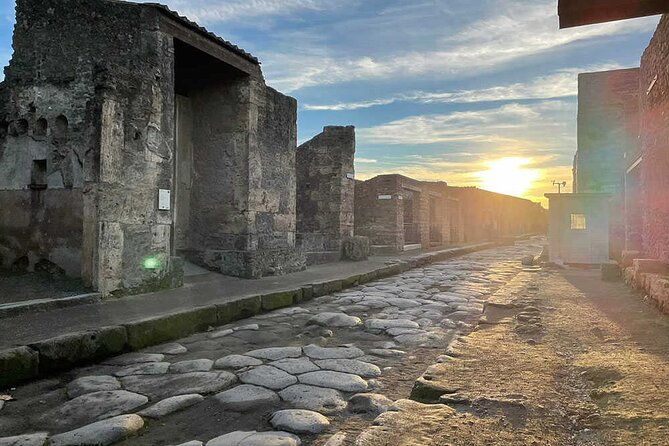
Then comes the Stabian Baths, the Terme Stabiane. This is one of those Pompeii stops that changes your brain state. You go from public spectacle and private art to a place built for bodily routines—bathing, socializing, and recovering. The tour even frames it as a must-have dip to regenerate a little, which is a nice way to think about it even though you obviously won’t be swimming in the ruins.
What you can expect is a clear explanation of how ancient baths worked and what made them important. Baths are also a great way to understand city planning. Even in a short tour, this stop tells you Pompeii wasn’t just made of homes and streets; it had institutions for relaxation and public community.
This is also a smart “mid-tour reset.” After a couple of more intense indoor or close-up architecture stops, you’ll likely feel more comfortable here just because the spaces are easier to read and the story connects to something universal: people want clean bodies and human connection.
The Forum and the Vesuvius view: where Pompeii becomes a whole city
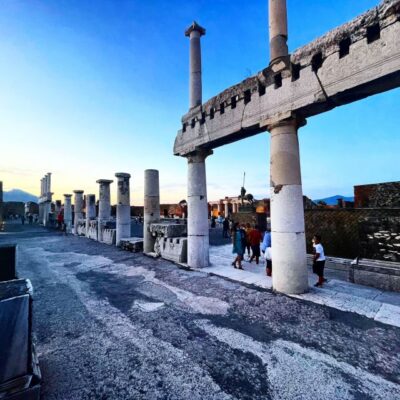
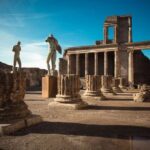
You finish at the Foro de Pompeya, described as arriving at the beating heart of the city. The Forum is exactly where you want to be at the end of a guided route because by now you’ve seen public life (amphitheatre), training life (gym), and domestic life (houses). The Forum ties those threads together as civic space—where people gathered, argued, did business, and lived in a shared rhythm.
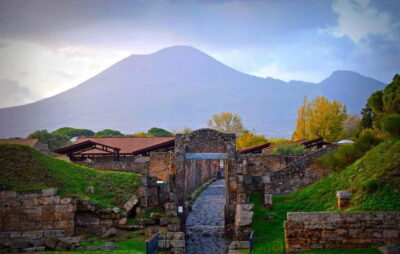
The tour also calls out the view of Vesuvius from the Forum as truly unrivalled. That matters more than it sounds. When you see the mountain looming over the city from the civic center, you stop thinking of Vesuvius as a background landmark and start understanding how the threat shaped the psychology of living nearby.
Timing can be tricky here because it’s also described as teeming with tourists. Your private guide helps you deal with that reality by pointing out what’s worth your attention first and keeping your movement efficient. You’ll spend about 30 minutes at this stop, which is a good amount to get the core experience and then exit without turning it into a long crowd-wait.
Price and logistics: what you need to budget and plan
Let’s talk money, because this is where expectations can get skewed.
You’re paying $361.23 per group (up to 8) for a private guide over about 3 hours. That price can look high if you’re imagining a ticketed attraction. But you’re buying coordination, pacing, and interpretation—plus a guide who can answer questions on the spot. For families, couples celebrating, or groups where at least one person wants real explanations, the value usually lands fast.
Now the tricky part: tickets. The tour data says ticket entrance to the Pompeii site is not included, while the stops list admission ticket included for each location. Since those two statements live side by side, don’t assume it’s automatic. When you book, double-check exactly what’s included in your confirmation. If Pompeii’s general entrance is still on you, budget for it so you don’t hit the gate with surprise costs.
Logistics also matter because the start and finish points aren’t the same:
- Start: P.zza Anfiteatro (Pompei)
- End: Foro di Pompei, via Villa dei Misteri, with the nearest exit noted as Porta Marina Inferiore
If you plan to return to the original meeting area, the tour warns you’ll need at least 15 minutes walking back. Plan your onward travel accordingly.
The guide factor: why this tour feels different from a self-guided walk
With a short Pompeii visit, the guide makes or breaks the experience. In past experiences tied to this kind of private format, guides such as Annarosa and Mariarosa are praised for being prepared, kind, and adaptable—especially for families. That adaptation shows up in real ways: adjusting explanations to what your group cares about, changing pacing so kids aren’t forced to march through stone for too long, and answering questions instead of brushing them off.
One detail I really like is the emphasis on more than facts. The strongest Pompeii guides teach you how to look: which wall details matter, how to interpret a household layout, and what the public spaces were for. You end up noticing things that you’d likely miss with a generic audio track.
Also, this is a setting where research keeps evolving. Some guides connected to this tour style are described as staying up to date with recent excavations and theories. Even if you don’t care about academic debates, you’ll benefit, because the explanations feel grounded in current interpretation rather than recycled scripts.
If you’re visiting during busy periods, the private approach also helps with crowd management in practical ways—like avoiding the worst choke points rather than letting you get trapped in a slow-moving line.
Who this Pompeii Unveiled tour is best for
This experience fits best when you want a guided Pompeii that still moves at a human pace.
- First-timers who feel overwhelmed by Pompeii’s size. The six-stop structure gives you a path and a storyline.
- Families with kids. The tour length is short enough to keep energy up, and the guide style is described as flexible with questions.
- History enthusiasts who want more than surface highlights. You’ll spend time in places like Palestra Grande and the bath complex that many people skip or rush.
- Multigenerational groups and celebrations. Past private experiences connected to this format include big birthdays, and that makes sense: a private guide turns Pompeii into a shared memory instead of a group chore.
If you’re the type who wants to spend hours soaking in every fresco and every footnote, this route might feel a bit tight. In that case, consider a longer private program. But for a first visit, or for someone with limited time in Naples, this three-hour plan is a solid sweet spot.
Should you book Pompeii Unveiled?
Book it if you want a focused private Pompeii with real explanations, and you care about seeing public life, domestic life, and civic space in one smooth loop. The route hits the amphitheatre, training gym, standout houses with gardens, Stabian Baths, and the Forum view—so you don’t end up choosing between the “important” stuff and the “I didn’t know that” stuff.
Think twice if your budget is tight or if you hate the idea of checking what tickets cover. Also, if your top goal is to linger for long stretches at every artwork and doorway, the 30-minute per stop rhythm may not match your style.
If you’re ready to trade a little freedom for clarity, this is a good value way to make Pompeii feel alive—especially with a guide who can answer questions and adapt to your group.
FAQ
How long is the Pompeii Unveiled private tour?
It’s listed as about 3 hours.
How many people can be in the group?
It’s a private tour for up to 8 people.
What language is the tour offered in?
The tour is offered in English.
Where does the tour start?
The start point is Pompei, P.zza Anfiteatro CL80045 Pompei.
Where does the tour end?
The tour ends at Foro di Pompei on Via Villa dei Misteri, and the nearest exit is Porta Marina Inferiore.
Is the Pompeii site entrance ticket included?
The tour data says ticket entrance to the Pompeii site is not included, even though admission tickets are listed for each stop—so you should confirm what your voucher includes.
What’s included in the tour price?
A private guide is included.
What’s the cancellation policy?
Free cancellation is offered, with a full refund if you cancel up to 24 hours in advance. If you cancel less than 24 hours before, the amount is not refunded.
Is the tour suitable for most travelers?
The additional info says most travelers can participate.
Is public transportation nearby?
Yes, it’s described as near public transportation.