REVIEW · POMPEII
2 Hours Private Walking Tour in Pompeii with an Archaeologist
Book on Viator →Operated by Tours with an archaeologist · Bookable on Viator
Pompeii can feel like a million stones—this 2-hour private tour gives you a map of what matters and why. I like that you get a licensed archaeologist guide with a degree in archaeology, so the explanations don’t feel like guessing. I also like that you cover both the big public sights and everyday places, including a thermopolium (Roman fast-food) and markets, not just the postcard stops. One thing to consider: the tour needs good weather, so you’ll want flexibility if conditions turn.
You’ll meet at Piazza Esedra and spend about two hours walking through key zones of the ancient city. You can pick from several tour times, and because it’s private (up to 8 people), your pace stays yours. You’ll also need to plan for the separate Pompeii admission ticket, which isn’t included.
In This Review
- Key points worth planning for
- Pompeii in 2 Hours: what this private walk actually covers
- Why an archaeologist guide matters at Pompeii
- Piazza Esedra meeting point: quick logistics, clearer start
- The big civic stops: theatres, thermal baths, the Forum, and the sacred area
- Theatres: social life in built form
- Thermal baths: comfort, routine, and social mixing
- The Forum: the main square as a living hub
- Sacred area: religion as a daily environment
- The thermopolium and bakery: Roman fast food and daily hunger
- Fabric market and houses: trade meets private space
- Fabric market: how work shaped the street
- Houses: the private side of status
- How much is it, and is it good value?
- Timing and tour times: pick what fits your day
- Weather, walking, and comfort realities
- Who should book this Pompeii archaeologist tour (and who might skip it)
- Should you book? My take on the decision
- FAQ
- How much does the Pompeii private walking tour cost?
- How long is the tour?
- Is the Pompeii entrance fee included?
- Where does the tour start and end?
- Is this tour private and what language is it in?
- When will I get confirmation after booking?
- What happens if the weather is poor?
Key points worth planning for
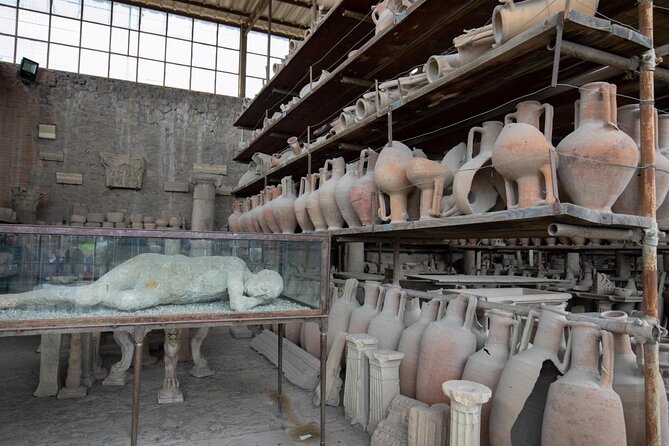
- An archaeologist guide (not just a lecturer): licensed and degree-holding, built for real on-site context.
- Public + private Rome in one loop: theatres, thermal baths, Forum, sacred area, plus homes and daily-life stops.
- Past the obvious routes: you’ll have chances to see areas described as hidden or out of the main tourist flow.
- Everyday food and trade stops: thermopolium, bakery, and fabric market themes bring the city to life.
- Private group size up to 8: easier questions, less waiting, and more focused attention.
- Pompeii entrance ticket is extra: the tour price covers the guide, not the €20 site admission.
Pompeii in 2 Hours: what this private walk actually covers
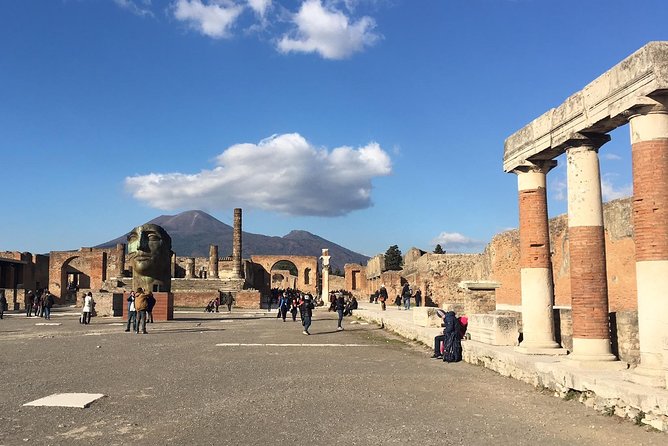
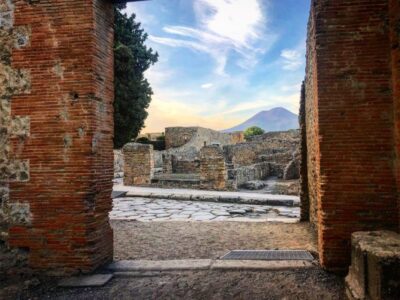
Two hours sounds short until you’re standing in Pompeii and realizing how quickly you can get lost. This tour is built around “most important areas” with enough structure to keep the big picture clear. The goal isn’t to see everything. It’s to see the right parts in a way that makes the rest of your visit click.
You’ll move through core civic spaces first—places tied to gatherings, religion, and community life. Then you’ll shift toward daily routines: eating, shopping, and living. That mix is the reason I’d choose this format over a quick overview tour.
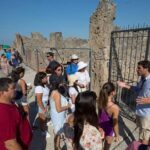
The pacing also matters. With a private group up to 8, your guide can slow down for questions or speed up when the group is ready. If you’re the type who wants to understand what you’re looking at, this is the sweet spot.
You can also read our reviews of more walking tours in Pompeii

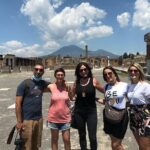

Why an archaeologist guide matters at Pompeii
Pompeii isn’t just ruins. It’s a snapshot of a town with rules, habits, and class differences—and those details can be easy to miss if you only get surface explanations.
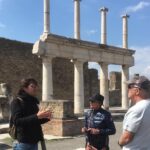
Here, the guide is a licensed professional with a degree in archaeology. That matters because Pompeii’s architecture is full of clues: how spaces were used, how people gathered, and how commerce worked. When you walk with someone trained to interpret the site, you don’t just see walls—you start seeing behavior.
I also noticed a named guide mentioned in the experience feedback: Yana. The takeaway for you is simple: this tour is the kind where the guide’s clarity is a big part of the value. If you care about “what am I actually looking at?” you’ll likely feel satisfied.
Piazza Esedra meeting point: quick logistics, clearer start
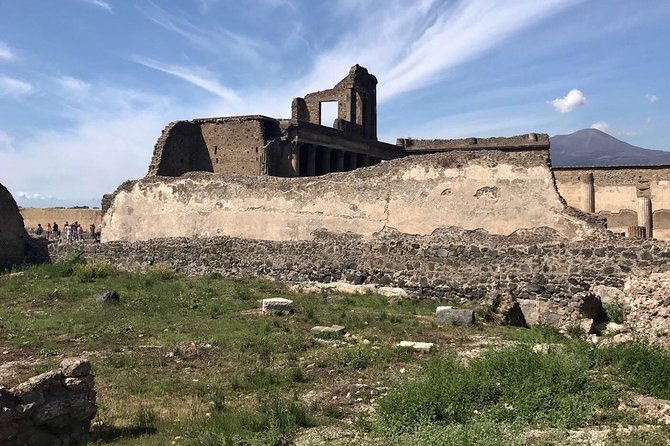
Your tour starts at Piazza Esedra, 10/13, 80045 Pompei NA, Italy and ends back at the meeting point. That round-trip structure is helpful because Pompeii can be a maze, especially if you’re pairing this with other plans.
The tour runs in English, and the ticket is described as mobile, which usually means less fuss on the day. It’s also near public transportation, so you’re not forced into a complicated routing plan.
Practical tip: arrive a bit early. Even with a simple meeting point, Pompeii days often run on “find your group” timing, not “you’ll be perfectly on time” timing. Use those minutes to settle in and scan the area around the meeting point so you get your bearings before you start walking.
The big civic stops: theatres, thermal baths, the Forum, and the sacred area
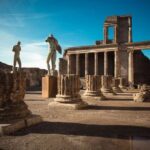
The first main block is built around the public face of Pompeii. You’ll have clear time at major landmarks like theatres, thermal baths, the Forum (main square), and a sacred area. This is where you learn how civic life functioned—who went where, and what those spaces meant.
Theatres: social life in built form
A theatre isn’t only entertainment. In a place like Pompeii, it’s a public gathering tool. Watching how Romans used built spaces for performance helps you understand how community identity worked.
You can also read our reviews of more private tours in Pompeii





Thermal baths: comfort, routine, and social mixing
Thermal baths show you the daily rhythms of cleanliness and social time. You’ll see why baths were more than bathing rooms. They were places where people spent time and interacted as part of routine life.
The Forum: the main square as a living hub
The Forum is the center of civic identity. It’s where public decisions, social movement, and status show up through location and layout. When you understand the Forum’s role, the rest of Pompeii feels less random.
Sacred area: religion as a daily environment
You’ll also investigate a sacred area. That’s important because religion in ancient Roman towns wasn’t locked into a single building and forgotten. It was part of how the city worked.
What you should like about this section: you’re not just hopping between famous stops—you’re connecting them into a story about public life.
Possible drawback: if you’ve already studied Pompeii heavily and want only the hardest-to-find corners, you might still want more time than two hours.
The thermopolium and bakery: Roman fast food and daily hunger
After the main public spaces, the tour moves into places that feel closer to real life: a thermopolium (Roman fast-food) and a bakery.
This is one of the most valuable parts of the tour because it reframes Pompeii as a working town. When you look at a thermopolium, you start picturing meals grabbed quickly, not feasts staged for formal occasions. The bakery reinforces that point: you’re seeing the infrastructure behind everyday eating.
And this isn’t a vague “imagine food here” moment. The tour is set up to help you understand the function of these spaces, so you can connect them to the broader city economy you see elsewhere on the route.
If you like travel that feels practical and human—not just impressive—this is the section where Pompeii becomes personal.
Fabric market and houses: trade meets private space
Next comes the angle that turns Pompeii from ruins into a city: trade and living patterns.
You’ll investigate a fabric market, plus houses. That combination matters because it shows the difference between public commercial activity and private domestic life. In other words: you can see how money and goods moved through the city, then how families lived with the results.
Fabric market: how work shaped the street
Markets aren’t only places to buy. They also signal what kinds of labor mattered. Seeing a fabric market theme helps you imagine production and commerce as part of daily routine, not distant “business.”
Houses: the private side of status
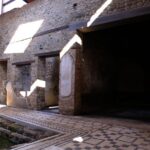
House visits help you understand how domestic space worked. Even without going deep into every architectural term, you’ll be able to read the idea that not everyone lived the same way, and that living spaces communicated social position.
For me, this is where the tour’s “private building” emphasis becomes a real win. You’re not stuck only in public monuments. You’re learning about the everyday machinery of Pompeii.
How much is it, and is it good value?
The price is $336.43 per group (up to 8 people), for about 2 hours. That pricing structure changes everything about value.
Here’s the simple math you can use:
- If you bring a full group of 8, you’re roughly at $42 per person for the guided portion.
- If it’s just 2 people, you’re closer to $168 per person for the guided portion.
But remember: Pompeii admission is not included. You’ll need €20.00 per person for the Pompeii Archaeological Park entrance ticket.
So is it a good deal? It depends on your group:
- Great value if you’re traveling as a small group that can fill up the private quota.
- Less of a bargain if you’re a couple and would rather pay less per person and just self-guide.
The private factor is the key justification. In two hours, an archaeologist guide can save you time you’d otherwise waste figuring out what you’re looking at. If you hate wandering without direction, this format usually pays off.
Timing and tour times: pick what fits your day
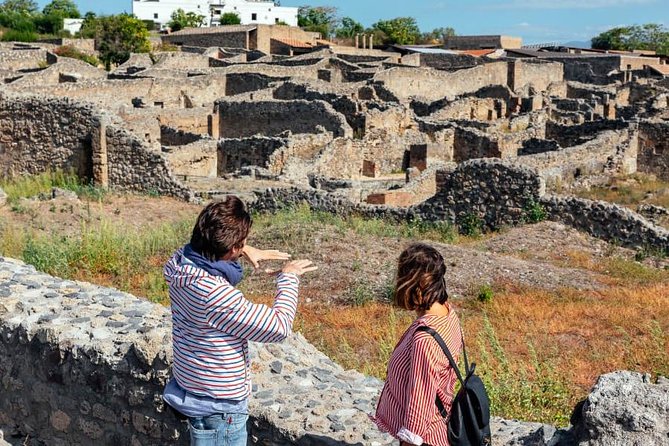
The tour offers several times so you can match your schedule. Booked on average about 7 days in advance, it’s not something you should leave to the last minute if you want the exact slot you prefer.
Confirmation is typically received within 48 hours, subject to availability. That gives you a buffer for planning, but it still means you should book with enough lead time.
A small planning note: Pompeii changes through the day, and crowds can also change your experience. Since this tour is short, choosing a time when you feel comfortable walking helps you get the most out of those key stops.
Weather, walking, and comfort realities
This experience requires good weather. If it gets canceled due to poor weather, you’ll be offered a different date or a full refund. That’s the risk with a compact walking tour: you can’t stretch it indoors.
The good part: it’s designed for most travelers to participate, and it allows service animals. It’s also described as near public transportation, so you’re less likely to need a complicated private transfer.
My practical advice: treat this as a “walk-first” activity. You’ll do best if you’re ready to stand and move for the full session without needing frequent long breaks.
Who should book this Pompeii archaeologist tour (and who might skip it)
Book this if:
- You want a structured Pompeii visit in only 2 hours.
- You care about how Romans lived day to day, not only the famous monuments.
- You like asking questions and want a guide who can respond in real time.
- You’re traveling with up to 8 people and can split the group cost.
You might skip it if:
- You’re looking to spend half a day or more wandering without any guide structure.
- You already know Pompeii well and feel ready to explore independently at length.
If you’re a first-timer who wants to leave with a clear sense of the city’s big ideas—public life, private life, and everyday food and trade—this tour fits like a glove.
Should you book? My take on the decision
I’d book this private Pompeii archaeologist walking tour if you want understanding in a short time. The combination of major public spaces—theatres, thermal baths, Forum, sacred area—plus everyday stops like the thermopolium, bakery, fabric market, and houses is a smart way to see more than monuments. You’re not just collecting sights; you’re building a picture of Roman routines.
One caution: factor in the separate €20 entrance fee and the weather requirement. If you’re flexible and you plan around a likely good day, this is the kind of tour that makes Pompeii feel organized and meaningful instead of overwhelming.
If you’re traveling with 4+ people, the value jumps fast because you’re paying a group rate for a genuinely expert guide.
FAQ
How much does the Pompeii private walking tour cost?
It costs $336.43 per group for up to 8 people.
How long is the tour?
The duration is about 2 hours.
Is the Pompeii entrance fee included?
No. The Pompeii Archaeological Park entrance ticket is not included and costs €20.00 per person.
Where does the tour start and end?
The tour starts at Piazza Esedra, 10/13, 80045 Pompei NA, Italy and ends back at the same meeting point.
Is this tour private and what language is it in?
Yes, it’s private. Only your group participates, and it’s offered in English.
When will I get confirmation after booking?
Confirmation is received within 48 hours of booking, subject to availability.
What happens if the weather is poor?
The experience requires good weather. If it’s canceled due to poor weather, you’ll be offered a different date or a full refund.