REVIEW · POMPEI CAMPANIA
Pompeii and Oplontis: Small Group Tour with an Archaeologist
Book on GetYourGuide →Operated by Askos Tours · Bookable on GetYourGuide
Two Roman worlds, one fast tour. This small-group outing pairs Pompeii with Oplontis, led by an archaeologist guide who helps you read the ruins like a story instead of a pile of stones.
I especially like the way the Pompeii portion focuses on the western highlights, with about two hours to take in major public spaces and notable houses. You’ll also cover Oplontis afterward, where the tone shifts from city streets to elite villa luxury.
One thing to plan for: the tour is not suitable for people with mobility impairments or wheelchair users, and the walking is part of the experience. Also, there’s been at least one instance of the Oplontis segment being canceled shortly before departure, so it’s smart to keep your schedule flexible.
In This Review
- Key points before you go
- Why Pompeii and Oplontis together makes sense
- Meeting at Porta Marina Superiore (and what to look for)
- Pompeii on an archaeologist’s pace: western highlights that explain daily life
- The Forum and Foro Civile: where the city ran on meetings and movement
- Temple of Apollo: religion in stone and street-level scale
- Basilica and theatres: public building energy, even after the collapse
- House of Menander: a home with character (not just a concept)
- Forum Baths and Terme Stabiane: comfort, not just sightseeing
- A short break, then the transfer to Oplontis
- Oplontis and the Villa of Poppea: elite life with frescoes and scale
- How the timing and group size affect your experience
- Skip-the-line access: where the value really shows
- Practical expectations: what you should know before you go
- What made the experience stand out in real feedback
- Who should book this tour (and who should skip it)
- So, should you book Pompeii and Oplontis with an archaeologist?
- FAQ
- How long is the Pompeii and Oplontis small-group tour?
- Where do you meet the tour guide?
- Is there a skip-the-line option for Pompeii?
- How much time do you spend at Pompeii?
- How much time do you spend at Oplontis?
- Is transportation included between Pompeii and Oplontis?
- What language is the live tour guide speaking?
- Are headsets included?
- Are meals or drinks included?
- Is the tour suitable for wheelchair users or people with mobility impairments?
Key points before you go
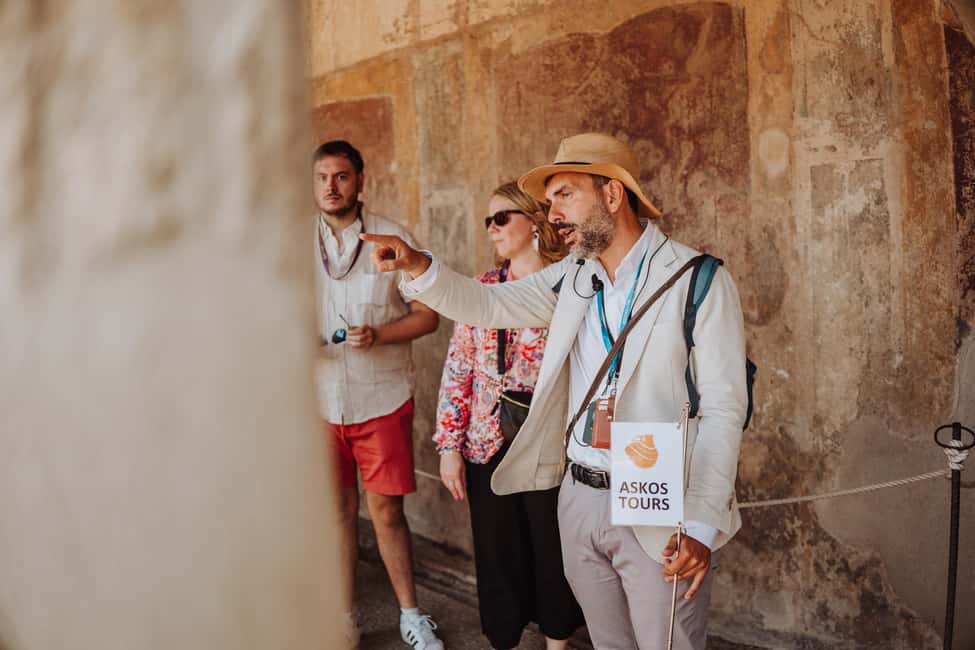
- Archaeologist-led commentary that stays anchored to what you’re actually seeing
- Skip-the-line access for Pompeii and tickets for Oplontis, so less time stuck at entrances
- Headsets included, which really helps when a group stops often for questions
- Pompeii focus on the Forum and major buildings in the western area
- Oplontis time centered on the Villa of Poppea and its frescoes
- Circumvesuviana one-way train included to link Pompeii to Torre Annunziata
Why Pompeii and Oplontis together makes sense
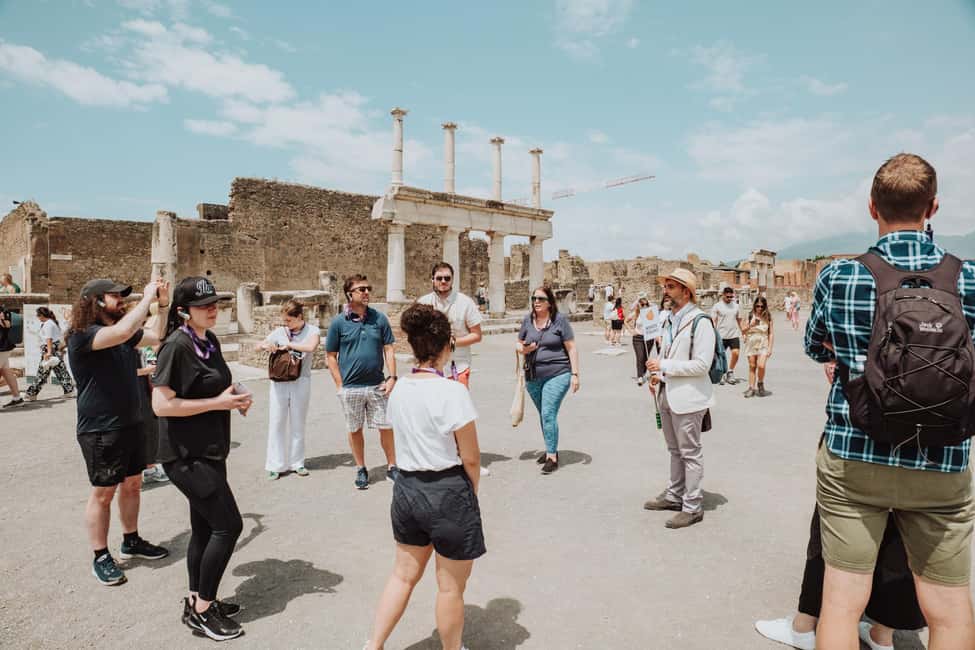
Pompeii is the headline act, but Oplontis often feels more intimate. When you connect them on the same day, you get an instant contrast between a crowded city and the seaside life of wealthy Romans nearby.
I like how this format doesn’t treat Pompeii as one big blur of stops. You spend dedicated time in key areas, then you switch gears for a different kind of Roman world at Oplontis, still within the same UNESCO day.
You can also read our reviews of more tours and experiences in Pompei Campania.



Meeting at Porta Marina Superiore (and what to look for)
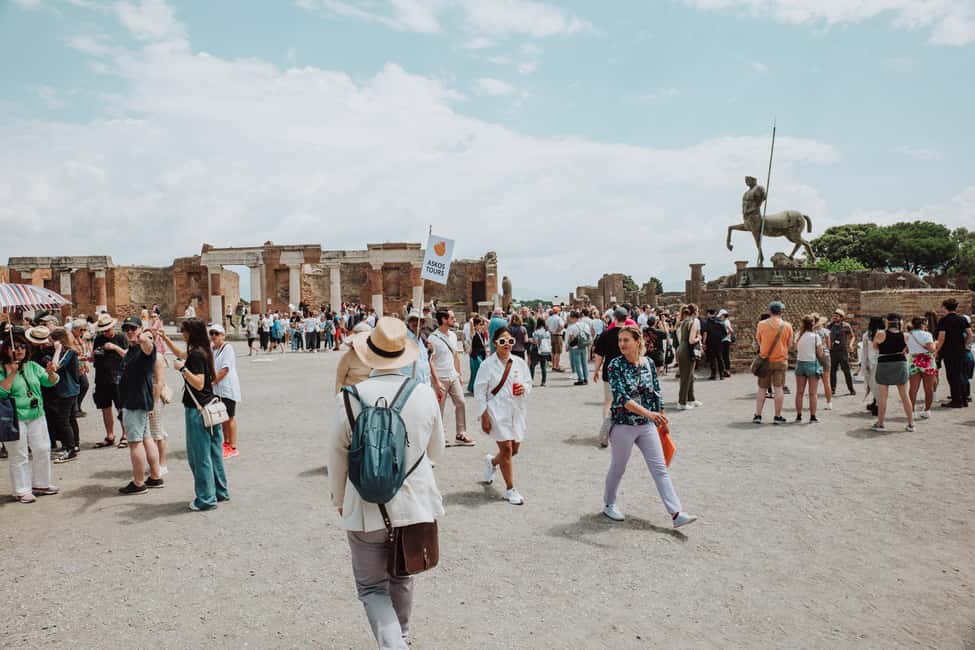
The meeting point is at Porta Marina Superiore, the main entrance of the Pompeii ruins, opposite the restaurant Hortus. The guide will be holding an ASKOS TOURS sign so you can spot them quickly.
This matters more than it sounds. Pompeii is large, and early minutes are when you want to get your bearings fast—before the crowds and the maze of entrances start to feel like a test.
Pompeii on an archaeologist’s pace: western highlights that explain daily life
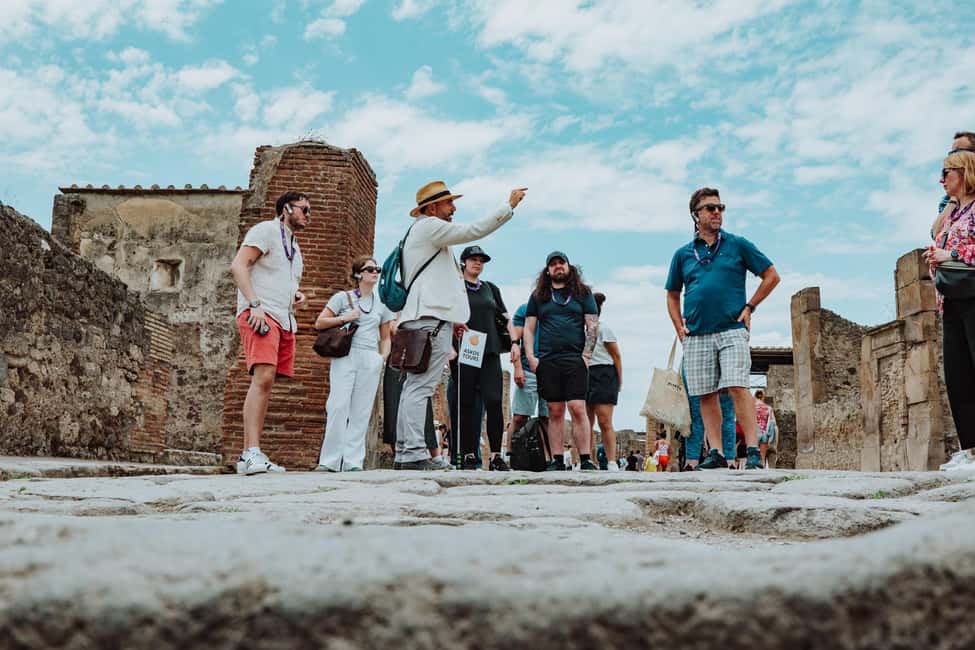
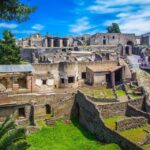
You start at Porta Marina Superiore and spend about two hours exploring Pompeii’s western area with your archaeologist guide. The point isn’t just to name buildings—it’s to show how public spaces, religion, work, and private life fit together in one city.
The Forum and Foro Civile: where the city ran on meetings and movement
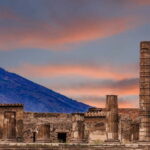
You’ll hit the Forum, the heart of Pompeian public life. It’s the kind of place where you can almost imagine announcements, transactions, and arguments spilling out of everyday rhythm.
Closely related is the Foro Civile (Forum) stop. Here, I like that your guide can point out how these spaces weren’t decorative. They were functional, and that makes the ruins feel purposeful rather than frozen.
Temple of Apollo: religion in stone and street-level scale
Next comes the Temple of Apollo. Even if you don’t know the details of Roman cults, you can read the layout and understand how worship shaped the city’s calendar and civic pride.
At this stage, the archaeologist style pays off. Instead of giving generic facts, the guide ties what you see to why Romans built in the first place: power, belief, and community.
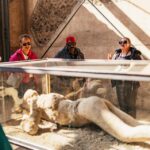

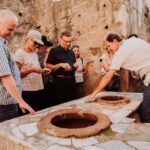
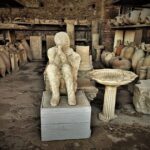
Basilica and theatres: public building energy, even after the collapse
The Basilica is a strong mid-tour anchor. In Roman towns, basilicas weren’t just about grandeur—they were where legal and business life happened.
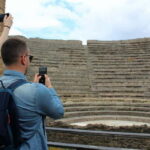
Then you’ll work your way toward the Large Theatre. The scale tells you a lot. A theatre wasn’t only for entertainment; it was also a social machine where people gathered and a shared culture took shape.
House of Menander: a home with character (not just a concept)
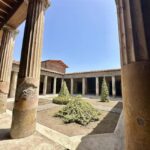
One of the most memorable parts of this tour is the House of Menander. It’s a house stop that helps you shift from public Pompeii to private Pompeii.
When houses like this are shown with a guide, you start noticing how art and daily routines connect—how the décor reflects status and how rooms were used.
Forum Baths and Terme Stabiane: comfort, not just sightseeing
Later, you’ll visit Forum Baths and Terme Stabiane. Bathrooms and bath complexes can sound like a break from the “big stuff,” but I think they’re some of the most revealing ruins.
Baths show a lot about what people valued: cleanliness rituals, social time, and access to leisure infrastructure. In other words, it’s where Roman life got physical.
A short break, then the transfer to Oplontis
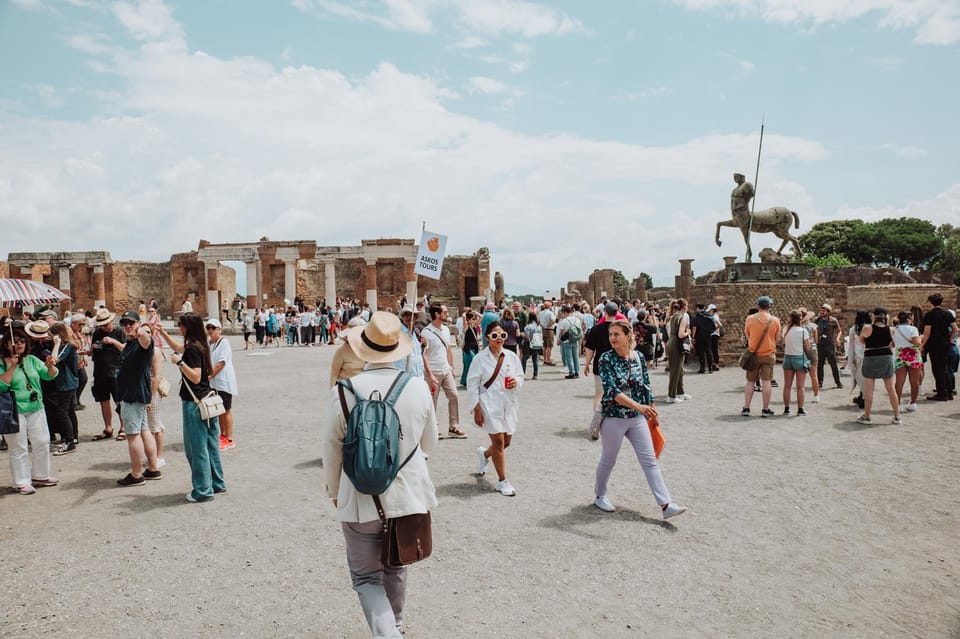
After Pompeii, you’ll have a 30-minute break. It’s a practical reset before the next site, and it’s also useful for hydration and snacks since meals aren’t included.
Then you move on to the Oplontis side via a short transfer and the provided Circumvesuviana one-way train ticket from Pompeii to Torre Annunziata. Expect about 15 minutes for the train portion as part of the schedule.
This “city to seaside villa” transition is quick. That’s great if you want two UNESCO sites in one day, but it also means you’ll want comfortable shoes and an easy mindset about moving at a steady pace.
Oplontis and the Villa of Poppea: elite life with frescoes and scale
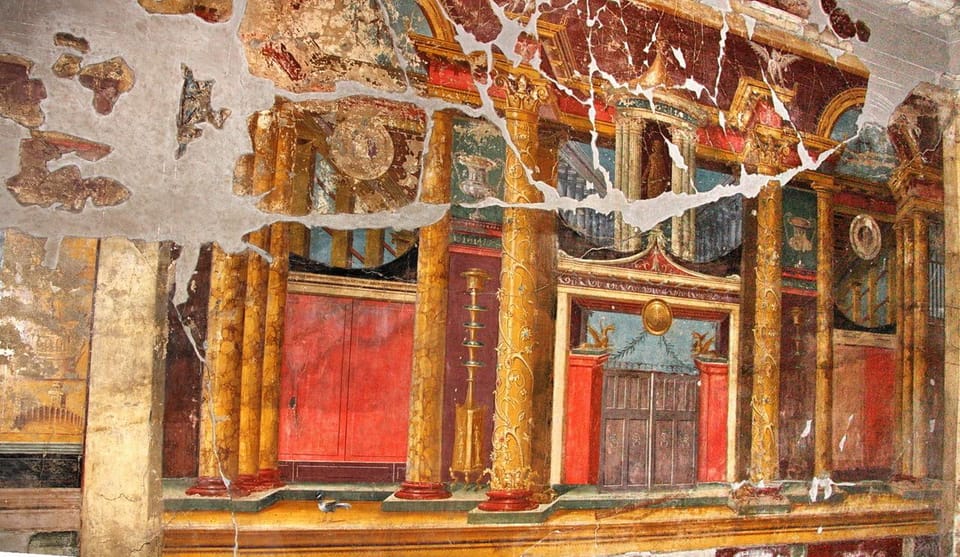
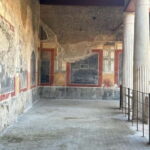
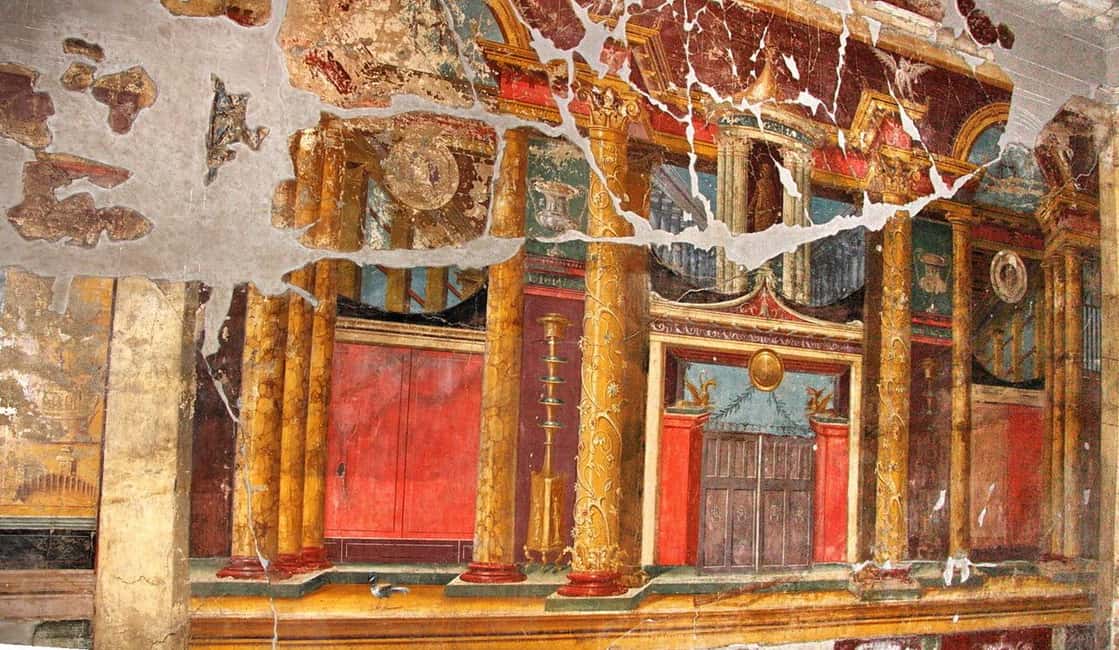
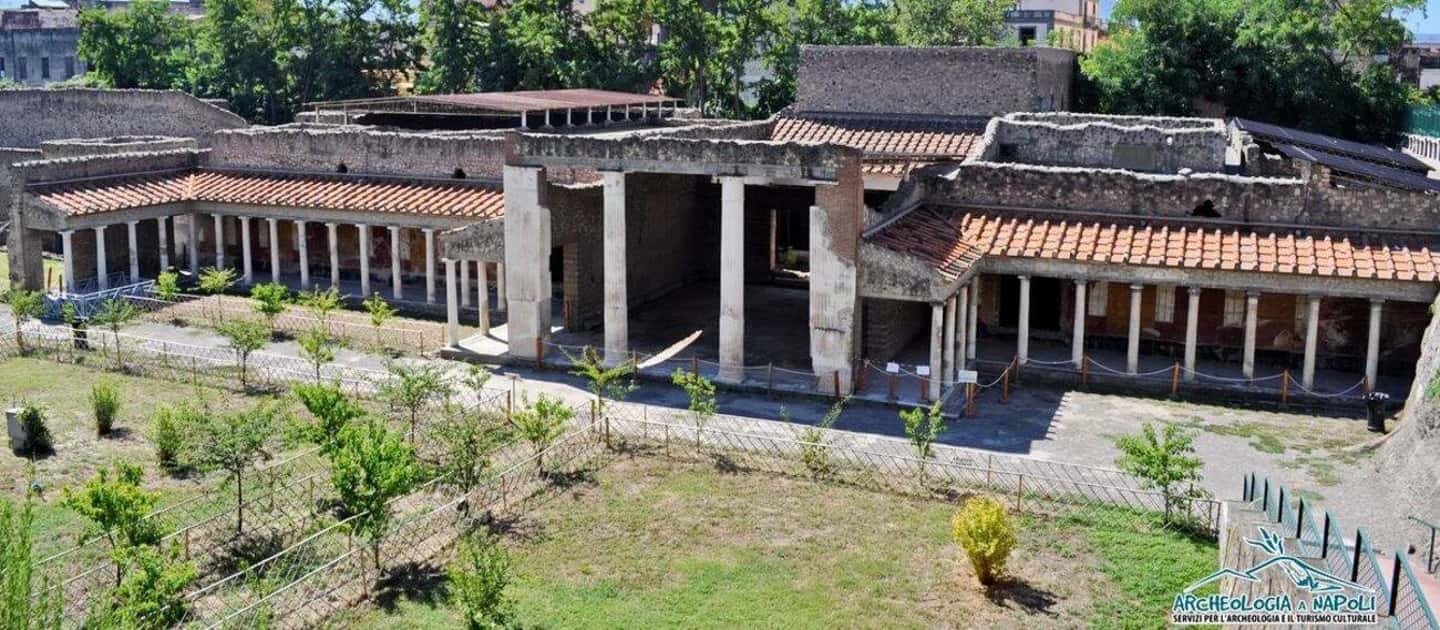
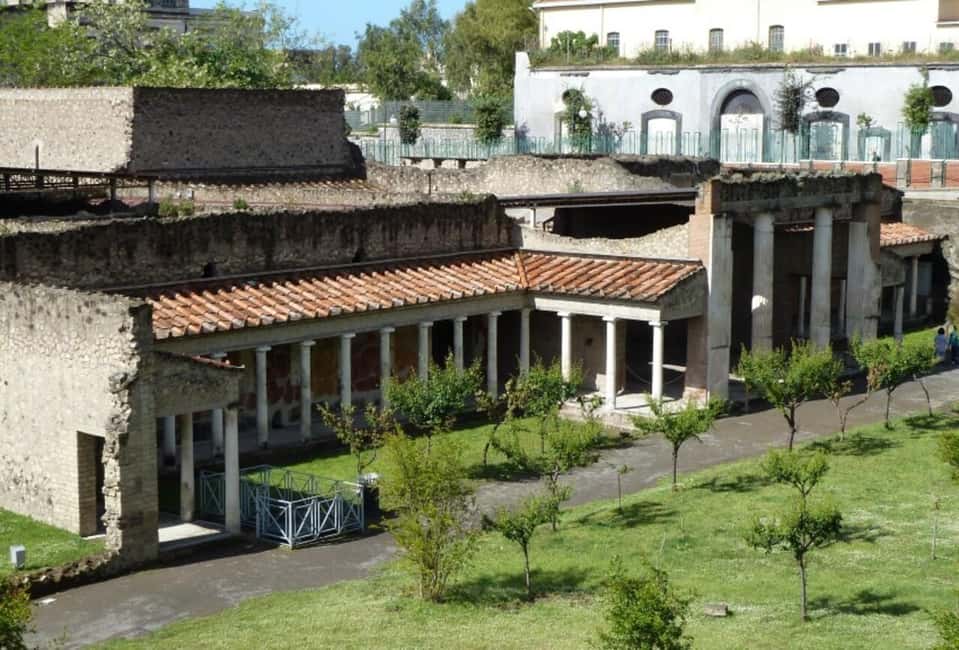
At Oplontis, you spend about 1.5 hours at Scavi di Oplontis – Villa Poppea. If Pompeii feels like a city snapshot, Oplontis feels like a statement—especially through its grand architecture and well-known fresco work.
The Villa of Poppea is often summarized as luxurious, but I like seeing it on the ground. You can sense hierarchy in the layout: where people would gather, how spaces were designed for display, and how art functioned as social branding.
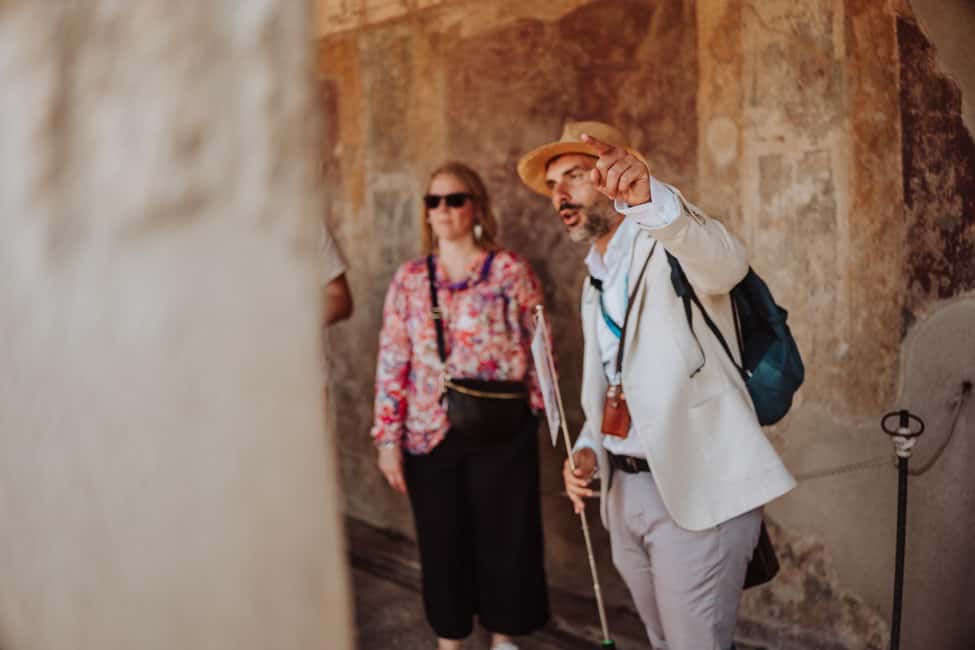
The archaeologist guide’s role here is key. Instead of just telling you the villa was fancy, the guide helps connect details to what elite Romans expected from a residence: comfort, visual impact, and control over the environment.
How the timing and group size affect your experience
This is a 4.5-hour tour, and it runs with a small group. That matters because Pompeii and Oplontis are both crowded, complex, and easy to wander in without context.
The structure is also smart: around two hours in Pompeii, then 1.5 hours in Oplontis. You’re not rushing through every corner of both sites, but you also aren’t stuck for half a day in one location.
You’ll also have headsets. I’m a fan because it prevents that classic problem of small groups getting stretched out. When you’re moving and stopping frequently, hearing your guide’s explanation makes the stops feel earned.
Skip-the-line access: where the value really shows
With archaeological sites, the ticket line can steal the best part of your energy. This tour includes skip-the-line access for Pompeii (using the Pompeii express entry) and tickets for Oplontis, which translates to time you can spend looking instead of waiting.
At $105 per person for a 4.5-hour guided archaeologist-led experience, the real value isn’t just the price tag—it’s the combination:
- You get expert commentary instead of a self-guided scramble
- You lose less time to entrance delays
- You receive headsets to keep the group experience coherent
If you’re choosing between a cheaper option and this one, ask yourself whether you want to “see ruins” or “understand ruins.” This format is built for understanding.
Practical expectations: what you should know before you go
This tour is Italian language only, and it includes a live archaeologist guide. If you don’t speak Italian, you might still follow along with the visual cues, but the full payoff comes when you can catch the guide’s explanations.
You should also know that it isn’t suitable for people with mobility impairments or wheelchair users. Pompeii in particular involves uneven ground and a lot of walking, and the tour format is built around moving between specific points.
Meals and drinks aren’t included. Plan on buying something near the 30-minute break if you need it.
What made the experience stand out in real feedback
The most praised element is the guide’s approach—good rhythm and attentiveness to questions. That’s exactly what I’d want at Pompeii, where it’s easy to feel rushed or overwhelmed.
Another key positive: the pace feels controlled enough to keep you oriented instead of sprinting from stop to stop. When you add headsets and a small group size, that “stay with the guide” feeling becomes real.
One caution that shows up in documented experience: Oplontis can be affected by last-minute operational changes. In at least one case, the Oplontis portion was canceled the day before and a refund was processed quickly. It doesn’t mean it’s common, but it’s worth keeping in mind if Oplontis is a non-negotiable priority for you.
Who should book this tour (and who should skip it)
This tour fits you best if:
- You want Pompeii plus Oplontis in one outing
- You’d rather understand what you’re seeing than just photograph ruins
- You like guided context, especially from an archaeologist
- You prefer a small-group pace over a giant bus crowd
You might reconsider if:
- You need wheelchair access or have mobility limitations
- You don’t want a structured route with walking between stops
- You’re expecting long free time at either site
So, should you book Pompeii and Oplontis with an archaeologist?
If you want the most “meaning per minute” day in Campania, I’d lean yes. The combination of archaeologist-led guidance, skip-the-line entry, headsets, and a route that hits the big Pompeii landmarks plus the Villa of Poppea makes the day feel efficient without feeling chaotic.
Book it if Oplontis is on your must-see list and you like learning as you walk. Consider staying flexible if your schedule is tight around Oplontis, but overall this is a strong way to cover two UNESCO sites without wasting your time at entrances or losing the narrative thread.
FAQ
How long is the Pompeii and Oplontis small-group tour?
The tour lasts about 4.5 hours.
Where do you meet the tour guide?
Meet at the main entrance of Pompeii, Porta Marina Superiore, opposite the restaurant Hortus. The guide holds an ASKOS TOURS sign.
Is there a skip-the-line option for Pompeii?
Yes. The tour includes skip-the-line entry for Pompeii (Pompeii express) and tickets for Oplontis.
How much time do you spend at Pompeii?
You spend about 2 hours exploring Pompeii with the guided portion focused on the western area.
How much time do you spend at Oplontis?
You spend about 1.5 hours at Oplontis at Scavi di Oplontis – Villa Poppea.
Is transportation included between Pompeii and Oplontis?
Yes. The tour includes a Circumvesuviana one-way ticket from Pompeii to Torre Annunziata – Oplontis, with train time included in the schedule.
What language is the live tour guide speaking?
The live guide provides the tour in Italian.
Are headsets included?
Yes. Headsets are included.
Are meals or drinks included?
No. Meals and drinks are not included.
Is the tour suitable for wheelchair users or people with mobility impairments?
No. It is not suitable for people with mobility impairments or wheelchair users.