REVIEW · POMPEI CAMPANIA
Pompeii No-line Entrance Tickets with audioguide
Book on GetYourGuide →Operated by italypasstours srl · Bookable on GetYourGuide
Pompeii without the ticket line is a treat. This no-line entrance ticket plus an audioguide helps you step into the buried streets of Pompeii at your own pace, while listening to clear explanations of everyday Roman life and the story of Vesuvius in 79 AD. I also love how you can focus on the sites that matter most to you, from the Temple of Apollo to the House of the Vettii, instead of wasting time staring at a queue.
The main drawback to plan around: you need to be ready at the meeting point to show your voucher and collect your ticket. Some people have run into trouble finding the right place or getting vouchers promptly, so I’d arrive early with your voucher saved offline.
In This Review
- Key points before you go
- Pompeii at your pace: what the audioguide changes
- Picking your visit window (and why it matters)
- Entering Pompeii: show the voucher, collect the ticket
- Touring the Forum and theaters: where city life shows up fast
- Temple of Apollo: religion you can actually picture
- Thermal baths: daily comfort and Roman routines
- The House of the Vettii: mosaics and small details
- “Mummies” of Pompeii: the story behind the ash
- How to pace your day (so you don’t miss the best bits)
- What’s included—and what you’re not getting
- Accessibility and practical realities on uneven ground
- Weather, heat, and the simple gear that saves your day
- Price and value: is $34 fair for what you get?
- Common hiccups to avoid (from real-world pain points)
- Should you book Pompeii no-line entrance with audioguide?
- FAQ
- Do I need to wait in a ticket line?
- What’s included with the Pompeii ticket?
- How long can I use the ticket?
- Where do I collect my ticket?
- When does the activity end?
- Are pets allowed?
- Can I bring luggage or large bags?
- Is smoking allowed inside Pompeii?
- What should I wear and bring?
- Is there a last time I can enter?
Key points before you go
- Skip the ticket line so you start walking sooner and waste less time in daylight heat.
- Audioguide included, which means you can learn while you move through ruins at your own pace.
- You’ll see major Pompeii highlights like the Forum, theaters, thermal baths, and the House of the Vettii.
- The audioguide helps connect the dots on daily life, not just famous monuments.
- Expect lots of walking on uneven surfaces, with sun exposure—bring the right shoes and water.
- Plan for last admission 1 hour before closing time, so you don’t get rushed at the end.
Pompeii at your pace: what the audioguide changes
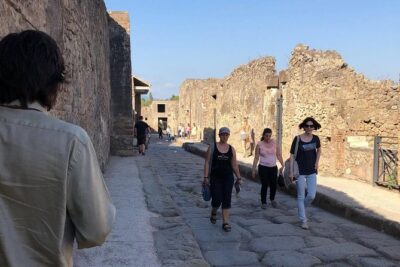
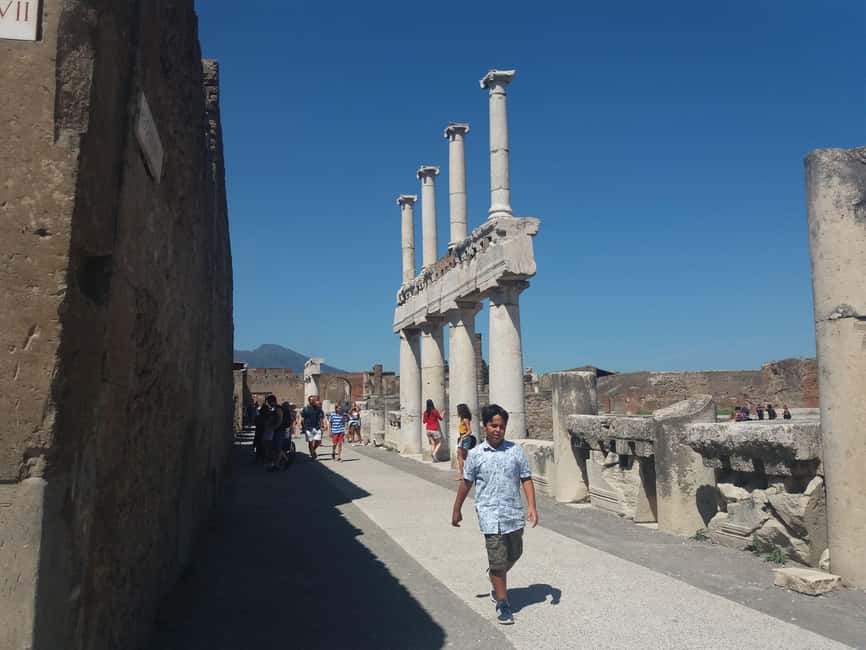
Pompeii is one of those rare places where the “wow” is obvious even before you understand it. The streets, doorways, and household spaces feel staged—like people simply walked out and time paused. What you’re really buying with this ticket is time and understanding at the same time.
The included audioguide is the big difference between just sightseeing and actually getting the city. As you wander cobbled lanes and pass public buildings, you get context for what you’re looking at: how the Romans organized daily life, what certain buildings were used for, and how the disaster unfolded. That makes Pompeii feel less like a museum of rocks and more like a city that used to be alive.
You also get the practical advantage of not queuing for your ticket. On a major site like Pompeii, skipping the ticket line can be the difference between enjoying the first hour and arriving already tired and sun-soaked.
You can also read our reviews of more tours and experiences in Pompei Campania



Picking your visit window (and why it matters)
This ticket is valid for 1 day, but you still need to check availability for the starting time options. That matters because Pompeii is heavily walk-through-and-spot-the-details. If you start too late, you’ll spend the last portion racing the clock instead of enjoying it.
There’s also a hard limit: last admission is one hour before closing time. So you’ll want to plan a pace that lets you slow down for the most interesting rooms and street corners, not just “hit the big names” and sprint to the exit.
If you’re visiting in summer, this is even more important. The site can get very hot, and you’ll be moving around on uneven ground. Going earlier lets you see more with less fatigue.
Entering Pompeii: show the voucher, collect the ticket
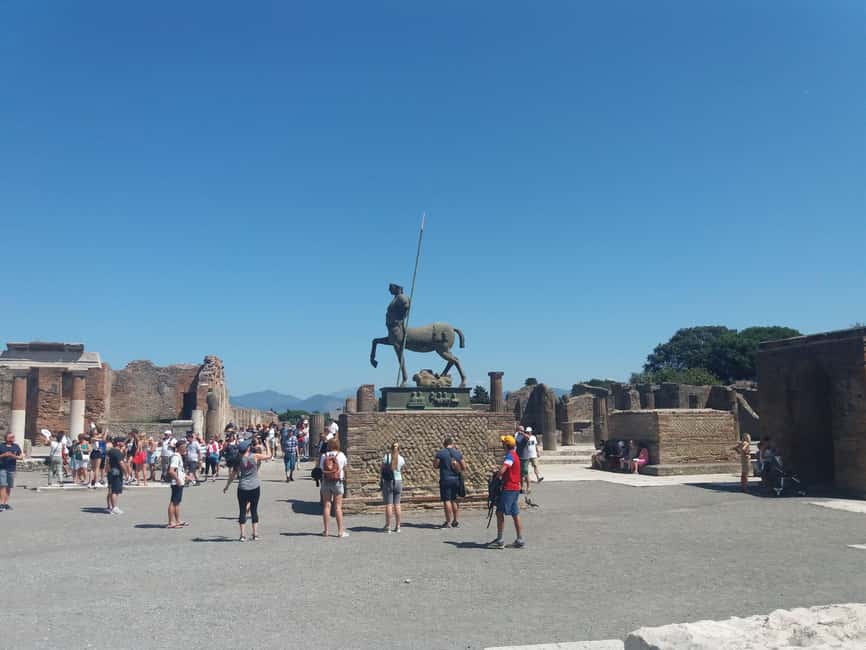
Your meeting instructions are straightforward: show your voucher at the reception and collect your ticket. That’s where your day can either go smoothly or stall.
I recommend you do two things to protect your time:
- Keep your voucher ready before you reach reception. Save it to your phone and have it accessible offline in case your connection acts up.
- Aim to arrive early enough to handle any confusion calmly. Pompeii is busy, and even small delays can push you toward that one-hour-before-closing deadline.
Your ticket experience is designed to end back at the meeting point, so treat your plan like a self-guided loop: you’ll enter, explore, and return at your own speed.
Touring the Forum and theaters: where city life shows up fast
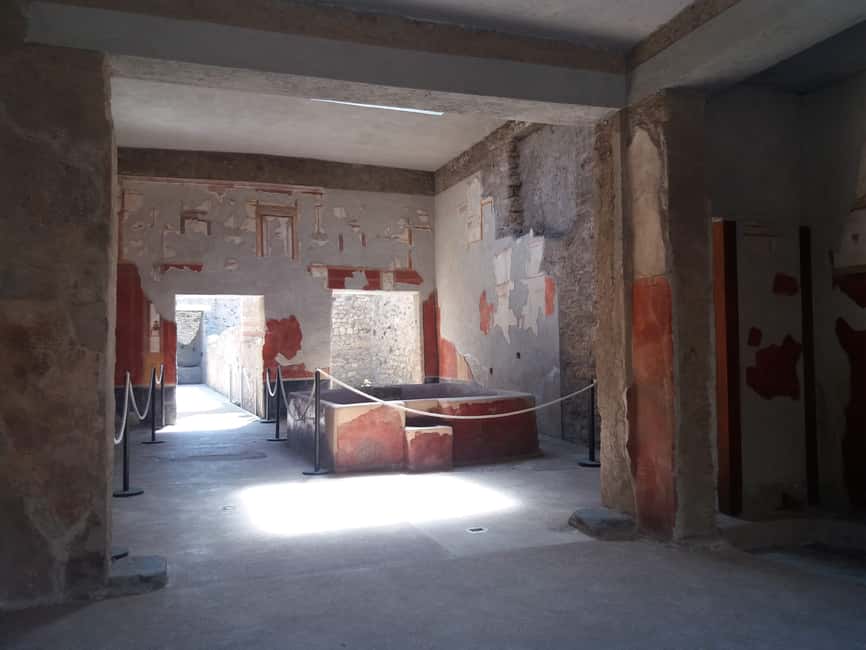
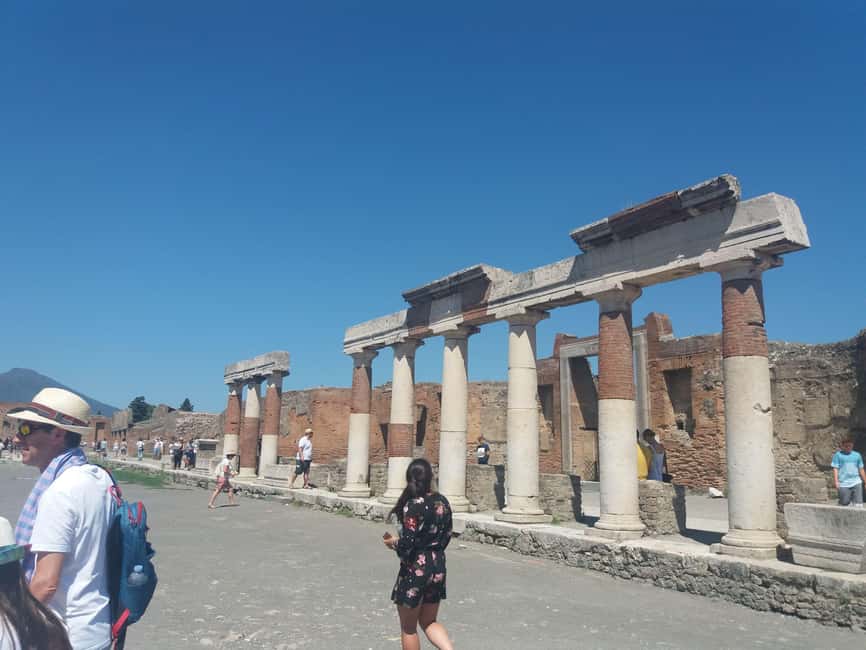
Once you’re in, start with the heart of the city. Pompeii’s Forum and theaters are often the easiest places to orient yourself because they represent public life—where you’d go for gatherings, performances, and civic activity.
Even without memorizing names of every structure, you’ll feel the layout. The Forum area helps you understand how Roman public spaces worked: the architecture funnels you toward key viewpoints and gives you a sense of how people moved through daily crowds.
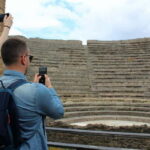
And the theaters do something similar but emotionally. These buildings are built for attention and sound, so you can look at the seating and imagine an audience. The audioguide helps you connect the physical space to what it meant socially.
Practical note: these areas can be popular, so if your goal is comfort and photos, plan a slower walk through and then return later if you want quieter moments.
Temple of Apollo: religion you can actually picture
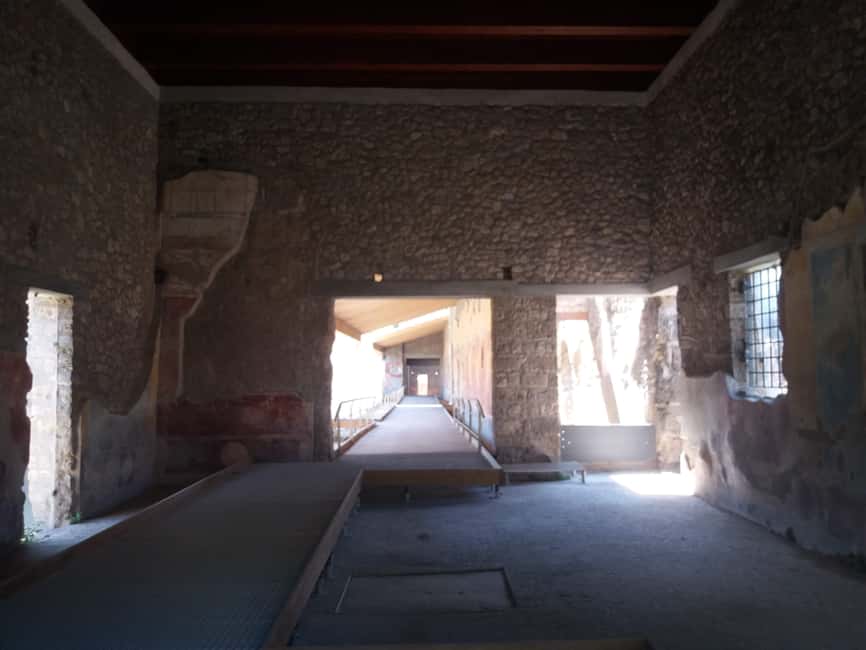
The Temple of Apollo is a standout stop because it’s not just “a temple.” It’s a way to understand how religion was woven into city life.
When you pass through religious spaces in Pompeii, you’re looking at a built environment for belief: repeated rituals, community identity, and civic meaning. The audioguide’s role here is to make the symbols and purpose less abstract, so you’re not just admiring stone and columns.
I like this stop because it’s a natural break from household spaces. After walking through domestic areas and street corners, a temple gives you a clear shift in scale and function.


Thermal baths: daily comfort and Roman routines
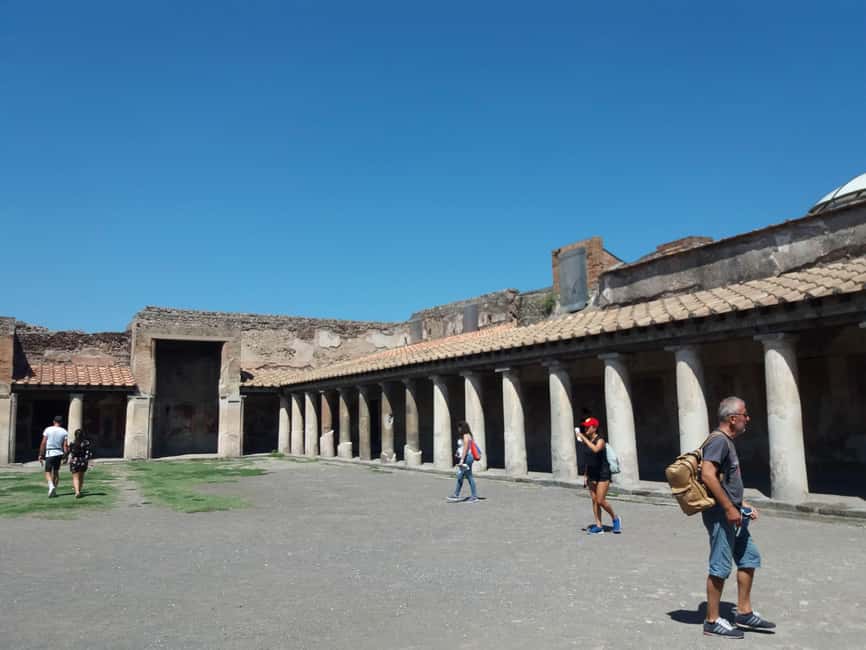
Few things make Pompeii feel real faster than the thermal baths. Bathing wasn’t just hygiene—it was social time, routine, and a kind of community space.
As you move through the baths areas, the audioguide helps you interpret the layout: different rooms for different stages, and how the space supported comfort and conversation. It’s the kind of information that makes the ruins click into place.
If you enjoy architecture and daily habits more than dramatic tragedy, the baths are a great choice. They also give you a mental reset—Pompeii isn’t only about fear. It’s also about routines that feel familiar.
The House of the Vettii: mosaics and small details
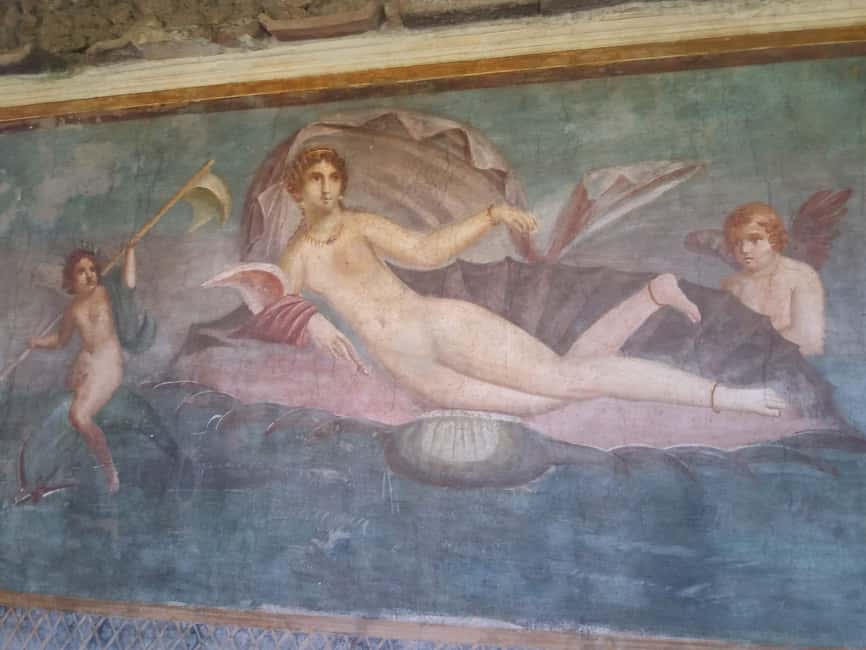
The House of the Vettii is one of those places where you stop because you can’t help it. Houses like this are proof that “ancient city” doesn’t mean one-note. Pompeii contains lifestyles: art on floors, decorative surfaces, and spaces meant for specific uses.
What I like about highlighting this house is that it shifts your attention from monuments to personal taste. A mosaic floor can teach you more about Roman life than a paragraph of general history because it shows what people valued aesthetically and how they used indoor spaces.
When you visit a house, take a slower pace and let the audioguide guide what to notice. Instead of walking past doors and walls, you’ll start seeing patterns: where someone would enter, where daily activities happened, and why certain rooms mattered more.
“Mummies” of Pompeii: the story behind the ash
The famous mummies in Pompeii are human bodies fossilized by ash. It’s a heavy stop, but it also explains why Pompeii is such a central name in world history.
This is where the story of Vesuvius becomes personal. The city wasn’t simply buried—it was interrupted at the moment people had routines, plans, and hopes. The audioguide helps you understand that timeline and why the eruption caused such sudden, tragic outcomes.
I’d treat this as a moment to slow down rather than power through. You don’t need to stare for long, but you do need a bit of mental space. Even if you’re not a “sad history” person, this part of Pompeii is one of the reasons the site matters.
How to pace your day (so you don’t miss the best bits)

Pompeii works best when you don’t try to do everything as fast as possible. Your best strategy is to choose a few “anchor” experiences and let the rest of the walk support them.
Here’s a practical approach:
- Start with public life: Forum and theaters.
- Shift to belief and routines: Temple of Apollo and the thermal baths.
- Finish with personal space and impact: House of the Vettii and the ash-preserved remains.
Your ticket is valid for one day and doesn’t include a guided tour, so the pacing is yours. That’s good news if you like control. It can be bad news if you hate deciding. If that sounds like you, keep the anchor list in your notes so you don’t get lost in the wow factor.
What’s included—and what you’re not getting
Included:
- Entrance ticket to Pompeii
- Audioguide
Not included:
- Hotel pickup and drop-off
- Guided tour
- Food and drinks
This setup is perfect if you’re comfortable navigating a major archaeological site and you want learning without being attached to a group’s timetable. If you prefer a guide who explains in real time, you’d need a different product. But for many visitors, the audioguide is a strong middle ground: educational, steady, and flexible.
On the food side, don’t assume you’ll find convenient meals nearby at the exact time you get hungry. Since food isn’t included, plan for breaks you can actually support.
Accessibility and practical realities on uneven ground
The information states wheelchair accessible, but it also flags that the experience may not be suitable for people with mobility impairments and not suitable for visually impaired people. With a site like Pompeii—uneven ground, steps, and ancient surfaces—those details matter.
If mobility is a concern, check your route needs carefully and plan for slower movement. For visual accessibility, confirm what the audioguide format will be and whether it matches your needs, since the activity explicitly says it’s not suitable for visually impaired people.
No matter what, wear shoes you trust. Pompeii is not a “walk in sneakers for an hour” place. You’ll be on uneven surfaces for longer than you expect.
Weather, heat, and the simple gear that saves your day
Pompeii can be very hot in the summer. The best advice is boring and true:
- Bring a hat and water
- Wear comfortable shoes for uneven ground
- Dress for the weather and plan short rest breaks
Also keep an eye on closing time. With last admission one hour before closing, dehydration or a long lunch can shrink your ruins time quickly.
Price and value: is $34 fair for what you get?
At $34 per person, the value depends on what you’re optimizing for.
You’re paying for three things:
- Entry to a UNESCO World Heritage Site
- A no-line ticket experience
- An audioguide, which is what turns the walking into learning
If you’re visiting Pompeii anyway, this price can be a smart upgrade because skipping ticket lines is one less friction point. And since the audioguide is included, you’re not adding another cost for interpretation. The ticket doesn’t include a guided tour, but the audioguide fills that learning gap in a self-paced way.
Where value might feel weaker is if your day is at risk due to voucher issues or finding the collection point. So the real “value risk” isn’t the $34. It’s whether you can smoothly start your day without delays. Arrive early and have your voucher ready.
Common hiccups to avoid (from real-world pain points)
Nothing ruins a Pompeii morning like starting late. Based on the kinds of issues that come up with online tickets for major sites, I’d protect your visit with these steps:
- Verify the meeting point and know you’re showing your voucher at reception to collect the ticket.
- Don’t rely on last-minute voucher access. Save the voucher and keep a screenshot.
- Give yourself buffer time so you’re not stressed about last admission.
If you’ve ever lost time because an office location wasn’t clear, you already know the pattern: small confusion eats hours. Pompeii doesn’t forgive wasted time well because walking continues, heat builds, and closing limits creep closer.
Should you book Pompeii no-line entrance with audioguide?
Book it if you want:
- A self-guided day where you can learn as you walk
- Fewer delays at the entrance
- Key Pompeii highlights like Temple of Apollo, thermal baths, and House of the Vettii without committing to a full guided tour
Consider skipping or looking for another option if:
- You need a fully guided explanation in real time
- You’re worried about being able to show your voucher smoothly at reception
- Your needs don’t match the accessibility notes for mobility or vision
FAQ
Do I need to wait in a ticket line?
This ticket is designed as a no-line entrance option, so you should be able to enter without queueing for tickets.
What’s included with the Pompeii ticket?
You get entrance to Pompeii and an audioguide.
How long can I use the ticket?
The ticket is valid for 1 day. Starting times depend on availability.
Where do I collect my ticket?
Show your voucher at the reception to collect your ticket.
When does the activity end?
It ends back at the meeting point.
Are pets allowed?
No, pets are not allowed.
Can I bring luggage or large bags?
No, luggage or large bags are not allowed.
Is smoking allowed inside Pompeii?
No, smoking is not allowed.
What should I wear and bring?
Wear comfortable shoes for uneven surfaces. In summer, bring a hat and water, and dress for the weather.
Is there a last time I can enter?
Yes. Last admission is one hour before closing time.