REVIEW · POMPEII
Pompeii Small Group with an Archaeologist and Skip The Line
Book on Viator →Operated by ELIANA SANDRETTI · Bookable on Viator
Pompeii is big, so time matters. This small-group tour uses skip-the-line entry plus an archaeologist-led walkthrough so you spend your energy seeing the places that teach you the most. I love the focused route that fits an efficient 2-hour visit, and I love that you get real human interpretation instead of a generic scan-and-snap tour. One drawback to think about: since it’s a short sprint through major areas, you may wish you had extra time in just one or two spots.
In this group of up to 10 people, you’re guided at a relaxed pace (not rushed, not lost). I also like that the experience can be led by Eliana Sandretti, and when she isn’t available, you might meet other guides such as Dario, Francesco/Francisco, or Anna, who still keep the learning sharp and the walk organized. A practical consideration: Pompeii can be noisy, and if you’re toward the back it can be harder to hear every detail over crowd sounds and walking noise.
In This Review
- Key things that make this Pompeii tour worth your time
- Skip-the-line entry that actually buys back your day
- Who guides you at Pompeii: Eliana Sandretti and the team behind the scenes
- How 2 hours works when you want to see the best parts (without feeling chased)
- Theater culture and a quick walk through Pompeii’s main life zones
- Granai del Foro: the forum’s barns and the tragic casts of 79 AD
- Stabian Baths: frescoes that feel like they were painted yesterday
- Forum power walk: Basilica of Pompeii and the Temple of Jupiter with Vesuvius behind it
- Entertainment meet law meet street life: gladiator barracks and the Lupanar
- Casa del Fauno: where you see wealth, taste, and how houses told stories
- Price and value: what you get for $217.69 and where it helps most
- Practical tips so your visit feels smooth, not stressful
- Should you book this Pompeii archaeologist tour?
- FAQ
- How long is the Pompeii small-group tour with an archaeologist?
- What’s included in the ticket price?
- Is there skip-the-line entry?
- How large is the group?
- What language is the tour offered in?
- Where is the meeting point?
- Is food or drinks included?
- Are service animals allowed?
- Is cancellation allowed and what happens if the weather is bad?
Key things that make this Pompeii tour worth your time
- Fast-track entry so you start sightseeing sooner instead of waiting at the gate
- Archaeologist-led explanations with on-the-ground perspective on how Pompeii is studied
- Small group (up to 10) for easier pacing and better chances to ask questions
- A highlights route that hits major themes fast: daily life, power, entertainment, and tragedy
- Mobile ticket support for smoother arrival and fewer ticket-handling headaches
Skip-the-line entry that actually buys back your day
Pompeii’s entrance area can slow people down. This tour hands you the fast-track advantage, so you’re already set to go rather than burning your morning or afternoon in the queue. For a site this large, saving even 20 to 30 minutes at the start changes how much you can absorb later.
And you’re not just “in sooner.” The tour is designed to move you toward the most meaningful clusters of ruins quickly, which is what helps the 2-hour format feel satisfying instead of like you only saw corners. I like tours that respect time, because Pompeii doesn’t wait for your schedule.
You can also read our reviews of more tours and experiences in Pompeii

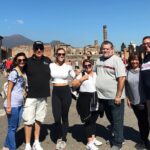
Who guides you at Pompeii: Eliana Sandretti and the team behind the scenes
This experience is run by ELIANA SANDRETTI, and she’s not just acting as a guide. In real terms, she’s described as an archaeologist working at Pompeii, and that shows in the way the stories connect to evidence in the ground. You’ll often hear details you would likely miss on your own, like why certain buildings look the way they do and what excavators and preservation efforts focus on.
When guides shift, the goal still stays the same: clear explanations, room for questions, and a route that makes sense for first-timers. Reviews mention Dario taking over when needed, plus Francesco/Francisco and Anna leading groups. Bottom line: you’re not going to be stuck with a script that sounds copied and pasted.
How 2 hours works when you want to see the best parts (without feeling chased)
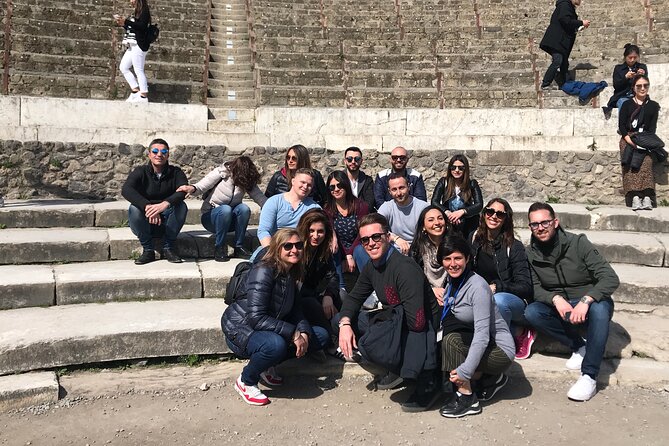
This is a small-group walk designed for “see a lot, learn a lot” rather than “meander all day.” With up to 10 people, the guide can keep you together and still manage questions. The pacing is relaxed in the sense that you stop at major points long enough to understand what you’re looking at, not just pass by like a human bus window.
One tip from the reality of Pompeii: pick your spot in the group. If you tend to stand toward the back, you might miss smaller explanations when noise is higher. If hearing matters, try to stay where you can see and listen without straining. It’s a small tweak that makes a big difference.
Theater culture and a quick walk through Pompeii’s main life zones
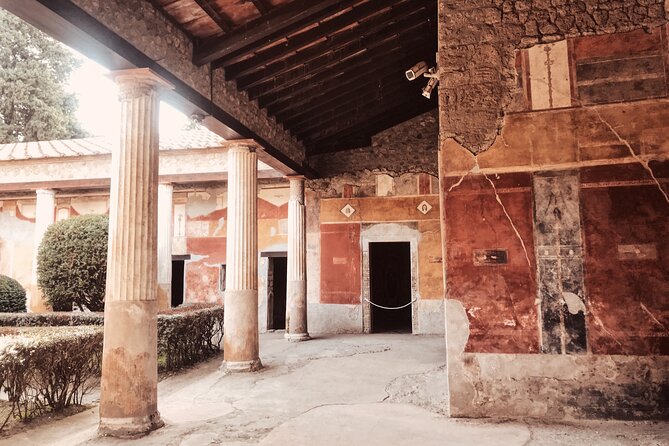
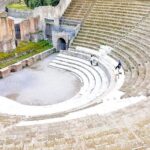
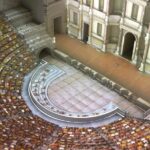
The tour begins at the Pompeii Archaeological Park, where you get in and settle into the ruins fast. From there, you move into the entertainment side of town, starting with a small theater used for musical and singing performances. It’s a great early stop because it sets a theme: Pompeii wasn’t just homes and streets—it had a social world.
Next comes Teatro Grande, where Greek-Roman comedies and tragedies were staged. Even if you don’t care about theater history, this is one of the easiest buildings to understand at a glance: rows for seating, a stage for performance, and a design that tells you how large the audience could be. It’s also a strong anchor point for grasping how public life worked in a Roman city.
Between stops, you cross the main street area to catch Pompeii’s color and street layout. That short street moment matters. It helps you stop thinking of ruins as isolated objects and start seeing a city with movement, shops, and daily rhythm.
Granai del Foro: the forum’s barns and the tragic casts of 79 AD
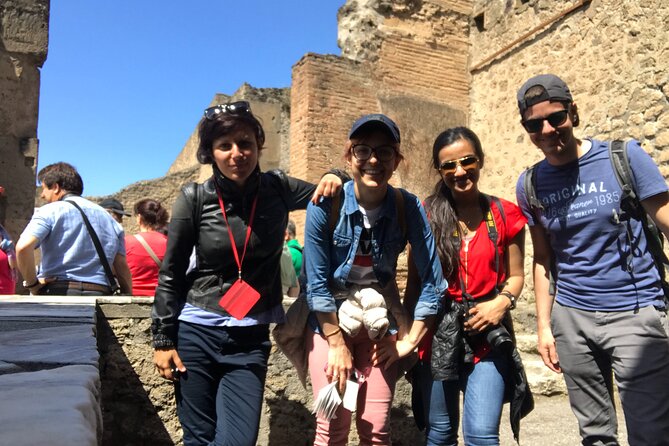
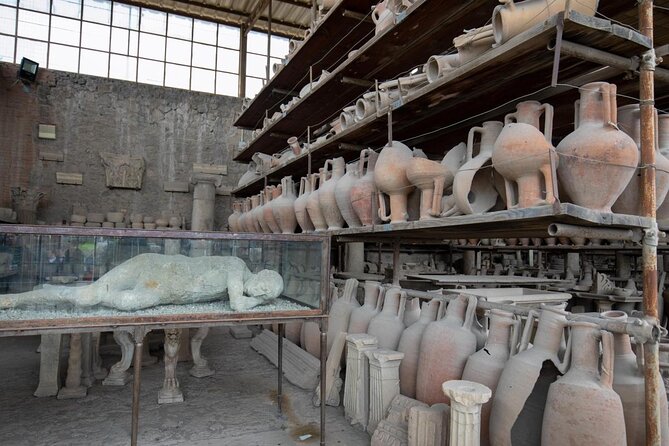
One of the most emotionally powerful stops is Granai del Foro—the barns of the forum. Here you’ll see casts of victims who died during the eruption of 79 AD. The setting is heavier than the theater, and the guide’s job is important: to explain what you’re seeing without turning it into a spectacle.
I recommend approaching this stop slowly. Look at the forms, then listen for the context about what the casts represent and how Pompeii’s preservation allows modern visitors to understand catastrophe in a tangible way. A good archaeologist guide helps you see that these are not just figures in a display; they connect to the real geography of where people were.
This is also a spot where you might want a moment to step back. If your group is moving fast, ask your guide if you can pause for a minute before walking on. The tour is built to cover it, but your brain still needs a beat.



Stabian Baths: frescoes that feel like they were painted yesterday
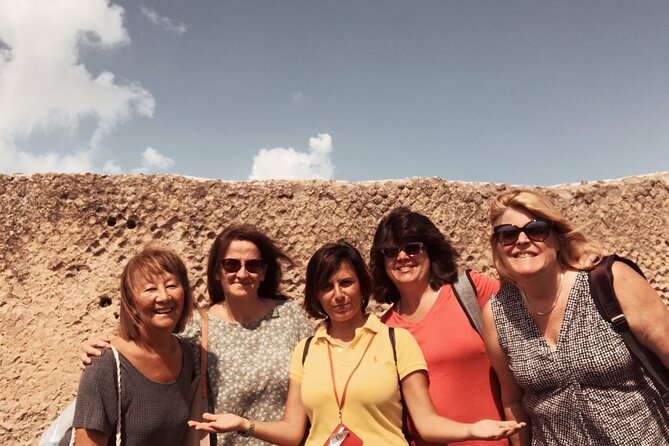
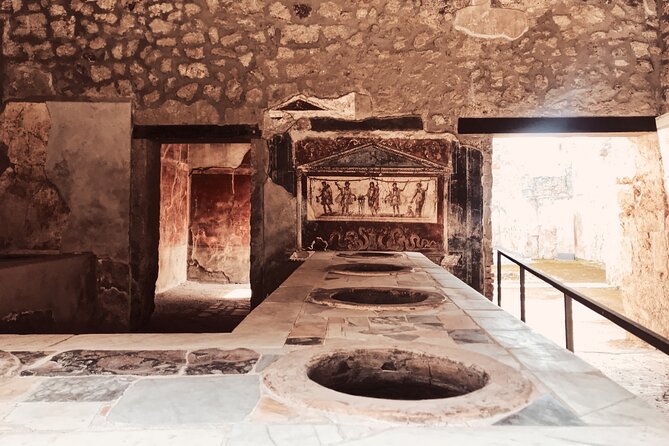
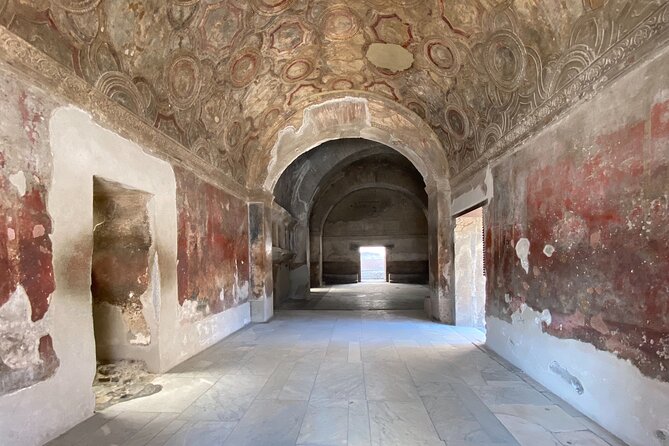
Then you move into Terme Stabiane, the Stabian Baths. If you love visuals, this is a highlight. The standout feature is the colorful frescoes, which are the kind you can’t fully capture in a photo. They help you understand that everyday Roman life included art, not just architecture.
Bath complexes in Roman cities were about more than cleanliness. They were social spaces where people talked, relaxed, and spent time. When your guide points out what you’re seeing in the fresco fragments—colors, placement, and design logic—it turns a “cool-looking wall” into a clue about how people lived and what they valued.
The stop is brief, so if you’re a detail person, you may wish you had longer. Still, for a 2-hour format, this is the kind of payoff that makes the overall route feel worth it.
Forum power walk: Basilica of Pompeii and the Temple of Jupiter with Vesuvius behind it
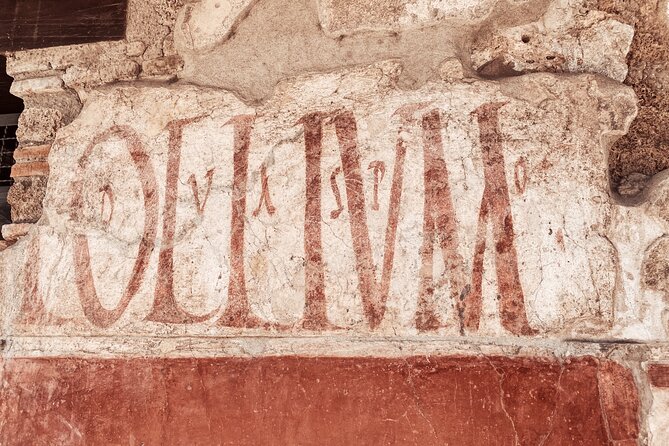
Back toward the city’s civic heart, you reach the Foro di Pompei, the main square. This is where the city’s public identity shows up in a readable way. Even if you only get a few minutes, the forum area gives you the sense of scale and coordination that’s hard to imagine from street-level ruins alone.
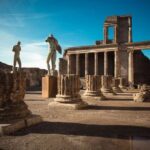
Next is Pompei La Basilica, the ancient seat of the court where justice was administered. A basilica isn’t just a big building. It signals power and process—how rulings happened and where civic authority stood. Seeing it in the context of the forum helps you connect buildings to social function rather than treating them as pretty fragments.
Then comes a very photogenic moment: the Temple of Jupiter, framed with the imposing backdrop of Vesuvius. This is the type of view that makes Pompeii feel like Pompeii. Your guide’s commentary helps tie the religious site to the broader city and gives you a reason to look beyond the background scenery.
Entertainment meet law meet street life: gladiator barracks and the Lupanar
One of the most interesting contrasts in Pompeii is how public spectacle and private routines exist side by side. The tour visits the Quadriporticus of the theatres area and includes the Gladiator Barracks, where you can see apartments and the context for how gladiators trained.
This stop works well if you’re curious about people who weren’t the elite. Gladiators weren’t anonymous. They had training rhythms and spaces shaped by discipline and practice. A guide’s job here is to help you interpret layout and use—what certain rooms likely served and how the training environment shaped daily life.
Then you’ll see the Lupanar, the old Red Light District. You’ll get context about what it represented in Pompeii society, not just a modern label. This is one of those stops where the guide’s tone matters because visitors can misread things. With the right framing, it becomes a lesson about how ancient cities organized services, boundaries, and commerce.
Casa del Fauno: where you see wealth, taste, and how houses told stories
The tour finishes with Casa del Fauno, one of Pompeii’s richest and most luxurious residences. This is a strong final act because it shifts your perspective from public spaces and shared life to private wealth and design.
A rich house like this also helps you understand social layering. It’s not just “someone had more money.” It’s how that money shaped architecture, decoration, and how space was used day to day. Even in a short visit, the guide can point out what you’d likely overlook without context.
If you’ve ever toured museums and wondered what daily life looked like beyond grand halls, this stop makes that question more real. It’s also a nice way to end because the house reminds you Pompeii wasn’t one dramatic moment—it was a full city with different classes living different lives.
Price and value: what you get for $217.69 and where it helps most
At $217.69 per person, this isn’t a bargain-bin ticket. So ask: what am I actually paying for? Here’s the honest value equation.
You’re paying for:
- Skip-the-line entry that reduces wasted time at the start
- A small group (up to 10) for a better pace and room for questions
- Archaeologist-guided storytelling, not just a standard tour script
- Admission included, so you’re not stacking separate ticket costs on top
If you only have a short window in Pompeii, the value rises fast. A self-guided visit can be great, but Pompeii is complicated, spread out, and easy to wander without clear priorities. This tour handles priorities for you. It trades depth-at-one-site for breadth-across the “major themes,” and it’s a solid trade when your time is limited.
That said, if you love slow walking and want to linger for 45 minutes per location, you might feel a bit of pressure with a 2-hour format. In that case, you’d need either a longer tour or a separate self-guided day.
Practical tips so your visit feels smooth, not stressful
A few things will make your experience better:
- Bring water and sun protection. Pompeii can get hot, and a short walk still adds up quickly.
- Plan to wear shoes with good traction. Pompeii’s ground is uneven, and you’re doing a lot of steps in a short time.
- If you’re traveling with a stroller, this tour can still work, but the route includes tough walking moments. One guide helped carry a stroller over difficult parts, but you’ll still want to be realistic about getting around.
- If you have trouble hearing, position yourself where you can see and listen without straining. Noise can make it harder when the guide is farther away.
- If your schedule allows, consider a later start time. One guide’s advice, based on real experience, is that late afternoon can feel calmer and less crowded than peak periods.
Should you book this Pompeii archaeologist tour?
Yes, if you want a high-value Pompeii intro and you like your sightseeing with explanations you can trust. The big win is the combination of skip-the-line access plus an archaeologist guide who can connect buildings, street life, and tragedy into a story that makes the ruins feel like a city instead of a scavenger hunt.
Skip it only if you know you’ll be happier doing a long, slow, self-paced visit where you spend most of your time in one area. For everyone else—especially if this is your first time in Pompeii and you have just a couple of hours—this is a smart, efficient way to see the essentials without turning the day into stress.
FAQ
How long is the Pompeii small-group tour with an archaeologist?
It runs for about 2 hours.
What’s included in the ticket price?
Admission tickets are included, along with an authorized tourist guide and assistance during the tour. Fees and taxes for the entrance ticket are also included.
Is there skip-the-line entry?
Yes. The tour includes skip-the-line tickets so you can spend more time inside the park.
How large is the group?
The group is limited to a maximum of 10 travelers.
What language is the tour offered in?
The tour is offered in English.
Where is the meeting point?
The meeting point is Ristorante Suisse, Piazza Esedra 10/13, 80045 Pompei NA, Italy.
Is food or drinks included?
No. Food and drinks are not included.
Are service animals allowed?
Yes, service animals are allowed.
Is cancellation allowed and what happens if the weather is bad?
You can cancel up to 24 hours in advance for a full refund. The experience requires good weather, and if it’s canceled due to poor weather, you’ll be offered a different date or a full refund.