REVIEW · POMPEII
Pompeii: Tour with Archaeologist Guide & Skip-the-Line Entry
Book on Viator →Operated by Travelcampania · Bookable on Viator
Pompeii hits different when someone explains it. I like the archaeologist guide approach because the story moves from eruption to everyday routines, and I also like the skip-the-line setup that saves real time. One thing to consider: at about 2 hours, it’s a fast, highlights-only run—great if you want structure, but not ideal if you’re the type who wants to linger for an hour in just one house.
You’ll meet near Piazza Esedra, then walk through the UNESCO site with a clear route built around Pompeii’s “big names” and the details that make them feel real: frescoed rooms, street life along Via dell’Abbondanza, the Forum’s civic power, and the casts that were created from the victims’ remains long after the eruption. The ending point is at the Foro di Pompei area, so you can keep exploring afterward if you’ve still got energy.
In This Review
- Key things you’ll get from this Pompeii tour
- Where the tour starts (and why meeting matters here)
- Skip-the-line entry: how it changes your first 20 minutes
- Teatro Grande: the amphitheater moment you should pay attention to
- Domus and frescoes: seeing private life instead of just stone
- Via dell’Abbondanza: the street that ties the city together
- Baths and the Lupanare: why these stops make Pompeii feel real
- Forum and Basilica: the civic center, explained in plain terms
- The casts of 1863 by Arch. Giuseppe Fiorelli
- Duration and group size: a practical 2-hour pacing plan
- Price and value: what $57.84 really buys you here
- What it feels like when the guide does the heavy lifting
- Where the tour ends (and how to keep the day going)
- Who should book this Pompeii archaeological tour?
- FAQ
- How long is the Pompeii tour?
- Is the admission ticket included?
- Where do we meet?
- Where does the tour end?
- What major sights are covered?
- How big is the group?
- Can I cancel for a full refund?
- Should you book this skip-the-line Pompeii tour?
Key things you’ll get from this Pompeii tour
- Skip-the-line entry handled by your guide, not you juggling tickets while you’re standing in the crowd
- Teatro Grande (Amphitheater) plus the route down Via dell’Abbondanza, so you see how public life and street life connect
- Frescoed Roman houses (domus) that help you picture daily living, not just ruins
- Stabian baths and the Lupanare, which show how “normal life” also included grooming, bathing, and nightlife
- Forum and Basilica stops, where you can connect Pompeii’s politics and commerce to what you’re walking past
- The 1863 casts by Arch. Giuseppe Fiorelli, a major turning point in how we understand what happened
Where the tour starts (and why meeting matters here)
This tour is based around Piazza Esedra, and that’s good news because it gives you an easy anchor point. You meet at the Travelcampania office area at Via Plinio, 107, then the actual guiding rendezvous is near the Coffee Shop Vittoria bar by Piazza Esedra.
You’ll also want to be on time because the whole point is efficiency. Pompeii can swallow time in lines, and even if you’re not in a queue, you’ll still lose daylight. This tour is designed to get you into the site quickly with the guide taking care of the entry process.
You can also read our reviews of more guided tours in Pompeii

Skip-the-line entry: how it changes your first 20 minutes
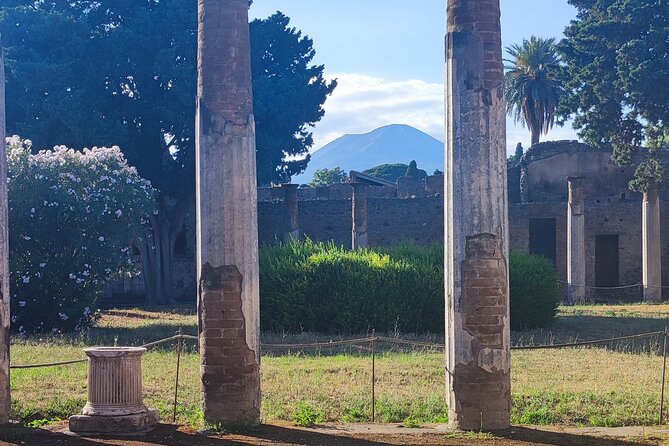
The biggest practical win is that the guide uses skip-the-line service and buys the entrance tickets for the group. That means your start doesn’t get hijacked by ticket windows and security checks.
Once you’re in, you’re not just wandering. The pace is planned around major sights: Teatro Grande first, then key stops that connect to the eruption story. If you’re visiting in peak season, this is the difference between feeling rushed all the time versus feeling like you’re on a track.
Teatro Grande: the amphitheater moment you should pay attention to
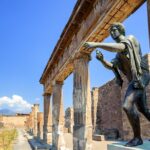
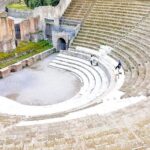
Most Pompeii tours start with the drama of the big ruins, but Teatro Grande works especially well as an opening. It’s a strong visual reference for the scale of public gatherings in the city.
From there, your archaeologist guide points you toward the most important parts of the UNESCO site in a logical flow: public entertainment, then the domestic spaces of the Romans. The point isn’t just to name buildings; it’s to show how Pompeii’s daily life mixed crowds, comfort, and politics—all in walking distance.
Domus and frescoes: seeing private life instead of just stone
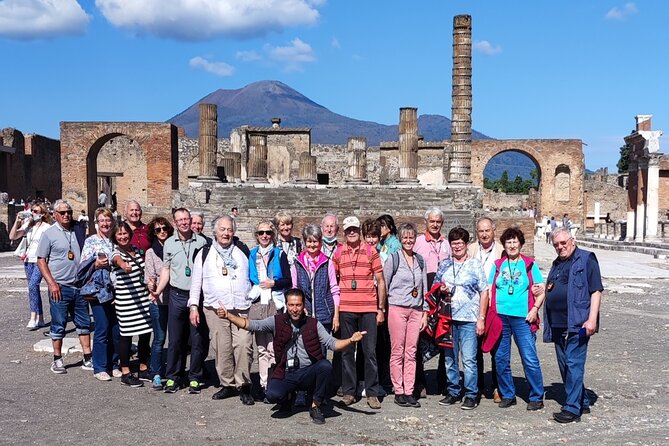
One of the best parts of this kind of Pompeii walk is when you shift from big landmarks to private houses. You’ll see domus areas with frescoes, which are crucial because they’re not “museum art.” They’re evidence of what people decorated their rooms with and how they wanted their homes to feel.
Here’s how I think about it: ruins are impressive, but frescoed walls make it personal. You can understand the city’s taste and status, and you start to realize these weren’t empty sets—people lived here until the eruption changed everything.
Via dell’Abbondanza: the street that ties the city together

Via dell’Abbondanza is one of Pompeii’s most famous streets, and your route includes it for a reason. Walking it helps you connect the dots between where people worked, where people shopped, where people ate, and where they relaxed.
This is also where your guide’s explanations matter most. Pompeii can feel like separate highlights if you only look at each location as a photo stop. On this tour, the street becomes the spine: you’re constantly reminded how one place feeds into the next.
You can also read our reviews of more tours and experiences in Pompeii





Baths and the Lupanare: why these stops make Pompeii feel real
The tour includes the Stabian baths, which are more than a technical detour. Bath culture tells you something direct about Roman routines—cleanliness, social time, and comfort in a place built for everyday use.
Then comes a stop that many visitors find both surprising and fascinating: the Lupanare, the ancient brothel. It’s handled as part of Pompeii’s real life, not as a scandal sidebar. You get a window into how commerce and entertainment worked in the city, and how “ordinary” residents likely would have understood these spaces.
If you’re curious about Roman behavior beyond politics and temples, these are the stops that deliver.
Forum and Basilica: the civic center, explained in plain terms
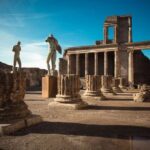
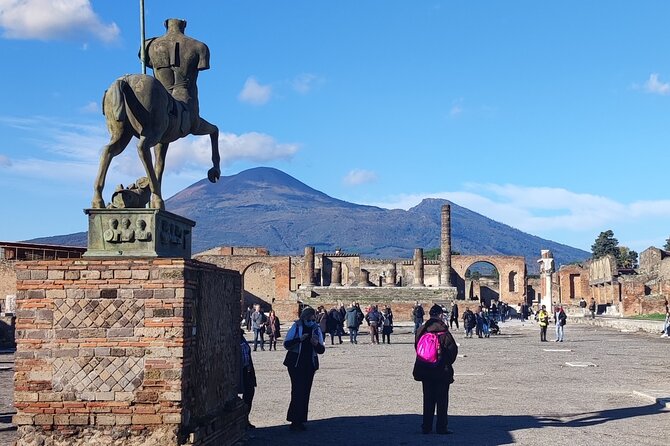
The Forum and the Basilica are where Pompeii shows its civic muscle. Even if you’re not a classics person, this is the part that helps you understand power, meetings, and everyday public business.
I like that the tour doesn’t treat the Forum as a standalone ruin. It connects it to the streets and buildings around it, so you can picture how people moved through the city’s social and economic life.
The casts of 1863 by Arch. Giuseppe Fiorelli
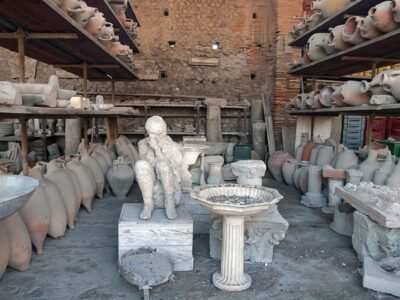
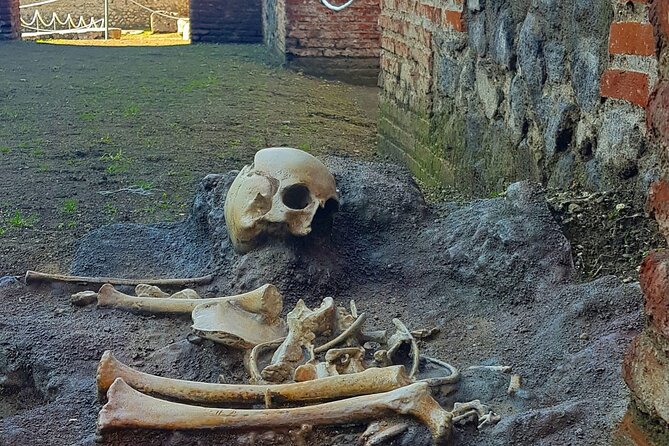
One of the most haunting and educational elements is the visit to the first casts (1863) by Arch. Giuseppe Fiorelli. These casts are key to Pompeii’s modern story because they helped transform vague tragedy into specific human understanding.
If you come in expecting only pretty frescoes and impressive columns, this is the moment that resets your perspective. The city stops being an archaeological site and becomes a place where people had bodies, positions, and last moments.
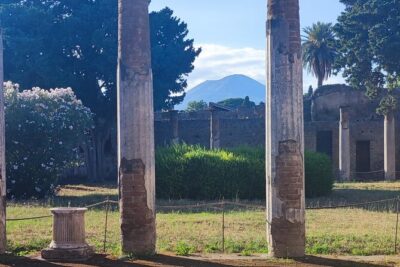
That’s also where the tour’s eruption framing becomes practical. Your guide leads you through the city in a way that makes the disaster feel connected to the locations you’re standing in—public spaces, private homes, and everyday routes.
Duration and group size: a practical 2-hour pacing plan
This tour is about 2 hours and is capped at a maximum of 25 travelers. That sweet spot matters. You’ll get enough time to cover the big essentials without it becoming a marathon, and the group size is small enough that your guide can keep control and explain as you walk.
The tradeoff is time. At two hours, you’ll cover a lot of ground, but you won’t slow down for long photo marathons or extended reading in one location. If you prefer deep lingering, plan to continue on your own after the tour ends.
Price and value: what $57.84 really buys you here
At $57.84 per person, the headline price might look like a splurge until you factor in what’s included: an archaeologist guide plus admission ticket and skip-the-line support through the guide. In practice, you’re paying for time saved and for expertise that turns ruins into an organized story.
I think this is good value if you want:
- a structured route through the UNESCO site
- less time negotiating logistics on-site
- context that explains why each place matters
It may not be the best fit if you already know Pompeii well and just want to walk freely. In that case, you might prefer an on-your-own plan so you can spend longer at your favorite corners.
What it feels like when the guide does the heavy lifting
The strongest feedback theme in this style of tour is how much knowledge you get without wasting time. When the guide is friendly and packed with information, the tour becomes less like sightseeing and more like understanding.
You’ll typically be hearing the city’s story while walking between major stops, which helps you remember it. The pacing also keeps you from getting stuck in confusing areas where it’s easy to lose the big picture.
Where the tour ends (and how to keep the day going)
You finish at the Foro di Pompei area, near Via Villa dei Misteri, 2. If you want to keep exploring, you can stay inside the archaeological park after the tour.
This is useful because the itinerary ends where the city’s civic heart is. Even if you spend the tour focusing on the highlights, you’re still positioned well to wander afterward with better orientation than you’d have at the start.
Who should book this Pompeii archaeological tour?
This works well for you if:
- you want a tight, organized Pompeii route in a short time
- you like history explained through real places, not just dates
- you appreciate a guide who keeps things moving while adding context
- you’re traveling with a moderate fitness level and can handle walking on-site terrain
It may be less ideal if you need lots of quiet time in museums, or if you expect Pompeii to be “done” in two hours without returning later.
FAQ
How long is the Pompeii tour?
It’s about 2 hours.
Is the admission ticket included?
Yes. Admission is included, and the guide handles the entrance tickets through the skip-the-line service.
Where do we meet?
You meet near Piazza Esedra, specifically by the Coffee Shop Vittoria bar, with the listed start at Travelcampania, Via Plinio, 107, Pompei.
Where does the tour end?
The tour ends at Foro di Pompei, near Via Villa dei Misteri, 2.
What major sights are covered?
You’ll see key Pompeii stops including the amphitheater area (Teatro Grande), frescoed Roman houses (domus), Via dell’Abbondanza, Stabian baths, the Lupanare, the Forum and Basilica, plus the first casts created in 1863 by Arch. Giuseppe Fiorelli.
How big is the group?
The maximum group size is 25 travelers.
Can I cancel for a full refund?
Free cancellation is available. You can cancel up to 24 hours in advance for a full refund.
Should you book this skip-the-line Pompeii tour?
If you want Pompeii with structure—amphitheater, street life, baths, the Lupanare, the Forum, and the Fiorelli casts—this is a smart choice. The price feels more reasonable when you consider the archaeologist guide, admission included, and the time-saving skip-the-line support.
I’d book it if two hours is your ideal window and you want to walk away with a clear mental map of how the city worked right up to the eruption. If you’re the type who likes to linger for hours in one house or one street, consider pairing this with extra time in the park afterward so you can slow down where you care most.