REVIEW · POMPEI CAMPANIA
Pompeii VIP 3h Tour: Skip-the-line with your Archaeologist
Book on GetYourGuide →Operated by Grand Tour Experience · Bookable on GetYourGuide
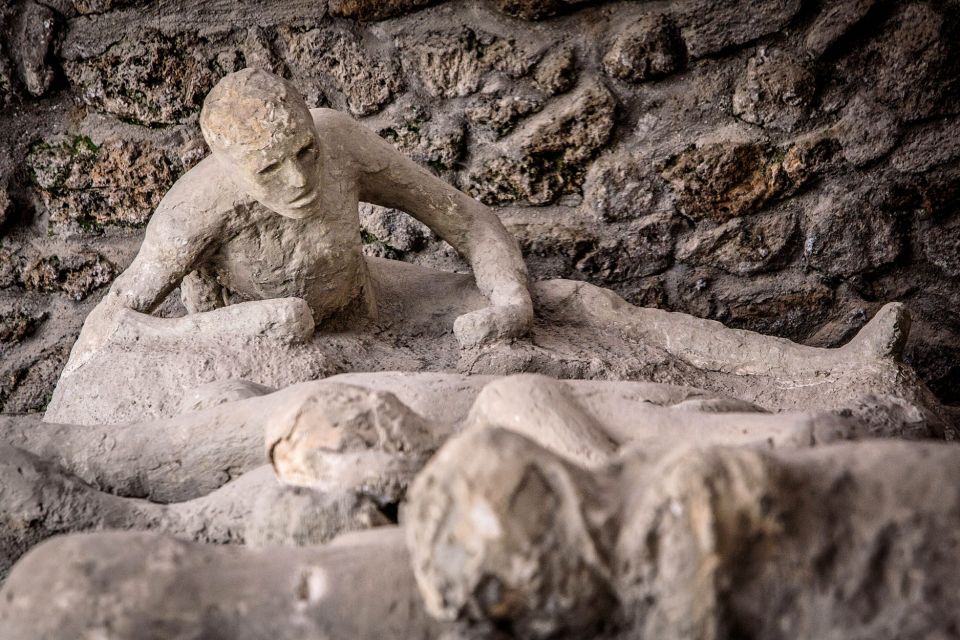
Three hours, and Pompeii feels personal. With skip-the-line tickets and a licensed archaeologist, you start fast and you don’t just look—you learn how the excavations changed what we thought about the city. I especially love the stop-by-stop way the guide brings new finds from the antiquarium into the story, like objects from the latest digs, including a coin that reshaped the eruption timeline. I also love the emotional gut-punch of the Garden of the Fugitives, with the body moulds you can see where people tried to escape. The main drawback: it’s a focused 3-hour run, so you won’t have time for a slow, wander-every-street kind of visit.
This is a private group tour, which helps because Pompeii can get crowded and confusing fast—so your route feels efficient without feeling rushed. Since admission tickets are included, you’re paying for the guide plus your entry, not just a reservation sticker. Still, it’s priced like a specialist experience, and if you’re traveling as a larger group, you’ll want to compare it against other shared tours.
You’ll meet at Porta Marina Superiore, right in front of Hortus Bar, and you’ll end back at the same spot—so your logistics are simple. Bring comfortable shoes and sunscreen, and plan to arrive on time because Pompeii’s ticket rules are strict about matching names to IDs.
In This Review
- Key Things I’d Bet You’ll Care About
- VIP Entrance at Porta Marina: Less Waiting, More Seeing
- Vesuvius, the Antiquarium, and the Excavation Story Behind the Stones
- Basilica and Forum Civile: Where to Stand to Understand the Whole City
- Via Dell’Abbondanza and the Greater Decumano: Daily Life, Not Just Monuments
- Domus Time: Recently Opened Houses and Restorations That Change How You See Pompeii
- Temples and Theatres: How Religion and Leisure Fit Into the Same Streets
- Garden of the Fugitives: Body Moulds That Make History Stop Being Abstract
- Amphitheatre Finale: The Size and Design You Can Actually Feel
- Price and Value: What You’re Actually Paying For
- Tips Before You Go: Ticket Rules, Timing, and Comfort That Matter
- Should You Book This Pompeii VIP 3h Tour?
- FAQ
- How long is the Pompeii VIP 3h Tour?
- Where is the meeting point for the tour?
- Is skip-the-line entry included?
- Are admission tickets included?
- Is transportation included?
- What languages are offered?
- Is this a private tour?
- What should I bring?
- Do I need to provide names and an ID for the tickets?
Key Things I’d Bet You’ll Care About
- Skip-the-line start at Porta Marina Superiore so you get into the ruins with less waiting
- Antiquarium stops with objects from the latest excavations, including items used to reassess the eruption date
- Recently opened domus and restorations like the House of Golden Cupids
- Garden of the Fugitives with body moulds, a stark reminder of what happened in real time
- Big-set-piece finale at the amphitheatre, built for crowds, not just walking tours
- A private archaeologist-led route that makes the stones easier to understand
VIP Entrance at Porta Marina: Less Waiting, More Seeing
Pompeii is famous for two things: the ruins and the lines. This tour helps with the second one right away. You start at Porta Marina Superiore, the main entrance area, in front of Hortus Bar, and the skip-the-line access means you can begin your walk while other people are still stuck at ticket chaos.
What I like here is how it sets your headspace. Instead of wasting time trying to orient yourself, you’re moving into the ancient city with a plan. Your guide kicks off the route through the ruins around the main entrance (Porta Marina). Then the tour turns into a guided “how to read Pompeii” experience: what you’re looking at, why it matters, and how archaeologists interpret it.
A small but important practical note: these tickets are personal. You’ll need to provide the full names of everyone in your group, and you’ll want an original ID or passport on hand to match the ticket. If you’re even a little late, the timing can become a problem—so treat “meet on time” as non-negotiable.
You can also read our reviews of more tours and experiences in Pompei Campania


Vesuvius, the Antiquarium, and the Excavation Story Behind the Stones
Early on, you’ll be walking with Vesuvius in the background—an instant reminder that this site is not just “ancient ruins,” it’s a snapshot frozen in time. The guide then takes you through the antiquarium area, which matters because it turns Pompeii from a picture into evidence.
This is where the guide’s archaeology background really shows. You’ll see objects found in the last excavations, and you’ll hear how certain discoveries changed broader understanding—one highlight is a coin that altered what we thought about the date of the eruption. You might also see other notable finds, like a heavy golden arm cuff, which helps explain wealth, status, and everyday materials people wore.
Why this matters for you: if you’ve ever felt like Pompeii tours are just a list of names, the antiquarium framing gives you a lens. It teaches you that interpretations can shift as new excavations happen. Even the “same” ruin starts to feel different once you know it’s part of an ongoing research story, not a finished textbook.
Basilica and Forum Civile: Where to Stand to Understand the Whole City
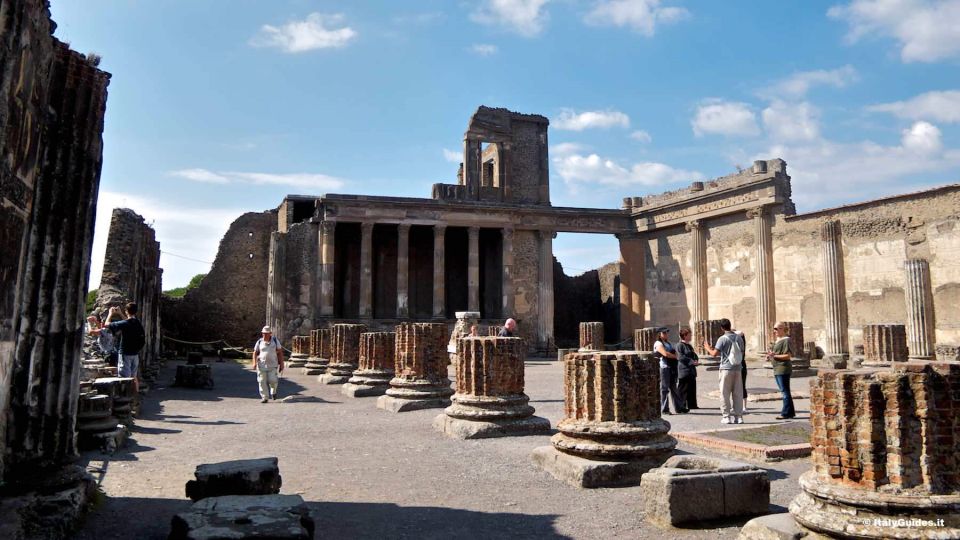
Once you’re inside the core zone, you’ll hit major civic landmarks that work like Pompeii’s navigation system. The Basilica area and the Foro Civile (Forum Civile di Pompei) are central for a reason: these were political, commercial, and ceremonial hubs.
Here, your guide doesn’t just point at stone columns and temples. The better tours teach you what those spaces were for. You’ll walk through the forum with market areas and main temples, and you’ll get context for why people gathered there—how the city functioned socially and economically.
If you’re the type who likes to understand the “why” behind a place, this portion is strong because it gives Pompeii structure. You start to see relationships between sites: streets that connect to civic spaces, the flow of movement, and how religion and trade were built into daily life.
A possible drawback: because it’s a 3-hour tour, you’ll be moving through these big-name stops on a tight schedule. If you’re hoping for long pauses at every viewpoint, you won’t get that. The tradeoff is that you’ll get a coherent story in one visit instead.
Via Dell’Abbondanza and the Greater Decumano: Daily Life, Not Just Monuments
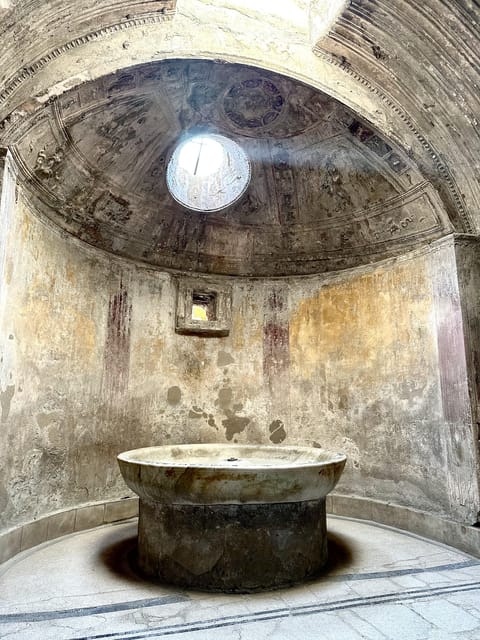
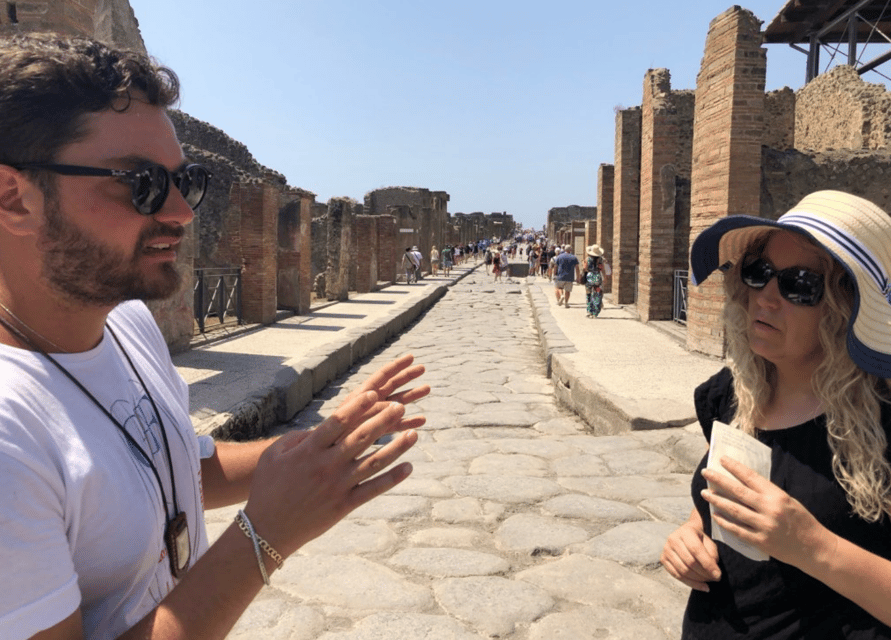
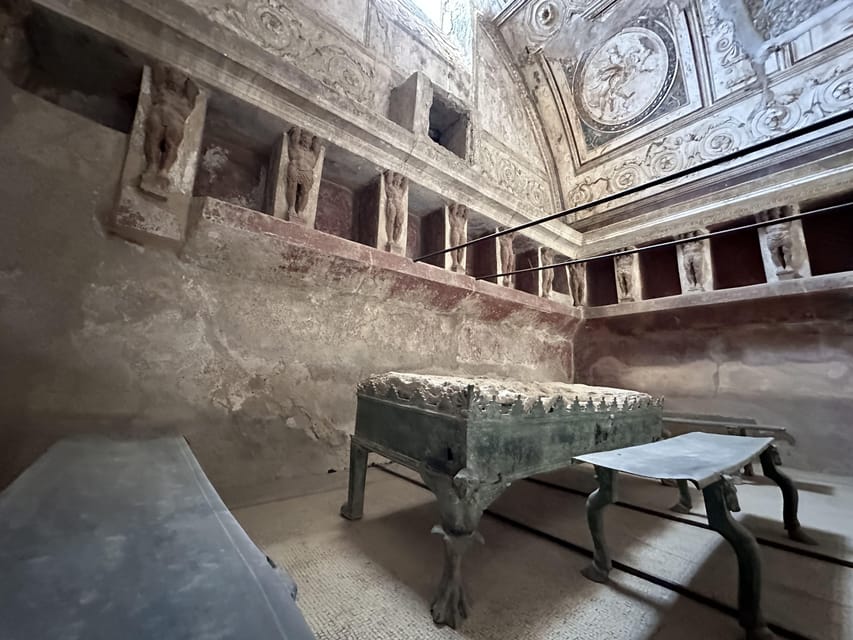
From the civic heart, you shift into the streets and neighborhoods where daily life shows up more clearly. The tour includes walking the Greater Decumano, where you’ll look at the thermal system (the city’s baths and plumbing logic), and you’ll also pass by the Lupanare, a well-known building linked with sex work.
This is where Pompeii stops feeling like a museum and starts feeling like a city. Thermals, streets, and street-level businesses help you imagine what people did morning to night. And the guide’s role here is key: without interpretation, it can be easy to skate over details and only remember the big photos.
You’ll also explore the market-style atmosphere along major roads such as Via dell’Abbondanza. Think of it like this: the forum tells you how people organized power. The streets show you how they lived with that power every day—through services, commerce, and routine.
Comfort tip: Pompeii is uneven in places, and you’ll do a lot of walking. Start with shoes you can trust. If you’re sensitive to heat, sunscreen helps more than you’d think once you’re in open areas under the sun.
Domus Time: Recently Opened Houses and Restorations That Change How You See Pompeii
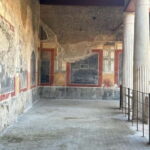
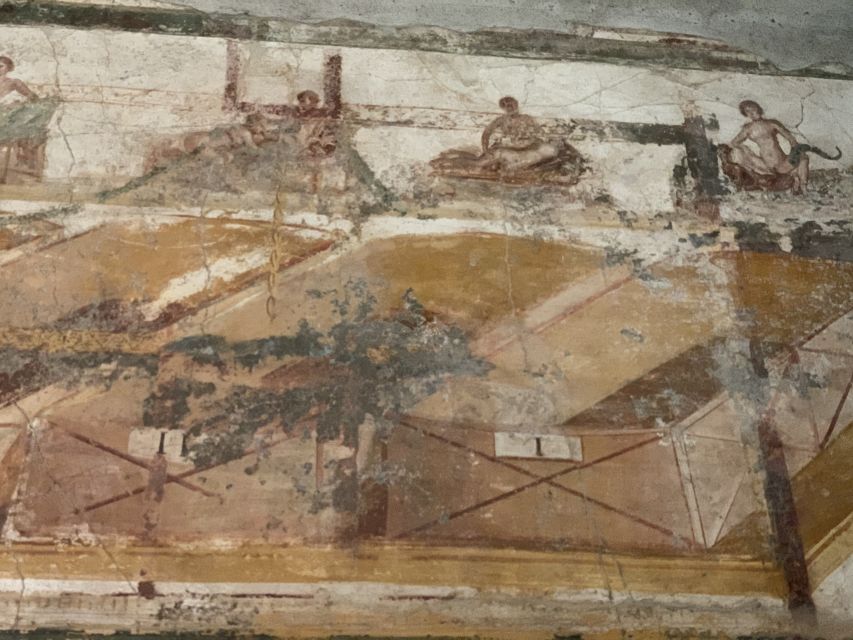
The best part of a Pompeii tour is often the houses—because domus (homes) show identity. In this tour, you spend time in some of the most beautiful houses, including ones that have been recently opened.
You’ll see restorations such as the House of Golden Cupids. That one matters because restoration work is part of how Pompeii becomes legible to visitors. Seeing what’s repaired (and how) helps you understand how archaeologists present evidence while still acknowledging what can’t be perfectly recovered.
You’ll also visit several domus stops, including:
- House of the Tragic Poet
- House of Menander
Even without going ultra-deep into any single home, the tour uses these stops to show patterns: how rooms were organized, what decoration suggests about social status, and how home layouts connect to the city’s street world.
One thing you might not expect: this segment is emotionally easier for many people than the darker stops later, because houses feel like “people lived here.” Of course, the city was built on real risks—so the tone stays grounded, but it gives you a break from the most intense parts.



Temples and Theatres: How Religion and Leisure Fit Into the Same Streets
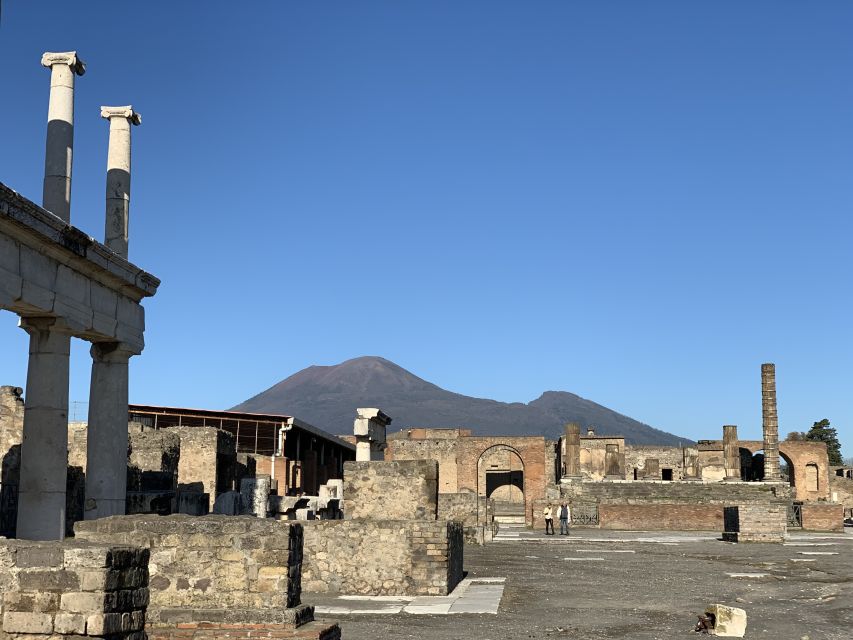
The itinerary includes key stops tied to belief and entertainment, including the Temple of Apollo and the Temple of Jupiter. Temples weren’t just architecture. They were anchors for civic identity, festivals, and public life.
After that, you’ll spend time around theatre spaces. You’ll visit the Large Theatre, which helps you see Pompeii as a place where people gathered for performances and communal events—not only for politics and commerce.
Then there’s the Great Gymnasium, another big “daily life” stop. A gymnasium in the Roman world wasn’t only for exercise; it was social space, routine space, and sometimes a place to be seen. Seeing what daily objects are exposed there helps your brain shift from “spectator mode” to “understanding mode.”
This is a good stretch if you’re trying to balance Pompeii’s scale with human routines. The downside is that it’s still a lot to cover in 3 hours. You’ll want to lean on your guide to pick the key details, because there simply isn’t time for everything.
Garden of the Fugitives: Body Moulds That Make History Stop Being Abstract
If you remember just one stop after the tour, it’ll probably be this one. The Garden of the Fugitives is where you encounter the body moulds left by victims of the eruption—people who tried to escape and perished.
This stop is heavy. It’s also why guided interpretation matters. Your guide can help connect what you’re seeing to the broader timeline and the reality of what happened. You’re not just staring at a strange shape; you’re confronting evidence.
I appreciate that this tour doesn’t treat Pompeii like a theme park. It gives you the facts and the context so the emotional weight doesn’t become confusion. For many people, it’s the moment the whole city stops being a set of photos and turns into a human story.
Practical consideration: spend your mental energy here. Don’t plan to also cram shopping or wandering right afterward. If you can, give yourself a little decompression time.
Amphitheatre Finale: The Size and Design You Can Actually Feel
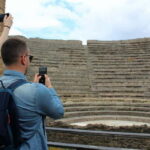
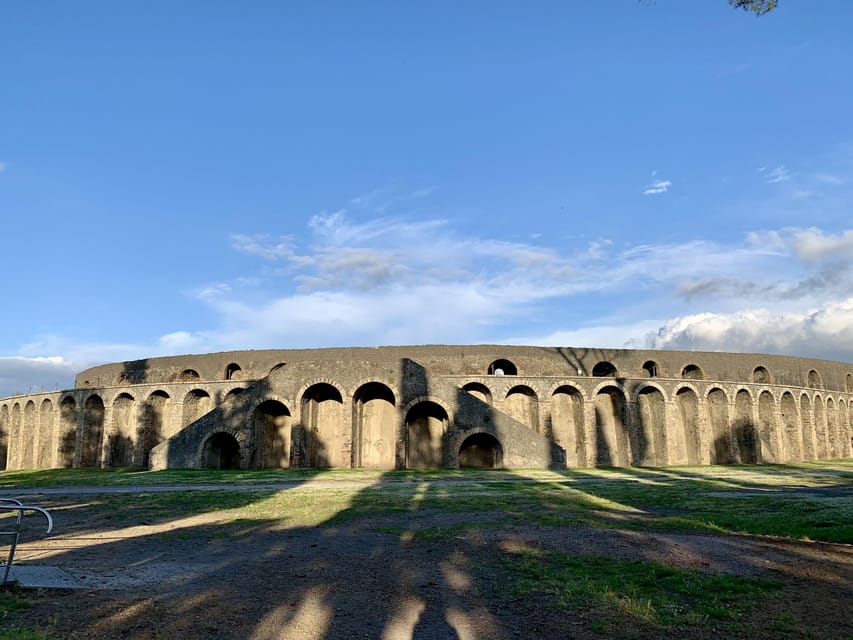
The tour ends at the Amphitheatre, described as the final stop of the journey. This is a smart way to wrap up because an amphitheatre shows scale and crowd design. Once you’ve walked through streets, homes, civic buildings, and entertainment venues, the amphitheatre ties it together.
You can start to see how Pompeii was built for gatherings—how public spaces were designed for visibility, movement, and attention. And it’s also a great “last look” because after walking through many sites, you’ll better appreciate how architecture shapes experience.
If you’re visiting Pompeii mainly for the wow-factor, this ending helps. If you’re visiting for understanding, it reinforces the civic-and-social picture your guide built throughout the tour.
Price and Value: What You’re Actually Paying For
The price shown is $407.83 per group, up to 1 person, for a 3-hour private tour. That’s not “budget” pricing, and it doesn’t try to be. It’s paying for several concrete things that are hard to replicate on your own:
- Private guided tour with a personal archaeologist
- Admission tickets included
- Skip-the-line service
- Full assistance (so you’re not stuck figuring out ticket rules, entry flow, or where to go next)
For a solo traveler, the cost can make sense because you’re essentially buying guaranteed time with an expert and cutting out the wasted hours that often happen when you try to DIY a route across Pompeii’s scale.
If you’re traveling as a group larger than what this listing indicates, your best move is to compare the per-person effective price against group tours that share a guide. The real question isn’t just “is it expensive?” It’s: do you want a guide who can connect objects from excavations to what you’re seeing in the streets and homes? If yes, this format is usually worth it.
Tips Before You Go: Ticket Rules, Timing, and Comfort That Matter
Pompeii has introduced strict ticketing rules to stop illegal resellers. For this tour, you’ll need to send the full list of participant names (full name and surname), and you must bring an original ID or passport. Tickets are personal, so being on time isn’t just courtesy—it’s part of the system.
Also:
- Wear comfortable clothes and comfortable shoes
- Bring sunscreen
- Pets are not allowed
- Alcohol and drugs are not allowed
- Food and drinks aren’t included, so plan around that
Language coverage is solid: the guide can operate in English, French, Spanish, and Italian. And the tour is wheelchair accessible, which is a meaningful plus if you need an environment that can handle mobility limits.
One last practical angle: if you’re trying to decide between this VIP approach and a self-guided walk, think about your goal. If your goal is to learn and make sense of what you’re seeing, the private archaeologist format is the lever.
Should You Book This Pompeii VIP 3h Tour?
Book it if you want Pompeii with structure. A licensed archaeologist-focused route is ideal when you care about how excavations reshape the story—like the antiquarium objects tied to eruption understanding. It’s also a strong choice if you want those high-impact stops packed into one visit: the Garden of the Fugitives, recently opened domus, and the amphitheatre.
Skip it (or consider alternatives) if your priority is slow roaming and extra time in every room. With only 3 hours, you’ll cover a lot, but you won’t linger everywhere.
If you do book, I’d treat the meeting time seriously and bring your ID. That’s the difference between a smooth start and an avoidable stress moment.
If you like your tours with real experts, this one’s built for that—and it ends right where Pompeii’s scale becomes impossible to forget.
FAQ
How long is the Pompeii VIP 3h Tour?
It lasts 3 hours.
Where is the meeting point for the tour?
You meet at Porta Marina Superiore, right in front of Hortus Bar, and the tour ends back at the meeting point.
Is skip-the-line entry included?
Yes. Skip the line service is included.
Are admission tickets included?
Yes. Admission tickets are included in the tour.
Is transportation included?
No. Transportation isn’t included.
What languages are offered?
The live guide is available in English, French, Spanish, and Italian.
Is this a private tour?
Yes, it’s listed as a private group.
What should I bring?
Bring comfortable shoes, sunscreen, and comfortable clothes.
Do I need to provide names and an ID for the tickets?
Yes. You must provide full names and bring an original ID or passport, and you should arrive on time because tickets are personal.