REVIEW · POMPEII
Private Pompeii & Amalfi Coast Tour: Sorrento & Positano -Tickets
Book on Viator →Operated by Leisure Italy · Bookable on Viator
Pompeii in one day is a big idea. This private outing pairs priority entry at the Roman ruins with the “how is this real?” cliff views of the Amalfi Coast, plus free time in both Sorrento and Positano.
I especially like two things: first, you get Pompeii Express skip-the-line tickets and a guided walking plan so you’re not wasting your morning in a ticket line. Second, the day is built with smart pacing—long enough to understand key Pompeii landmarks, then enough breathing room to wander Sorrento’s lanes and stroll Positano’s beachfront without rushing.
The one drawback to weigh is time and walking. Even with a focused route, Pompeii is still Pompeii, and you’ll be on your feet for several hours, with moderate physical fitness needed.
In This Review
- Key highlights worth knowing before you go
- A private, priority day: Pompeii first, coast after
- Priority at Pompeii: why the ticket strategy matters
- Pompeii route you can actually follow: from gate to house
- The Pompeii starter block: a highlight tour with kid-friendly energy
- Porta Marina and the walls: entering the city the real way
- Civic power in stone: Basilica, Forum, and a whole lot of public life
- Religion with personality: Temple of Apollo
- Food and daily supply: Macellum
- Baths as social life: Terme del Foro
- Elite homes and arts: Casa dei Vettii
- Neighborhood life from above: Insula dei Casti Amanti
- Entertainment and crowds: Teatro Grande
- Antiquarium di Pompei: a fast brain reset before the walk
- The Amalfi Coast by road: SS145 to Sorrento
- Sorrento hour: Piazza Tasso, Corso Italia, and a quiet cloister
- Positano in an hour: the cliffside, Spiaggia Grande, and Santa Maria Assunta
- Private Mercedes comfort and onboard live commentary
- Price and value: what $486.47 is really buying
- Who this tour fits best (and who should rethink)
- Should you book this Pompeii & Amalfi Coast tour?
- FAQ
- Do I need to buy tickets for Pompeii?
- Is pickup available, and where can it be arranged?
- Will there be an English guide during Pompeii?
- How much time do I get in Sorrento and Positano?
- Is lunch included?
- What’s the cancellation window?
Key highlights worth knowing before you go
- Priority access at Pompeii saves time and helps you see more of the site
- A planned Pompeii route hits the Forum, Baths, major temples, and standout houses
- Photo stops on the Amalfi Coast road mean you’re not just staring out the window
- Free time in Sorrento and Positano lets you do coffee, shopping, or a slow beach walk
- Private Mercedes van + live onboard commentary keeps the day organized and low-stress
- Family-friendly energy, especially for kids around ages 6 to 11, with games and story-style guidance
A private, priority day: Pompeii first, coast after
This is the kind of full-day plan that works because it respects your time. You start with Pompeii while your energy is still high, then you switch gears to the Amalfi Coast viewpoints, ending with time to enjoy two classic towns at a human pace.
What makes it feel “private” in practice is that you’re not sharing a day-long schedule with strangers who move at a different speed. Your guide and driver can adapt your rhythm—how fast you want to walk, where you want to linger for photos, and when you’d like a little more independence to wander.
If you like structure but hate being trapped in a rigid tour, this format is a good fit.
You can also read our reviews of more tours and experiences in Pompeii


Priority at Pompeii: why the ticket strategy matters
Pompeii is one of those places where arriving early helps, but waiting in lines can drain your day fast. This tour includes Pompeii Express skip-the-line tickets, which means you spend less time stalled at the entrance and more time in the streets, temples, and markets that make Pompeii unforgettable.
That priority also changes the emotional vibe. Instead of feeling like you’re always catching up, you can actually start absorbing the place right away. Pompeii rewards focus: street grids, public buildings, household art, and everyday spaces connect into one story.
One more practical note: Pompeii is large and uneven. The tour says you can still enjoy the experience even if you don’t want the full walk inside—there are cafés and shops right outside the entrance, so you’re not completely stuck if legs or heat become an issue.
Pompeii route you can actually follow: from gate to house
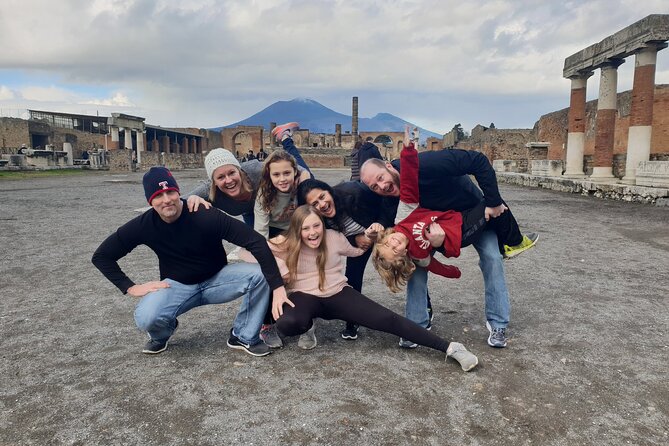
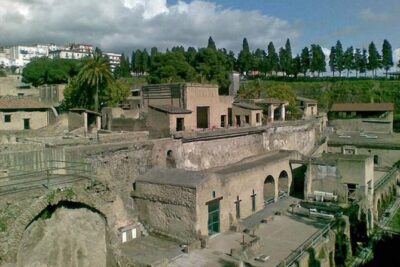
Your Pompeii time centers on a guided walking tour that selects the highlights of the archaeological park, with admission ticket included for the key sections you visit. The tour’s pacing is designed so you get a strong overview without trying to cram everything into one sprint.
The Pompeii starter block: a highlight tour with kid-friendly energy
The morning begins at the Archaeological Park of Pompeii with a guided route that focuses on what’s most meaningful. There’s also a special Pompeii for Kids style visit recommended for kids ages 6 to 11, and the family review you shared specifically points to Giuseppe using games, stories, and a map to keep kids engaged.
That kid-friendly approach isn’t just for children. Even if you’re traveling solo or as a couple, it helps you remember details: what you’re seeing, why it mattered, and how the pieces fit together.
If your group includes kids who can’t do long museum-style listening, this portion is a real advantage because it adds motion and play while keeping the facts grounded.
Porta Marina and the walls: entering the city the real way
A quick stop at Porta Marina gives you the feeling of arrival—this gate was one of Pompeii’s main access points near the port area. You can walk along the original stone ramp and connect what you see now to how merchants, sailors, and visitors would have entered.
The follow-on theme here is defense and control. Connecting this gate to the defensive walls helps you understand Pompeii as more than ruins—it was a working city with systems, borders, and traffic flow.
You can also read our reviews of more private tours in Pompeii





Civic power in stone: Basilica, Forum, and a whole lot of public life
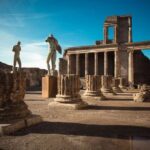
Next up is the Basilica, Pompeii’s central public hall for business, justice, and political life. It’s tall, formal, and very Roman: columns, open space, and the sense that deals were being made and rulings delivered right in the middle of daily life.
From there you step into the Forum, the civic heart where religion, politics, and commerce overlap. The layout from the surrounding terraces gives you a useful “map view,” so you can understand how the Capitolium, Basilica, and Macellum relate in one monumental square.
This is one of the smartest parts of the route because it doesn’t require you to be an expert. With a guide’s explanation, you start seeing Pompeii like a city, not like disconnected sights.
Religion with personality: Temple of Apollo
The Temple of Apollo is an anchor point for the spiritual side of Pompeii. The big idea: it’s one of the oldest and most important religious sites, dedicated to Apollo—god of the sun, music, and prophecy.
In plain terms, you’re learning how people organized life around public worship. The temple sits near the Forum area, so it fits Pompeii’s pattern of civic and religious spaces sharing the same power center.
Food and daily supply: Macellum
The Macellum was Pompeii’s covered food market, and the tour uses it as a shortcut to understanding daily rhythms. You see how stalls, storerooms, and central features worked together to keep the city fed.
Even a quick stop here pays off because food supply is something you can picture immediately. You get the sense of transactions happening at morning pace, with imported delicacies and local products moving through a busy daily system.
Baths as social life: Terme del Foro
The Forum Baths are where Pompeii gets human in a different way. You’re seeing a social and recreational hub, with separate areas for men and women, plus spaces for warm and hot bathing and a cold plunge pool.
A standout detail: the heating system relied on a hypocaust, and you can still make out stucco reliefs and vaulted ceilings. That preservation matters. It turns the Baths into a vivid glimpse of hygiene plus leisure plus conversation—an everyday routine, not a tourist-only exhibit.
Elite homes and arts: Casa dei Vettii
The House of the Vettii shows what wealthy life looked like. The route focuses on the house’s decorated frescoes and layout around atria and peristyle gardens, highlighting refined taste in the 1st century AD.
If you’re the type who likes art and design, this stop is one of the most rewarding. Pompeii’s homes help you understand that the city wasn’t only about public squares. It had private worlds, too.
Neighborhood life from above: Insula dei Casti Amanti
Next comes Insula dei Casti Amanti, a residential and commercial block named after a striking fresco of lovers. Today, visitors access the site via elevated ramps designed to protect fragile surfaces while still giving you a clear view into workshops and rooms below.
This is a clever stop because it helps you imagine daily routine at city-block scale. You can picture craftsmen working, families moving between spaces, and trade mixing with home life.
Entertainment and crowds: Teatro Grande
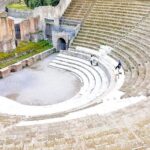
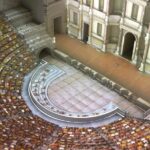
Finally, Teatro Grande brings the drama into focus. From terraces and modern walkways, you can look down onto seating tiers and understand the scale of performances.
Even without standing inside for long, the structure tells you why it mattered. Pompeii’s theatre wasn’t an occasional event—it was a place where public ceremonies and popular drama turned community into a shared experience.
Antiquarium di Pompei: a fast brain reset before the walk
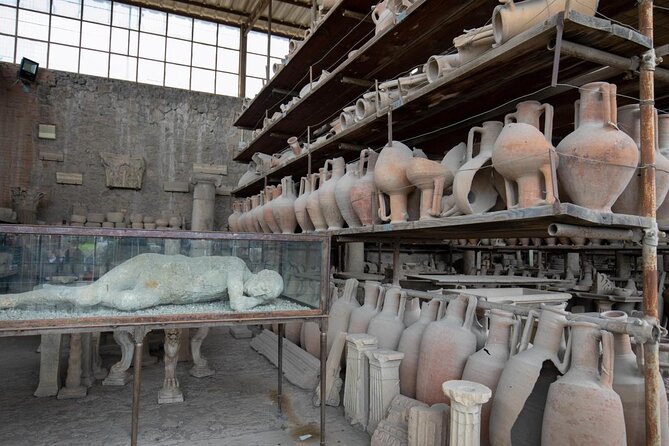
The Antiquarium di Pompei acts like your on-site orientation. You move through galleries with statues, household objects, inscriptions, and jewelry—items that don’t always survive well outdoors.
Then you get plaster casts and eruption-related material in a more controlled setting. That emotional framing helps when you step back outside and look at ruins with context, not just visuals.
The drawback is timing: since it’s included and helps you understand the rest of Pompeii, you’ll want to use that time actively. Treat it like a short briefing, not a place to wander with no plan.
The Amalfi Coast by road: SS145 to Sorrento
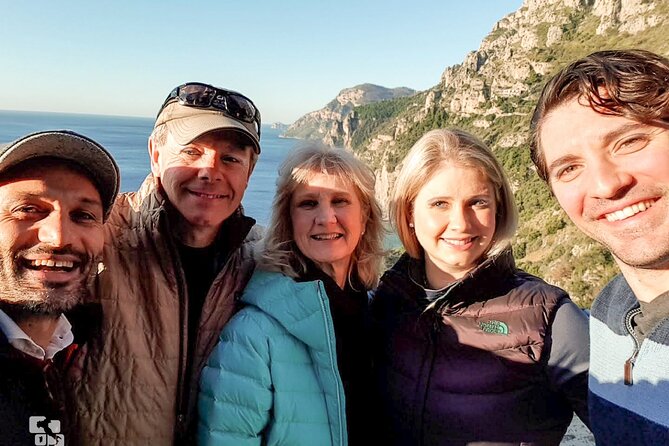
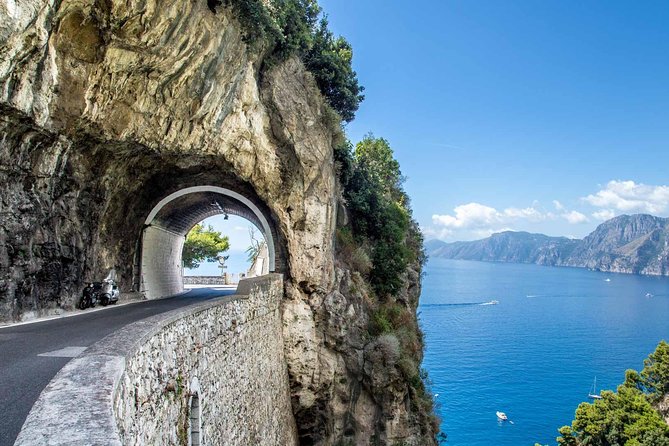
After Pompeii, you switch from Roman stone to Mediterranean scenery. The route includes Strada Statale 145, which winds along cliffs and is famous for views over the Bay of Naples. From the vehicle, you get glimpses of Mount Vesuvius, terraced lemon groves, small ports, and fishing villages.
You’re not stopping every two minutes, but the drive itself is part of the experience. The winding road and photo turnouts build anticipation before you even reach town.
It also helps you avoid the most common Amalfi mistake: arriving without seeing the coast’s big-picture scale.
Sorrento hour: Piazza Tasso, Corso Italia, and a quiet cloister
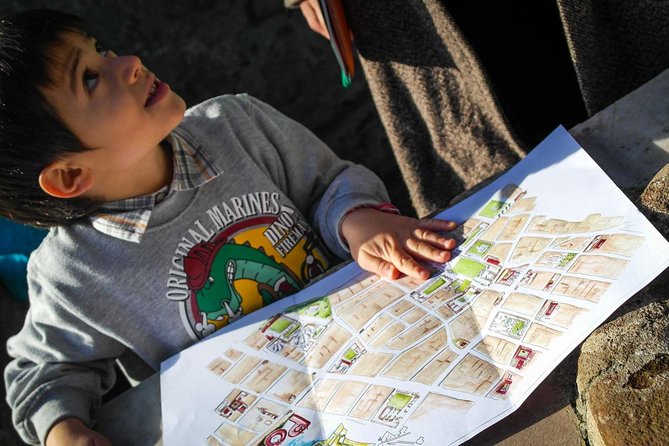
Sorrento is where you take a breather. You get about 1 hour of free time (with admission for specific sights listed as free where applicable), and that’s enough to do one or two “anchor” stops without feeling rushed.
Start with Piazza Tasso, the social center framed by cafés and patisseries. It’s a great place to get your bearings fast. Watch the flow of locals and day-trippers, then decide if you want coffee, gelato, or a quick snack before strolling.
From there, head to Corso Italia, the main promenade lined with shops—leather goods, limoncello producers, and the kind of everyday shopping that makes towns feel real. The timing matters: late afternoon passeggiata-style walking is where it feels most alive.
If you need a pause from street noise, the Cloister of San Francesco is a calm reset. Its pointed arches and portico create a small pocket of quiet before you walk back toward the coast areas.
This is also where you get to control your own pace. If your group includes walkers and non-walkers, this hour is easy to tailor.
Positano in an hour: the cliffside, Spiaggia Grande, and Santa Maria Assunta
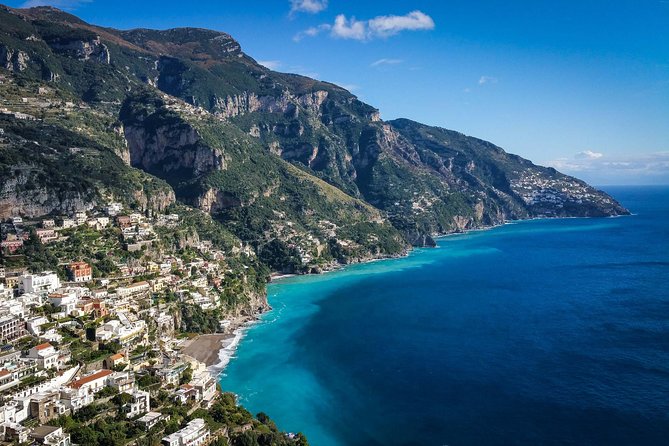
Positano is steep, dramatic, and very easy to photograph from the road. The tour gives you a full 1 hour of free time, and it’s just enough to catch the town’s signature look and still feel like you visited, not just passed through.
Begin at Spiaggia Grande, the main beach and natural hub at the base of those pastel cliffside buildings. You’ll see ferries, small boats, and the waterfront promenade where the town’s daily rhythm plays out.
Then move to Chiesa di Santa Maria Assunta, Positano’s iconic landmark with a colorful majolica dome. Inside, it’s a Baroque space with marble altars and side chapels, plus the celebrated icon of the Black Madonna, tied to local legends about pirates and storms.
Even if you only spend a few minutes there, stepping back out onto the church steps gives you a panoramic viewpoint back toward the harbor and beach area. It’s one of the easiest “wow” moments to capture without needing special tickets or an extra hike.
Private Mercedes comfort and onboard live commentary

Getting to Amalfi-area towns often means stress: traffic, parking, and uncertain timing. This tour uses a private transportation Mercedes Minivan with an English-speaking driver and live commentary onboard, plus A/C and a clean, comfortable ride.
That matters because it turns the long day into something you can manage. Live commentary also helps you connect dots—what you’re seeing from the road, how towns developed, and what to notice as you approach.
You’ll still want comfortable walking shoes and sun protection. Pompeii plus steep-town strolling is not the day to wear fancy footwear unless you enjoy regretting it later.
Price and value: what $486.47 is really buying
The price is $486.47 per person for an 8 to 9 hour private experience, and you should judge it by what’s included and what you avoid.
You’re paying for:
- Priority skip-the-line Pompeii tickets
- Private Mercedes van instead of shared chaos
- Live English commentary
- A guided Pompeii highlights route with multiple key sites
- Admission tickets included for the Pompeii stops listed
- Time in Sorrento and Positano without added ticket requirements for those free areas
For couples, this can be a solid value if you’re comparing it to the cost of separate transportation + individual guide + timed entry. For families, it often makes even more sense because kids do better with guided structure, and parents do better when the day is handled.
If you’re traveling solo on a tight budget, the private format will feel expensive compared to group tours. But if you value convenience, timing, and not arguing about schedules, the price can feel fair.
Also, the rating trend is very strong, and your provided reviews highlight Giuseppe’s patience and how he tailored the day for kids with games, stories, and a map.
Who this tour fits best (and who should rethink)
This experience is a great match if you want one day that covers Pompeii plus two Amalfi-area towns without turning it into an endurance contest.
It’s especially good for:
- Families with kids around the 6 to 11 age range, since Pompeii for Kids style activities are specifically recommended
- First-timers to Pompeii who want the highlights explained in a clear order
- People who prefer guided focus in Pompeii, then independent time in town
- Visitors who don’t want the hassle of planning routes between Naples-area pickup, Pompeii entry, and coastal driving
You might rethink it if:
- You want a super long stay at Pompeii to wander slowly across every street
- Your group has limited walking ability for the number of Pompeii stops included
- You’re hoping for a long lunch with a set restaurant stop (lunch is not included; the tour notes lunch only if requested)
Should you book this Pompeii & Amalfi Coast tour?
I think this is a smart booking for most people who have a limited schedule and want a day that feels both meaningful and manageable. Priority entry at Pompeii plus a guided route is the big win, and the Sorrento + Positano time makes the day feel like more than a history assignment.
Book it if your goal is: see the core of Pompeii well, then enjoy Amalfi Coast towns at a human pace. If your goal is: spend all day wandering Pompeii on your own, you may prefer a more flexible approach. For everyone else, this private format usually feels like the easiest way to make the most of one day.
FAQ
Do I need to buy tickets for Pompeii?
You’ll have Pompeii Express skip-the-line tickets included, and admission is included for the Pompeii stops listed on the itinerary.
Is pickup available, and where can it be arranged?
Yes. Pickup is offered from Naples, Sorrento, Pompeii, and other locations like hotels, vacation rentals, train stations, and airports, plus cruise terminal/port. You specify your pickup place when booking.
Will there be an English guide during Pompeii?
The tour includes a private guide for the Pompeii highlight walk (English is offered). Your Pompeii visit includes guided selection of key ruins, and the experience mentions optional guide within Pompeii.
How much time do I get in Sorrento and Positano?
You get about 1 hour in Sorrento and about 1 hour in Positano, with free time to explore specific areas like Piazza Tasso, Corso Italia, and Spiaggia Grande.
Is lunch included?
No. Lunch isn’t included unless you request it.
What’s the cancellation window?
You can cancel for a full refund up to 24 hours before the experience start time. If you cancel less than 24 hours before, the amount paid is not refunded.