REVIEW · POMPEI CAMPANIA
Pompeii Skip the Line Ticket + Guide Book with itineraries
Book on GetYourGuide →Operated by VISITING CAMPANIA S.R.L. · Bookable on GetYourGuide
Pompeii is big, and this helps you beat the stress. I like the skip-the-line ticket for easier entry, and I really like having a take-your-time guidebook with 2, 4, or 6-hour plans and an updated map. The main catch: you may still face a line for security bag scanning, so don’t expect instant magic at the gate.
You can enter from 9:00 am to 5:00 pm, then wander at your own pace without a live group to keep up with. This is a great fit if you want Pompeii to feel personal, with time to stare at frescoes, read the room-by-room story, and step back before the crowds build.
Here’s the one consideration: Pompeii is spread out, and without a clear plan you can burn hours walking in circles. The guide itineraries help, but you’ll still want comfortable shoes and a simple strategy for where you start.
In This Review
- Key things I’d focus on before you go
- Pompeii with a skip-the-line ticket and a built-in game plan
- Where and how you enter: Piazza Anfiteatro and the Via Roma info point
- Getting the most from 2, 4, or 6 hours (without rushing the ruins)
- First steps inside: getting oriented fast at Pompeii
- Streets, houses, and frescoes: what to look for in plain sight
- Baths, temples, shops, and Thermopolis: daily life in Roman rhythm
- Theaters and brothels: Roman entertainment, shown without sugarcoating
- Victim casts and the amphitheater: the emotional high point
- Keeping it low-stress: shoes, timing, and a smarter end-of-day plan
- Price and value: what $41 gets you (and what it doesn’t)
- Who this Pompeii ticket is best for
- Should you book this Pompeii skip-the-line ticket?
- FAQ
- Where do I go for the meeting point staff?
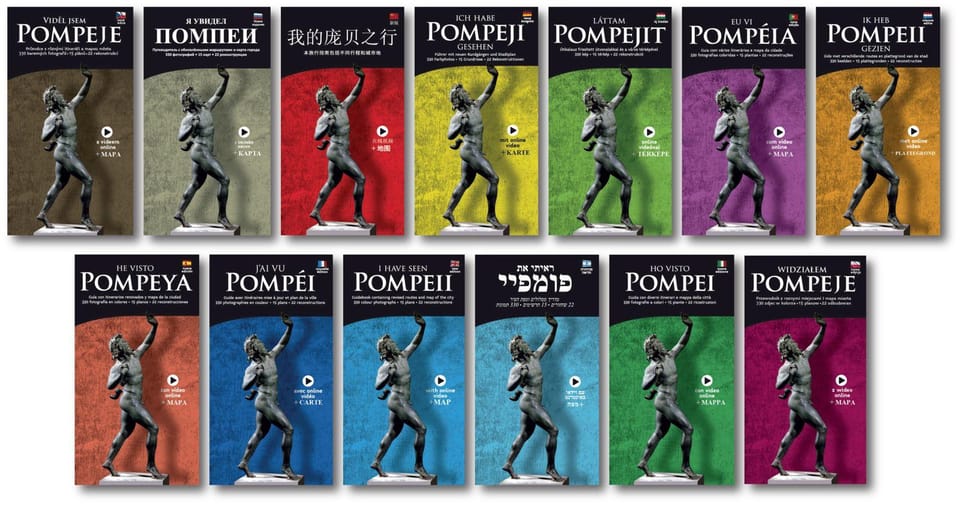
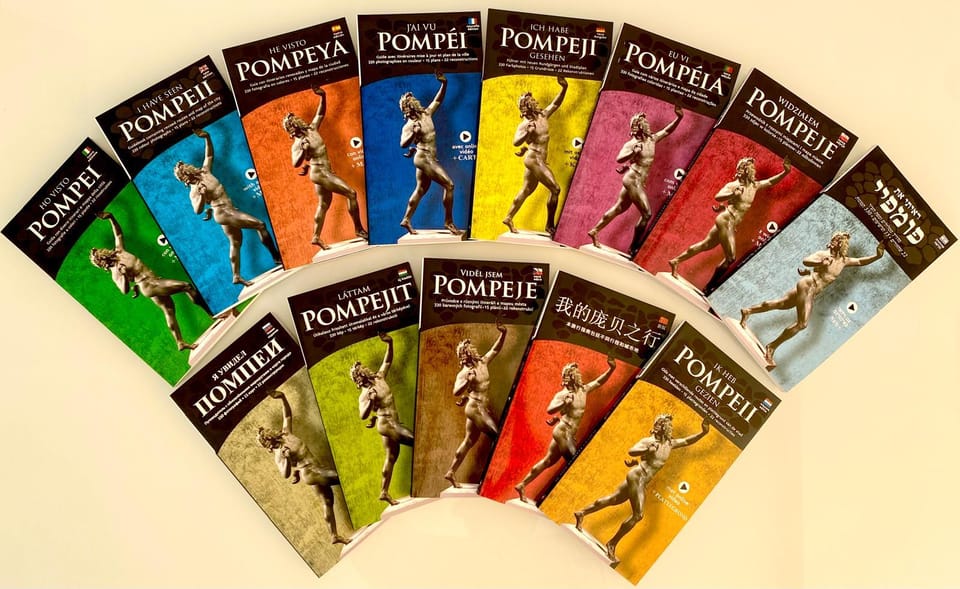
- What do I actually receive with the ticket?
- Can I enter Pompeii any time during the day?
- Is this a guided tour with a live instructor?
- What languages are supported?
- What’s included in the ticket price?
- What is not included?
- What should I bring to Pompeii?
- Is there a youth discount?
Key things I’d focus on before you go
- Skip-the-line ticket to Pompeii Archaeological Park, so you can spend your energy inside
- Guidebook + updated map with suggested routes in 2, 4, or 6 hours
- Self-guided pacing with entry windows from 9:00 am to 5:00 pm
- Famous Pompeii highlights you’ll be able to spot fast: baths, temples, shops, Thermopolis, theaters, brothels
- Victim cast area and one of the best-preserved Roman amphitheaters for the emotional peak
- Practical reminder: expect security scanning lines even with a skip ticket
Pompeii with a skip-the-line ticket and a built-in game plan
A skip-the-line Pompeii ticket is only useful if it saves you enough time to actually enjoy the site. In this case, the value is that you’re not paying for a live guide who talks at you. You’re paying for an easier entry process plus a guidebook you can use all day at your own speed.
The guidebook matters because Pompeii can feel like a puzzle at first glance. With the updated map and timed itineraries (2, 4, or 6 hours), you get a route idea that turns a huge archaeological park into a manageable walk.
If you’re visiting with a partner, this is also a practical setup: one book is provided for every two reservations, so you’ll want to plan who will hold the guidebook and who will keep the map handy.
You can also read our reviews of more tours and experiences in Pompei Campania



Where and how you enter: Piazza Anfiteatro and the Via Roma info point
Your entry starts with Piazza Anfiteatro. That’s where you go once you’re in the park area with your reservation.
Before you head to that entrance, you meet staff at the information point at VIA ROMA 123, POMPEI. When you arrive, show your voucher to staff for easy access to the Pompeii Archaeological Park.
One thing to keep your expectations grounded: even if you’re skipping some lines, you should plan time for security checks. The site’s still the site, and bag scanning can slow things down before you even reach turnstiles.
Getting the most from 2, 4, or 6 hours (without rushing the ruins)
The guidebook gives you a choice of itineraries designed around how much time you want to spend. If you only have a short visit, pick 2 hours and focus on the biggest, most recognizable stops. If you want breathing room, 4 hours is the sweet spot for actually reading the context and lingering in the places that hit you.
For a fuller day, 6 hours lets you slow down across multiple zones. You’ll be able to move from daily life to public spaces without feeling like you’re skipping your own highlights.
Here’s how I’d use those itineraries in real life:
- Follow the route in order, then add 10 minutes to any spot you keep circling.
- Use the map to confirm you’re pointed the right direction before you commit to a longer walk.
- Treat Pompeii like rooms in a museum, not like an outdoor checklist.
And if you’re the type who hates wasting time, plan a quick start. After you’ve settled into your first few stops, you’ll know what kind of Pompeii visitor you are: fresco-starter, street-walker, or amphitheater-obsessed.
First steps inside: getting oriented fast at Pompeii
Once you’re in, your goal is to find your bearings quickly. Pompeii is large, and the worst feeling is realizing you’ve spent the first hour walking without a clear route.
Start by using the updated map before you go deep. It’s not just navigation. It helps you understand what’s near what, which is the difference between a day that feels efficient and one that feels random.
As you move, keep in mind that Pompeii isn’t a single “main attraction.” It’s a chain of neighborhoods and public spaces. That’s why the guide itineraries work so well: they stitch together the site so you don’t end up crisscrossing.
Streets, houses, and frescoes: what to look for in plain sight
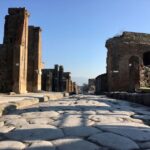
One of the best parts of Pompeii is how normal it can feel. You’re walking through what used to be everyday spaces—millennial streets, doorways, and buildings that once held real routines.
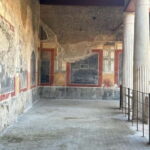
With your guidebook, you’ll be able to spot frescoed houses and interpret what you’re seeing instead of just admiring it. The magic is in details like wall paintings and how rooms connect. Even if you’ve never studied Roman life, the guidebook’s history and ruin explanations help you read the site.
A practical drawback here: it’s easy to overheat and lose patience in the middle of the day. Build in short breaks between zones, and keep water on you. Pompeii rewards slow looking, but only if you don’t fry doing it.
You can also read our reviews of more guided tours in Pompei Campania



Baths, temples, shops, and Thermopolis: daily life in Roman rhythm
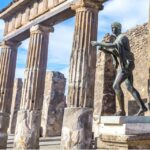
Pompeii does a great job of showing what Romans actually used their city for. Look for spas, temples, and the street-level spaces that made commerce and community happen.
You’ll also see references to shops and the Thermopolis, basically the fast-food style place of the time. It’s one of those stops where the building’s purpose clicks into place. You’re not just looking at stone walls; you’re imagining the flow of people grabbing something hot, moving on, and living their day.
This is also a good section for visitors who love “how things worked.” The guidebook’s updated map and suggested route help you avoid getting stuck in one area while the rest of Pompeii waits.
Theaters and brothels: Roman entertainment, shown without sugarcoating
Pompeii isn’t shy about reality. In the same day you can walk past spaces connected to theaters and brothels, and both are part of how the city functioned socially.
In a self-guided format, these areas work best when you let the guidebook do the contextual heavy lifting. You’ll get more from the experience if you read the brief explanations instead of rushing past because the site feels uncomfortable or surprising.
If you want a balanced experience, try not to treat these stops like shocks or curiosities. Use them as part of the bigger story of daily life—what people watched, how they spent time, and how the city organized public and private spaces.
Victim casts and the amphitheater: the emotional high point
The casts of the victims of the eruption are where Pompeii changes tone. This is the moment when the archaeological site feels most human. Even if you’ve seen photos before, standing in the area in person tends to slow you down.
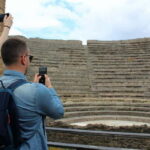
After that emotional peak, the day shifts again into physical scale. Pompeii has one of the best-preserved Roman amphitheaters, and it’s the kind of place that gives you perspective on how Romans gathered for spectacle.
If you like visual moments, plan to spend real time here. Don’t just walk in, snap a photo, and rush out. The amphitheater helps you understand the city as a stage—public life built into architecture.
Keeping it low-stress: shoes, timing, and a smarter end-of-day plan
This experience is designed to be easy and no stress, but your comfort still decides how much you enjoy it. Start with comfortable shoes and plan for lots of walking. Add a sun hat and keep water with you, especially since you’ll be outdoors most of the time.
Timing can also change the entire mood. If you can, save some energy for later hours. The site tends to feel calmer after about 4:30 pm, which is when you can slow down without feeling swept into crowd momentum.
One more real-world tip: don’t wait for your “perfect moment” to use the map. Use it early. Pompeii is massive, and your best chance to avoid backtracking is to correct your direction while you still have time.
Price and value: what $41 gets you (and what it doesn’t)
At around $41 per person, you’re paying for three key things:
1) Pompeii entrance with a skip-the-line ticket concept
2) A souvenir guidebook with 2, 4, or 6-hour itineraries
3) An updated map to keep your day organized
What you don’t get is just as clear: no food, no drinks, and no transfer. You’ll need to plan your own lunch or snack stop nearby and figure out transport to Pompeii yourself.
Is it worth it? For most people, yes—because you’re not only buying entry. You’re also buying a tool that shapes how you experience the site. A self-guided day with a good map and timed route can feel more flexible than a group tour, especially if you’re the type who stops to read.
One more pricing note: there’s a youth reduced price for ages 18–24, but it’s only for EU citizens. If that applies to you, it can make the ticket even better value.
Who this Pompeii ticket is best for
This works especially well if:
- You want Pompeii on your schedule, not a fixed group pace
- You enjoy reading as you go and want a guidebook you can keep
- You’d rather spend money on self-guided structure than on a live guide
It may be less ideal if:
- You hate any uncertainty about how lines move at the entrance, because security checks can still happen
- You’re going with no plan at all (Pompeii can be long-walk tiring fast)
If you’re visiting solo or as a couple, the setup is straightforward. You get the entry and the navigation help without having to coordinate meeting points inside the park.
Should you book this Pompeii skip-the-line ticket?
I’d book it if you want a practical way to see Pompeii without feeling rushed, and you’ll actually use the 2, 4, or 6-hour itineraries in the guidebook. The combination of skip-the-line entry plus a souvenir guide and updated map is a strong value for a one-day Pompeii plan.
I’d think twice if your main goal is maximum certainty that absolutely no line will slow you down. Even with the skip ticket, security processing can still add time at the start. In that case, build in buffer time and consider starting earlier in the day.
FAQ
Where do I go for the meeting point staff?
You meet staff at the information point at VIA ROMA 123, POMPEI. After that, you enter the archaeological park at Piazza Anfiteatro with your reservation.
What do I actually receive with the ticket?
You get a Pompeii entrance ticket, a guide book (one book for every two reservations), an updated map, and the guide’s itineraries for 2, 4, or 6 hours.
Can I enter Pompeii any time during the day?
Your ticket is valid for 1 day, and you can enter from 9:00 am until 5:00 pm.
Is this a guided tour with a live instructor?
This is self-guided. You get an instructor listed by language, but the experience is built around your ticket plus the guide book, map, and timed itineraries.
What languages are supported?
The guidebook is translated into 13 languages. The instructor languages listed are English, Italian, Spanish, and French.
What’s included in the ticket price?
Included are the Pompeii entrance ticket, the guide book, an updated map, and the itineraries of two, four, or six hours.
What is not included?
Food and drinks are not included, and transfers are not included.
What should I bring to Pompeii?
Bring a passport or ID card, comfortable shoes, a sun hat, water, and comfortable clothes.
Is there a youth discount?
Yes, there is a youth reduced price for ages 18–24, but it’s only for EU citizens.