REVIEW · POMPEI CAMPANIA
Pompeii: Entry Ticket & Guided Tour with an Expert Historian
Book on GetYourGuide →Operated by Vox City International · Bookable on GetYourGuide
Pompeii moves fast when it is planned well. This experience pairs fast-track entry with an art historian-led walk, so you spend your time on the big story of the city and the eruption, not in a queue. The main trade-off is simple: with a 2-hour guided route, you will only see the highlights, and you will want to plan extra time if you want more than the core sights.
I like how the whole setup keeps you oriented right away. You meet at the Vox City info point in Piazza Esedra, in front of Hotel Vittoria, swap your voucher for official tickets, then head into the Pompeii Archaeological Park with your guide. In a recent Spanish-language experience led by Rafael, the organization and the clear explanations made the ruins feel understandable instead of overwhelming.
After the tour, you get to keep going at your own pace. The in-app audio guide covers 130+ points of interest, but you’ll need to use your own phone (and headset if you want audio privacy), since the listing says those aren’t included.
In This Review
- Key highlights that make this Pompeii tour worth it
- Getting in at Piazza Esedra: the fast route starts before Pompeii
- The 2-hour historian walk: what you actually see and why it matters
- Roman temples and the city’s public face
- The Pompeii Forum: trade and politics in one space
- Vesuvius aftermath: what the ash, homes, and casts teach you
- Language and guide experience: choosing English, Spanish, or Italian
- Using the in-app audio guide after the tour (130+ stops)
- What is not included: the suburban villas you will need to plan separately
- Price and value: why $58 can feel fair (if you use everything included)
- Who this Pompeii tour fits best
- Should you book this Pompeii entry ticket with an expert historian?
- FAQ
- How long is the Pompeii guided tour?
- Where do I meet the tour guide?
- Does this ticket include skip-the-line entry?
- What languages are available for the live guided tour?
- Is there an audio guide included after the guided portion?
- What do I need for the audio guide?
- Which parts of Pompeii are included or excluded?
- How do I download the audio guide?
- What time should I arrive for the tour?
- Can I cancel, and is there flexibility in payment?
Key highlights that make this Pompeii tour worth it

- Fast-track entry saves time so your 2 hours start with momentum, not waiting.
- Historian-led storytelling helps you connect monuments, streets, and everyday details into one picture.
- Pompeii Forum focus gives context for trade and politics, not just postcard ruins.
- Vesuvius aftermath stops show the human scale of the eruption with ash-covered homes and plaster casts.
- 130+ audio points let you extend the visit independently right after your guided portion.
- Smart group coordination is built into the experience, which helps you find the right meeting spot and language.
Getting in at Piazza Esedra: the fast route starts before Pompeii
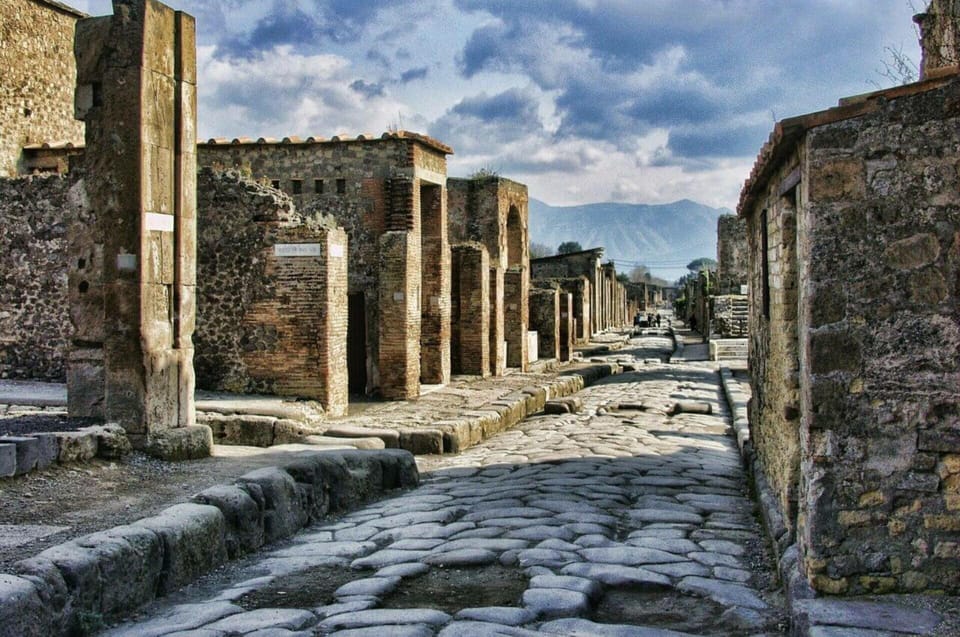
The best Pompeii visits feel smooth at the start. Here, you begin at Piazza Esedra, at the Vox City info point located in front of Hotel Vittoria. That’s also where you exchange your voucher for the official tickets, so you are not stuck figuring out the ticket process once you arrive.
Then your group enters the Pompeii Archaeological Park. Tours depart on the booked time slot, so arrive about 5 minutes early if you can. That small buffer matters at busy sites—especially in peak season—because it keeps your start on track and prevents a stressful scramble at the entrance.
You can also read our reviews of more tours and experiences in Pompei Campania



The 2-hour historian walk: what you actually see and why it matters
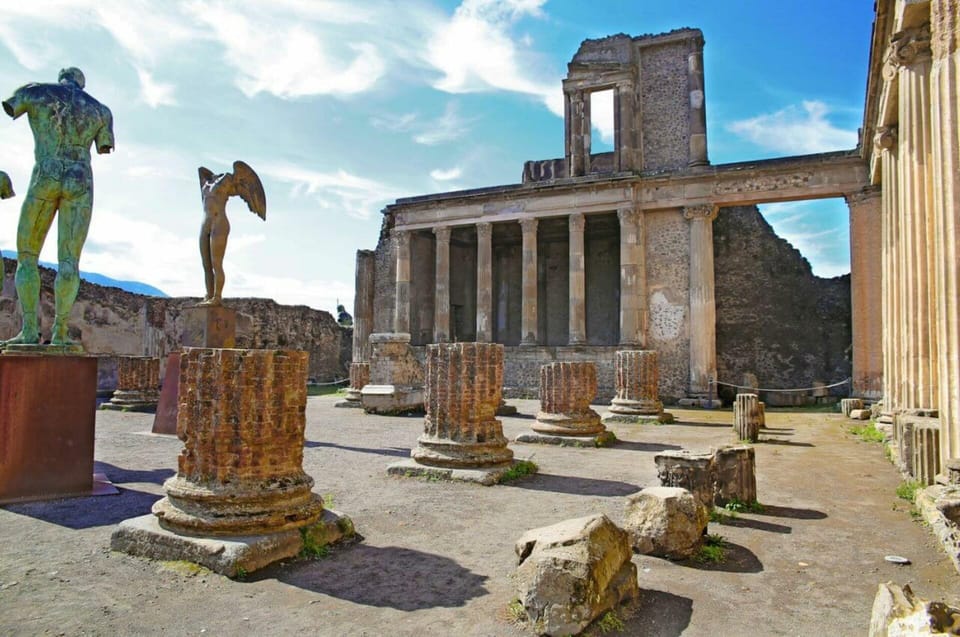
This is a compact, high-impact route: about 2 hours of guided time. You are not trying to cover every street and corner of a 44-square-hectare site. Instead, your guide uses the key landmarks to explain how a Roman city functioned, what people valued, and what the eruption changed forever.
You can expect a storyline that moves through the city’s center and major public spaces. The walk includes Roman temples and the heart of Pompeii, then builds toward the Pompeii Forum. Along the way, your guide points out details you might otherwise miss, like how architecture and layout reflect daily life and civic power.
Roman temples and the city’s public face
Roman temples weren’t just religious buildings. They helped shape the public identity of the city, from religious practice to civic pride. Seeing temples early in the route helps you understand that Pompeii is not only a set of houses—it’s a functioning urban landscape.
A guided walk also helps you look at ruins correctly. You start noticing things like where movement likely happened, how open space was used, and how buildings relate to the street grid.
The Pompeii Forum: trade and politics in one space
The Pompeii Forum is one of the best “anchor points” for a first-time visit because it concentrates so many roles in one area. It served as both a trading hub and a political center. That dual purpose is exactly what your guide can make clear: you are seeing a place where money, decisions, and daily business likely intersected.
This kind of context is the difference between seeing old stones and understanding old life. When you learn what a forum was for, it becomes easier to interpret other parts of the city you visit afterward on your own.
Vesuvius aftermath: what the ash, homes, and casts teach you
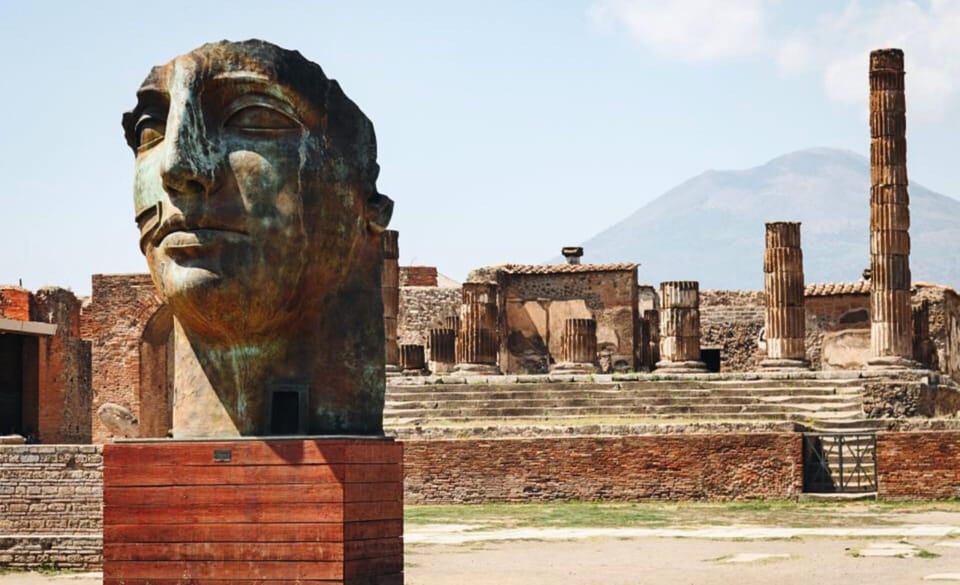
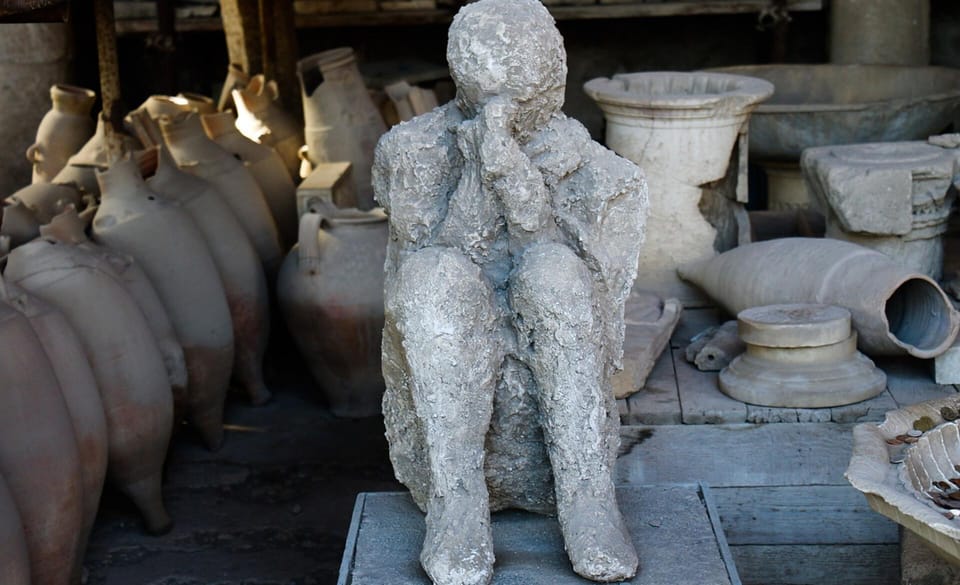
If you want the emotional impact of Pompeii without getting lost, this route is built for you. Your guided portion includes sights tied directly to the eruption: ash-covered homes and haunting plaster casts of victims, set against the dramatic backdrop of Vesuvius.
The value of these stops is not just shock. It’s scale and clarity. Ash preserved more than buildings—it preserved moments. And once you have those “frozen in time” examples in front of you, the city’s textures—walls, doorways, everyday objects—start to feel more personal rather than purely archaeological.
A good art historian (or historian-style guide) also helps you view the casts with care. You learn what you are looking at and why it matters, instead of treating the scene like a single dramatic photo moment. That’s where the live commentary matters most.
You can also read our reviews of more guided tours in Pompei Campania





Language and guide experience: choosing English, Spanish, or Italian
The guided tour is available in English, Spanish, or Italian. Selecting your language at checkout is worth doing early, because the guide’s storytelling style is a big part of why this experience works.
One of the strongest positives from real-world experiences with this tour style is the feeling that the guide makes the place make sense. In the Spanish-language experience led by Rafael, the explanations were a major reason the visit felt exceptional, not just informative. If you are traveling with family or friends who want clarity rather than just a route map, that historian voice is the heart of the experience.
Using the in-app audio guide after the tour (130+ stops)
Here’s the part I like most for independent exploring: the tour doesn’t “end” when the 2 hours finish. Your ticket includes an app-based audio guide with 130+ points of interest. After your guided portion, you can continue at your own pace using your smartphone.
You will need to download it. The instructions say to scan the QR code on your voucher prior to arrival. Do that early if you can, so you are not trying to troubleshoot your phone at the entrance.
One practical note: the information says headset and mobile device are not included. So bring your own phone, and consider bringing wired or wireless headphones if you want audio without sharing space with the rest of the group.
What is not included: the suburban villas you will need to plan separately
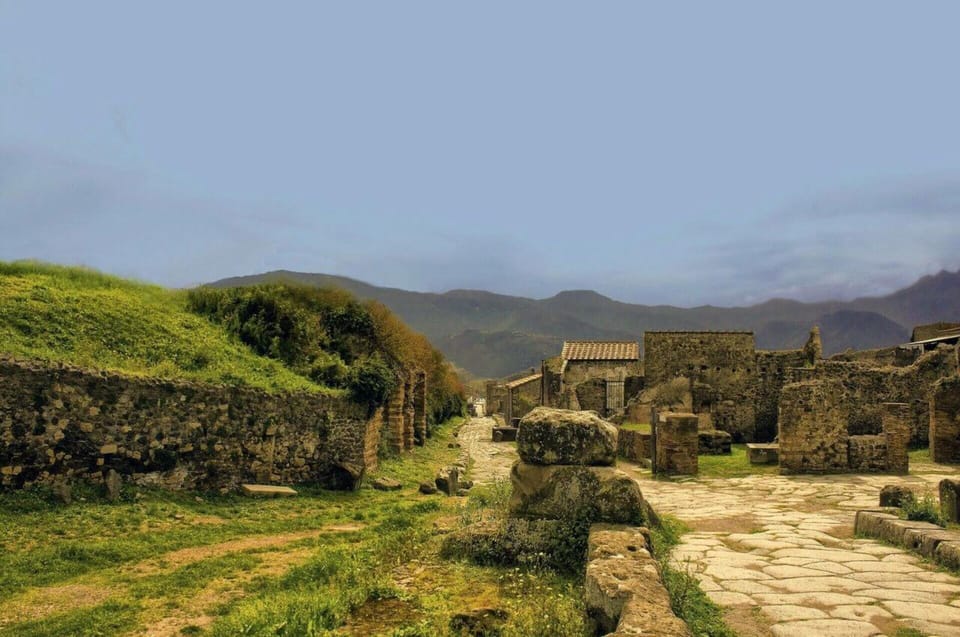
Pompeii has more than one “world.” This ticket focuses on the main park route and the key city landmarks in the guided 2-hour window.
You do not get access to the suburban villas, including the Villa of the Mysteries, Villa of Diomedes, and Villa Regina. If villas are your top priority, you should either add time on your own or choose a different tour option that includes them. With a fixed 2-hour guided walk, your focus stays on the city’s core story rather than the outer properties.
Price and value: why $58 can feel fair (if you use everything included)
At $58 per person, you are paying for more than entry. You are paying for skip-the-line admission plus a live historian guide, radio guides, and the audio guide library of 130+ points.
That can be great value if you do two things:
- You listen during the live tour and use the audio guide afterward.
- You treat the 2 hours as a guided “foundation” instead of expecting it to cover everything.
If you prefer to wander without any structured help, the price may feel steep. But if you want the ruins explained in real time and then want extra stops afterward, the inclusions are doing real work for you.
Also, fast-track entry matters more than it sounds. Pompeii can be busy, and time is your most limited resource once you are there. Cutting waiting time means more meaningful minutes.
Who this Pompeii tour fits best
This is a strong fit if you:
- Want a first-time Pompeii experience that prioritizes the biggest, most interpretable sights.
- Like learning while you walk, especially from a historian style guide.
- Care about context—how public spaces worked, not only what a building looks like.
- Want a guided start and then the flexibility to roam afterward with an audio guide.
It may be less ideal if you:
- Only want independent exploring and no guided commentary.
- Are specifically chasing the suburban villas as your must-see priority.
Should you book this Pompeii entry ticket with an expert historian?
If you want a smooth, understandable Pompeii visit, I’d book it. The combination of fast-track entry, a historian-led 2-hour highlight route, and a 130+ point audio guide gives you both structure and freedom. If you are okay with focusing on the city core and saving the villas for another visit, this is a smart way to get value out of limited time.
FAQ
How long is the Pompeii guided tour?
The guided experience lasts 2 hours.
Where do I meet the tour guide?
Meet at the Vox City info point in Piazza Esedra, in front of Hotel Vittoria, where you exchange your voucher for official tickets.
Does this ticket include skip-the-line entry?
Yes. It includes a skip-the-line entry ticket to the Pompeii Archaeological Park.
What languages are available for the live guided tour?
Live guided tours are available in English, Spanish, or Italian.
Is there an audio guide included after the guided portion?
Yes. Your ticket includes an in-app audio guide with 130+ points of interest, which you can use to explore independently afterward.
What do I need for the audio guide?
A mobile device is not included. The instructions also say the headset is not included, so you should plan to use your own phone and, if you want, your own headset.
Which parts of Pompeii are included or excluded?
The experience focuses on the Pompeii Archaeological Park highlights. Access to the suburban villas is not included, including the Villa of the Mysteries, Villa of Diomedes, and Villa Regina.
How do I download the audio guide?
Scan the QR code on your voucher to download the audio guide prior to arrival.
What time should I arrive for the tour?
Tours depart at the booked time slot. Arrive about 5 minutes early if possible.
Can I cancel, and is there flexibility in payment?
Free cancellation is available up to 24 hours in advance for a full refund. The option also says you can reserve now and pay later.