REVIEW · POMPEI CAMPANIA
Pompeii Pass: Skip-the-Line, Guided Tour & Museum Access
Book on GetYourGuide →Operated by TOURISTATION · Bookable on GetYourGuide
Timing is everything at Pompeii. This Pompeii Pass groups skip-the-line entry with an archaeologist-led walkthrough, plus a virtual museum ticket so you can actually make sense of what you’re seeing. I love that it saves you from queue stress, and I also love the way the guide turns ruined streets into something you can follow. One possible drawback: the pass includes multiple parts, and if timing slips on the day, you might get less than the full set of add-ons.
You get flexibility too. The hours are designed so you can plan your order of stops later, not the other way around, which is rare for Pompeii day trips. It also helps that the group moves with a city-train overview, so you’re not guessing where things are supposed to be.
Just note the physical reality: this is not suitable for people with mobility impairments, and you’ll want to bring your ID and a bit of patience for crowds around the main entrances.
In This Review
- Key highlights to know before you go
- Pompeii Pass basics: what this 4-hour experience really gives you
- Meeting point at IBT Center near Chalet Donna Lucia
- Reserved entry and skip-the-line: why this is worth it
- The 4-hour guided walk through Ancient Pompeii (with an archaeologist)
- Pompeii City Train: the orientation trick that pays off
- The Virtual Museum of Pompeii: understanding what the ash preserved
- Timing, flexible hours, and what you’ll do at the start and end
- Language and group experience: how the guide style changes everything
- Value check: when this pass is a smart choice
- Who should book this Pompeii Pass
- Should you book it? My take
- FAQ
- What is the duration of the Pompeii Pass tour?
- Do I need to skip the line for Pompeii entry?
- What attractions are included besides the Pompeii ruins?
- Where do I meet the tour?
- What languages are available for the live guide?
- What do I need to bring?
- Is the tour suitable for people with mobility impairments?
- Are pets allowed?
- Is alcohol allowed?
- What is included for refreshments?
Key highlights to know before you go
- Skip-the-line Pompeii entry with reserved access so you lose less time to queues
- Archaeologist guide using multiple languages (Spanish, English, French, Italian)
- Virtual Museum ticket with a reconstruction of part of ancient Pompeii
- Pompeii City Train for an overview so ruins make more sense
- Water at the start, orange juice at the end to keep the day easy
Pompeii Pass basics: what this 4-hour experience really gives you
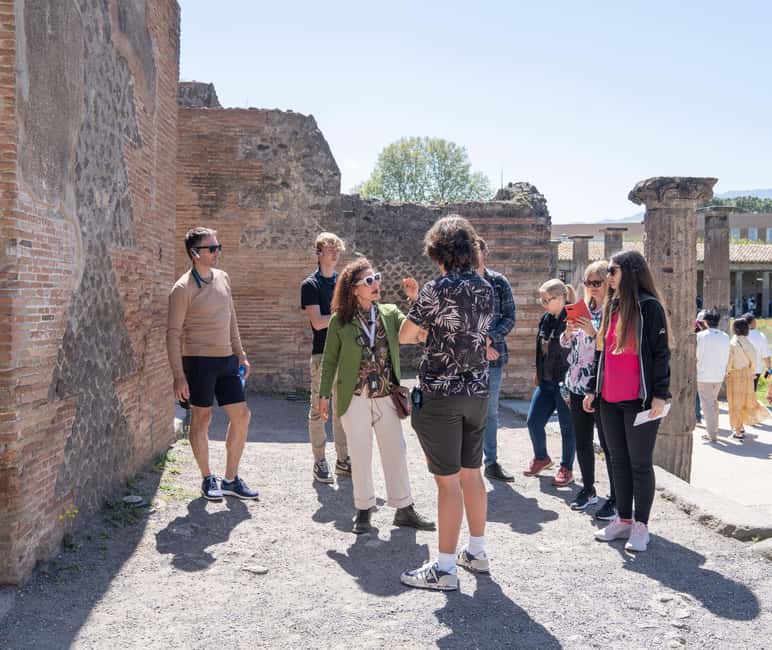
This pass is built for one goal: help you see more Pompeii with less time wasted. In about 4 hours, you combine three layers of experience—an on-site guided walk through the UNESCO archaeological area, a virtual museum to explain what the eruption changed, and a touristic city train to help orient you for the bigger layout.
If you’ve been worried that Pompeii is just a pile of “wow, that’s old” without context, this is the kind of ticket that adds structure. The guide isn’t just pointing at columns. You’re guided through streets and neighborhoods as a living city, the way people worked, shopped, ate, and fought.
You can also read our reviews of more guided tours in Pompei Campania



Meeting point at IBT Center near Chalet Donna Lucia
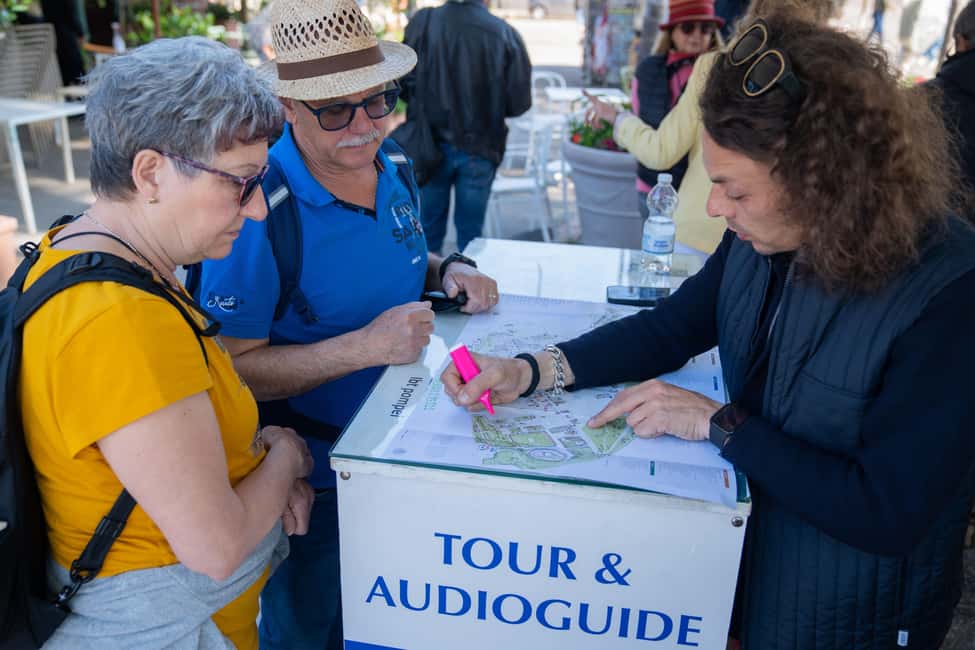
Plan on arriving at the start location with a little buffer. The official meeting point is at the Office called IBT Center/Touristation, next to Chalet Donna Lucia (coordinates: 40.74748992919922, 14.483768463134766).
You may also see Piazza Esedra 11 listed as the starting location. In practice, what matters is getting to the correct office on time so the group can check in and get organized for the skip-the-line entrance. If you’re coming from Naples by local transport or you’re juggling a rental car, give yourself extra time—these kinds of delays can be annoying in Pompeii.
Language support is good: the live guide can work in Spanish, English, French, or Italian. That matters because Pompeii is complex, and the best guides make the details click instead of turning it into random facts.
Reserved entry and skip-the-line: why this is worth it
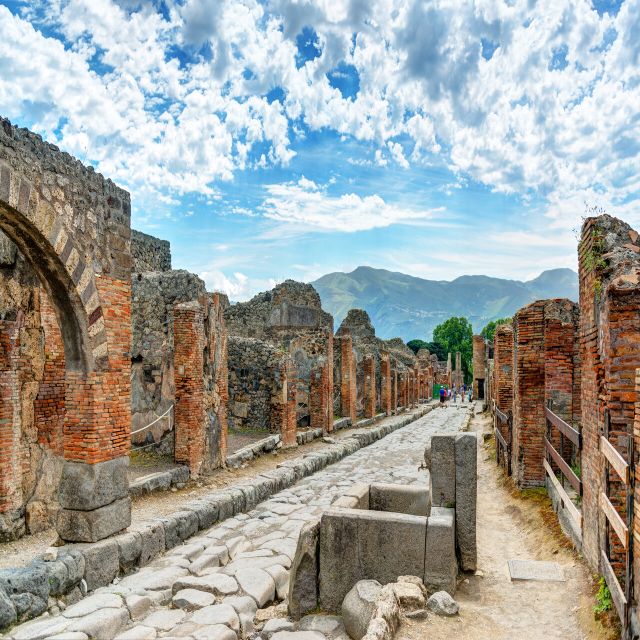
The big practical win here is the skip-the-line ticket. Pompeii can have long, slow queues at the main archaeological entrances, and losing an hour “waiting to start” is the easiest way to burn a short day.
With reserved admission, you can walk in and spend your energy where it counts: in the streets themselves. When you’re there on limited time, that shift is huge. You’re not standing around while the daylight changes and everyone’s energy drops.
Also, skip-the-line doesn’t mean you skip the rules. You still need your passport or ID card, and you should avoid bringing anything restricted (glass objects, alcohol, and drugs are not allowed). The pass also notes that pets aren’t allowed, with a specific exception for small dogs.
The 4-hour guided walk through Ancient Pompeii (with an archaeologist)
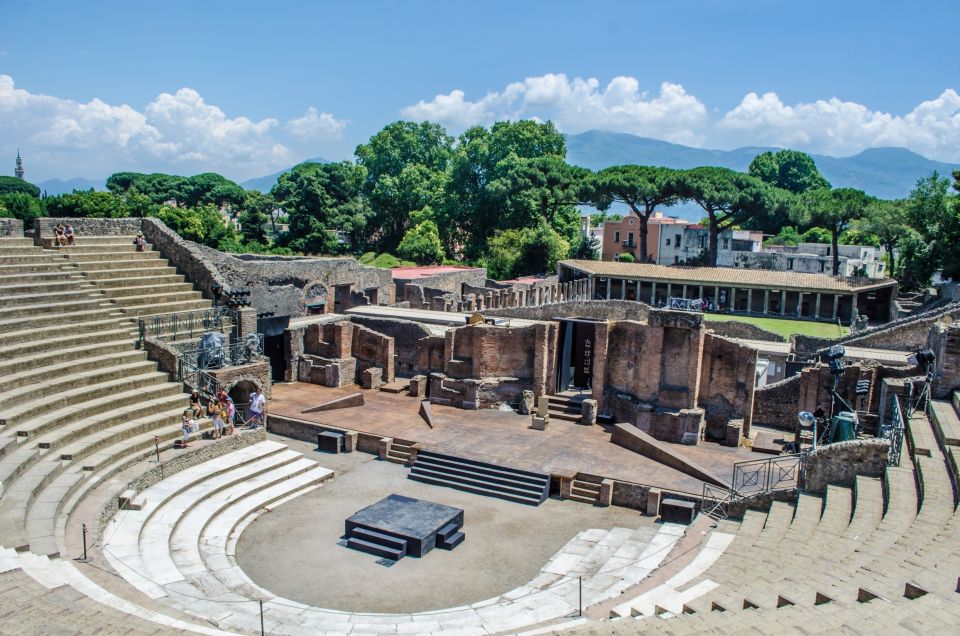
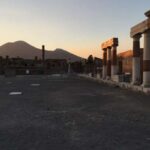
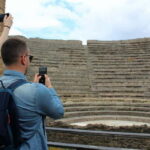
This is the core experience: a guided visit to the Pompeii Archaeological Site with an archaeologist guide. You’ll explore this UNESCO World Heritage area as a city that was preserved under volcanic ash from Mount Vesuvius.
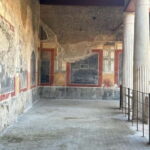
What I like about an archaeologist-led format is that you stop treating Pompeii like a theme park. Streets have logic. Buildings have purpose. Even when things are damaged, you can still understand how people moved and lived. The guide helps you connect details—doorways, layouts, and street-level features—into a bigger picture.
The ruins also feel more human when you’re guided through the idea of lived life: people lived here, loved, fought, and feasted. It’s not just monuments. It’s everyday routines frozen midstream.
One watch-out: this pass is not suitable for people with mobility impairments. The archaeological area is uneven, and the walking is part of how you experience the place.
Pompeii City Train: the orientation trick that pays off
You also get a ticket for the Pompeii City Train, which gives you an overview of the city. This is useful in a very practical way: Pompeii is big, and when you’re standing in front of ruins without orientation, you can feel lost fast.
The train helps you get your bearings fast—so when you’re later walking the archaeological area (or understanding what the guide is pointing at), you’re not starting from scratch. Think of it as the map layer that makes the ruins easier to read.
Keep your expectations sensible, too. A train overview won’t replace walking. It’s there to reduce confusion, not to “save” you from exploring.
You can also read our reviews of more museum experiences in Pompei Campania


The Virtual Museum of Pompeii: understanding what the ash preserved
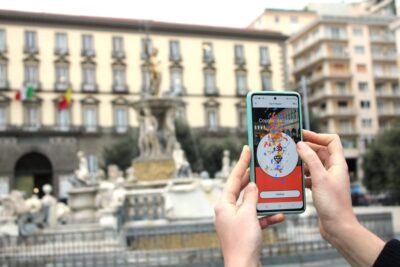
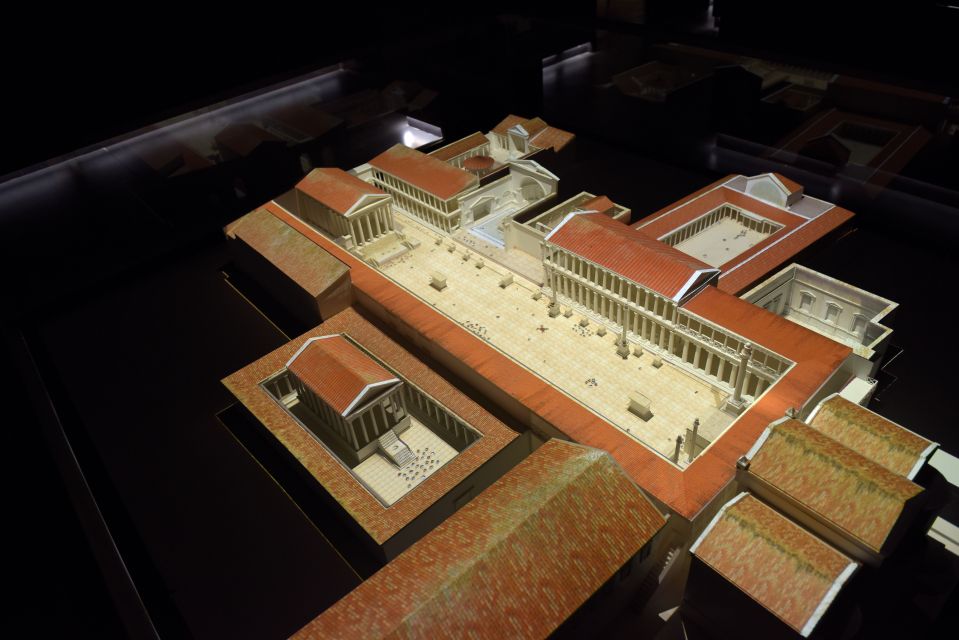
Here’s where this pass gets smarter than a simple ruins ticket. You also receive access to the Virtual Museum of Pompeii, which helps you interpret what life looked like before and during the eruption in 79 AD.
The virtual museum includes a perfect reconstruction of a part of ancient Pompeii. That reconstruction matters because Pompeii can be visually fragmented. A living neighborhood becomes easier to understand when you’re shown how things likely looked and how daily life fit into the space.
If you’re the kind of person who likes putting ruins into context—how people used buildings, what streets were for, how events unfolded—this add-on is a strong payoff. Even if you love ruins photos, this helps you return from your visit with real understanding, not just images.
Also, it’s not just a one-note video. The idea is that it bridges the gap between what you see in ruins and what happened that year—so the guide’s storytelling lands better.
Timing, flexible hours, and what you’ll do at the start and end
This pass is designed with flexible hours. The goal is to help you organize your day even if you’re running slightly behind or want to decide the order of attractions later. In real life, Pompeii days rarely go perfectly, so flexibility is a real value.
You’ll also get small comfort perks: a small bottle of water at the beginning and a glass of fresh orange juice at the end. Those are simple, but they make the difference between feeling refreshed and feeling drained—especially if you’re walking in heat.
About timing on the day: one important detail from real-world bookings is that the operator has shown they can handle schedule issues. For example, if someone arrived late due to a car-rental problem, staff managed to arrange a new guided tour and still ensured the museum visit was covered. That’s the kind of contingency you want to hear about when your day has multiple moving parts.
Language and group experience: how the guide style changes everything
Pompeii can get overwhelming fast, and the guide makes the difference between memorizing trivia and actually understanding what you’re looking at.
This tour offers live guide instruction in Spanish, English, French, or Italian, which increases your odds of getting a clear explanation. An archaeologist guide also tends to explain why certain features look the way they do, not just what they are. That helps you notice details you might otherwise walk right past.
If you care about interpretation—why things are where they are, what people did in different spaces—this format will feel more rewarding than a self-paced ticket.
Value check: when this pass is a smart choice
This pass is best value when you want more than entry. You’re not just getting a ticket to wander. You’re getting:
- Reserved skip-the-line admission
- A guided archaeologist walkthrough
- Virtual Museum access for context
- A city train overview for orientation
- Water and orange juice tied into the flow of the day
If your biggest worry is “I don’t want to waste hours in queues,” this is the right kind of planning. If your biggest worry is “I’ll see ruins but not understand them,” the virtual museum and archaeologist guide combination is also exactly what you need.
Where you should be cautious is when you’re expecting everything to be perfect on a tight schedule. The package includes multiple components, so if the day runs off plan, you might not get every element in the exact way you imagined. That said, the operator has shown a willingness to fix problems when they happen.
Who should book this Pompeii Pass
I’d steer you toward this pass if you:
- Have limited time and want to reduce queue stress
- Prefer a guided explanation over wandering
- Like learning how ancient daily life worked, not just reading plaques
- Want help orienting yourself with the city train overview
I’d think twice if you:
- Need the tour to be suitable for mobility impairments (it isn’t)
- Want a totally self-paced day with no group movement
It also helps if you’re traveling with the right documents. ID is required for all participants, and you should bring passport or ID card.
Should you book it? My take
Book this Pompeii Pass if you want a high-ROI Pompeii day: skip the line, get an archaeologist guide, and use the virtual museum to turn scattered ruins into a story. The add-ons aren’t random extras. They’re there to help you understand the site faster and feel less lost.
Skip it if your priority is slow wandering only, or if mobility access is a concern. In that case, you’ll likely be happier with a different format that matches your needs.
If you’re aiming for a smart, structured Pompeii experience in just a few hours, this is one of the cleaner ways to do it—especially when you factor in the orientation help of the city train and the context-building from the virtual museum.
FAQ
What is the duration of the Pompeii Pass tour?
The experience lasts 4 hours.
Do I need to skip the line for Pompeii entry?
Yes. The pass includes skip-the-line entrance with a reserved entry ticket.
What attractions are included besides the Pompeii ruins?
You also get access to the Virtual Museum of Pompeii and a ticket for the Pompeii City Train for an overview.
Where do I meet the tour?
You should report to the office IBT Center/Touristation next to Chalet Donna Lucia (around Piazza Esedra 11).
What languages are available for the live guide?
The live guide can be in Spanish, English, French, or Italian.
What do I need to bring?
Bring your passport or ID card. ID is required for all participants.
Is the tour suitable for people with mobility impairments?
No. It is not suitable for people with mobility impairments.
Are pets allowed?
Pets are not allowed, but small dogs are permitted inside the archaeological area if they are kept on a leash and carried when inside buildings.
Is alcohol allowed?
No. Alcohol and drugs are not allowed.
What is included for refreshments?
You’ll receive a small bottle of water at the beginning and a glass of fresh orange juice at the end.