REVIEW · POMPEI CAMPANIA
Pompeii Skip the Line Ticket + Guide Book with itineraries
Book on GetYourGuide →Operated by MOTORENT S.R.L. · Bookable on GetYourGuide
Pompeii can feel overwhelming. This ticket makes it calmer, with a skip-the-line entry plus a take-home guidebook that lets you explore at your own pace. I like that you can choose a 2, 4, or 6-hour plan without being dragged around, and I also like that the book stays with you as a souvenir and helps you navigate with an updated map. The one drawback: there’s no full live guided walk included, so you’ll rely on the guidebook for context rather than a person speaking to your questions.
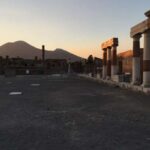
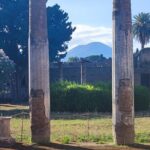
The setup is simple. You enter the archaeological park between 9:00 am and 5:00 pm, walk the ruins for as long as you want within that window, and follow the route options in your guidebook. You’ll see the big Pompeii signatures—frescoed houses, baths, temples, theaters, and the amphitheater—plus the haunting casts of the eruption victims.
One thing to consider before you buy: if you personally qualify for any special reduced-price or free admission based on age or category, double-check whether those savings would already apply to you. Since your price covers the entrance plus the guidebook, the value is strongest if you’re paying regular admission.
In This Review
- Key highlights to know
- Skip-the-line entry from Piazza Anfiteatro (and where you meet)
- Choosing your pace with the 2, 4, or 6-hour guidebook plans
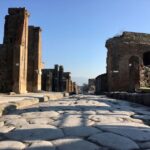
- What you’ll see in Pompeii: streets, frescoes, and everyday life
- Public landmarks: baths, temples, and Pompeii’s best-preserved amphitheater
- The casts of the victims: a sobering stop you can’t rush
- Using the updated map so you don’t get lost (too much)
- Price and logistics: what $41 includes, and when it may not feel fair
- What to bring for a comfortable Pompeii day
- Who this Pompeii ticket is best for (and who should look elsewhere)
- Should you book this Pompeii skip-the-line ticket with guidebook?
- FAQ
- What time can I enter Pompeii?
- Where do I meet for the reservation?
- Which entrance do I use?
- How long are the guidebook itineraries?
- Is the visit guided by a person?
- What languages are available?
- Does the price include food?
- What should I bring?
- Is there free cancellation and a pay-later option?
Key highlights to know
- Skip-the-line ticket that gets you into Pompeii faster during the day
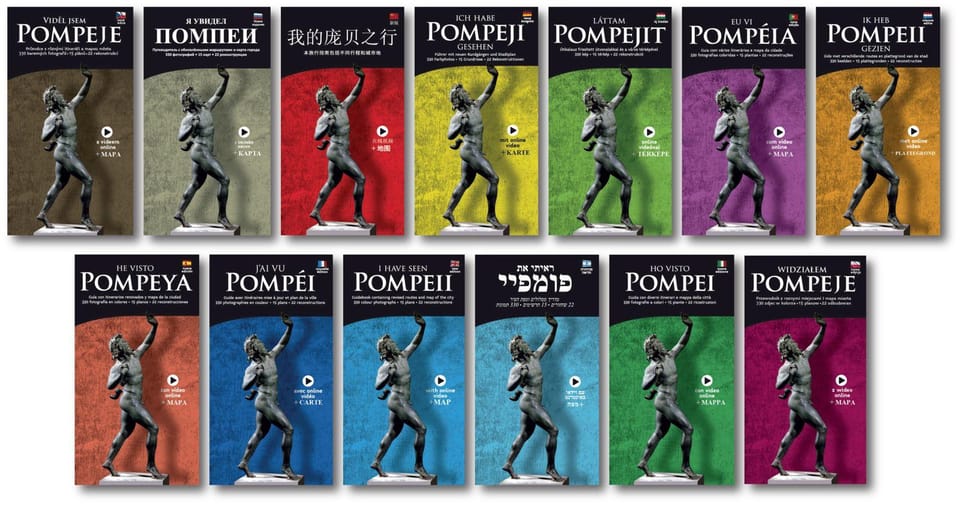
- Guidebook in 13 languages with an updated map and timed itineraries
- Self-paced visit with entry valid from 9:00 am to 5:00 pm
- Two-hour, four-hour, six-hour routes so you can match your energy level
- The must-see mix: houses, spas, temples, theaters, brothels, Thermopolis, and casts
- One book per every two participants, so plan to share if you’re solo
Skip-the-line entry from Piazza Anfiteatro (and where you meet)
Pompeii’s crowds can turn a day trip into a waiting game. This ticket is built to avoid that, with a reserved skip-the-line entrance so you can spend more time walking and less time standing in a queue.
Your access point is the Piazza Anfiteatro entrance. Meet the operators at the information point at VIA ROMA 123, Pompei. Once you arrive, you’ll show your voucher, and then you’re through to the archaeological park entrance tied to that reservation.
Why I like this approach: it’s structured without locking you into a group schedule. You get the benefit of an organized entry time, then you’re free to wander—slow, fast, or in-between—based on what catches your eye.
Practical note: this is not a transfer. You’ll need your own way to get to Pompei and to the meeting point on VIA ROMA 123.
You can also read our reviews of more tours and experiences in Pompei Campania



Choosing your pace with the 2, 4, or 6-hour guidebook plans
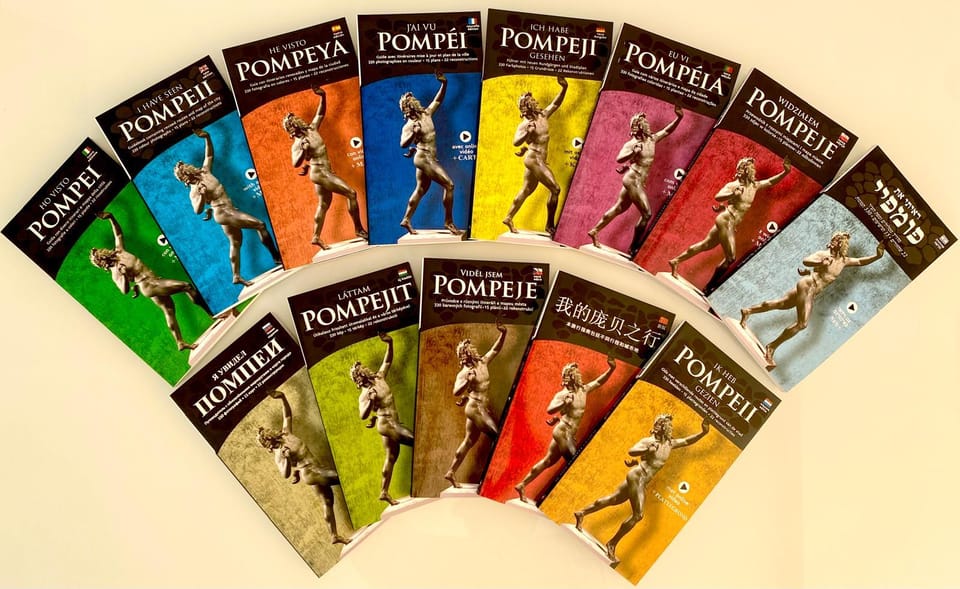
The core of this experience is the guidebook. It’s not just photos and trivia—it includes an updated map and itineraries of two, four, or six hours, so you can pick a route that fits your day.
If you’re only in Pompeii for a short window, the 2-hour plan is the one to choose. It’s designed for a highlight circuit: the places most people want to see first, so you don’t miss the big anchors.
For a more relaxed visit, the 4-hour itinerary gives you time to slow down. That matters at Pompeii, because you’ll want to stop for frescoes, read wall details, and take a breath between areas.
If you want the most complete experience without rushing, go for the 6-hour plan. With more time, you can cover more of the range—public spaces and everyday life, not just the headline monuments.
One more detail that affects how you’ll enjoy it: the guidebook is translated into 13 languages, and one book is available for every two participants. If you’re traveling with a friend or partner, that’s easy. If you’re solo, you might prefer to plan ahead so you have a clear way to share the book.
The guidebook also stays with you as a souvenir, which I think is genuinely useful. After your visit, you’ll still have a map and the route references to remind you what you saw.
What you’ll see in Pompeii: streets, frescoes, and everyday life
Pompeii isn’t a single monument—it’s a whole city you walk through. That’s why self-paced works so well here. You can spend 10 minutes at a shop area, then go deeper at a house with frescoes, then return later to another spot when the mood hits.
Here are the big categories you’ll be looking for as you move around the site:
Frescoed houses and domestic rooms
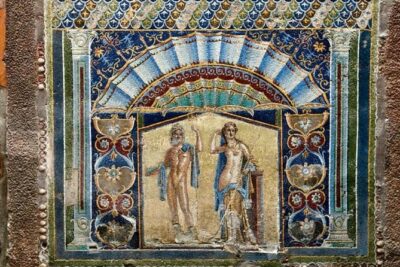
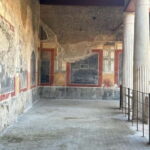
This is where Pompeii becomes visual and personal. You’ll see the remnants of homes decorated with wall paintings, and you’ll get a sense of how people lived day to day. Even if you don’t read every label, the guidebook helps connect what you’re seeing to what it means.
Spas and temples
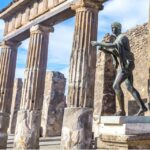
Pompeii includes places for body care and spiritual life. Spas show social habits and routine. Temples help you understand the city’s religious landscape.
Shops and the Thermopolis
You’ll also come across commercial spaces—shops and the Thermopolis, essentially the fast-food spot of the Roman world. It’s a fun stop because it breaks the “only temples and tombs” expectation. You’re reminded this place was crowded with normal, practical life.
Theaters and brothels
Yes, Pompeii includes theaters and brothels. The guidebook is built to explain these sites in context, so you’re not just looking at labels—you understand what these spaces were for. If you’re uncomfortable with explicit content, plan to skim selectively. You can still get a great Pompeii day without staring at everything.
If you like sites that feel human, this mix is exactly why Pompeii is worth the effort. It’s not just ruins—it’s routines, art, work, and public life all layered together.
Public landmarks: baths, temples, and Pompeii’s best-preserved amphitheater
Pompeii’s “big structures” are where the scale hits you. You feel how dense and organized Roman city life was—and how well certain features were built.
One standout in this experience is the one of the best-preserved Roman amphitheaters. When you find it, take a moment to look for the geometry: the seating layout, the sightlines, and the way it’s designed for crowds. Even without a show, the space reads instantly as a place built for public gathering.
You’ll also encounter other public life zones, including:
Thermal and spa areas
These are great for understanding daily rituals. They’re also good breathing points in your day because they tend to make you slow down and look around.
Temples
Temples help you read the city as a place with shared beliefs and civic identity, not just homes and streets.
Theaters
Theaters add a cultural angle. Even if you’re not an entertainment-history buff, it’s a reminder that Romans treated performances as part of everyday social life.
What I find practical: these big landmarks can act like “anchors” when you’re walking a self-paced route. If you’re tired halfway through, you can still feel like you got something major by hitting the amphitheater and a couple of the public sites.
The only drawback here is simply physical. Pompeii involves lots of walking on uneven ground. Wear comfortable shoes, and don’t plan to “power walk” the entire site.
The casts of the victims: a sobering stop you can’t rush
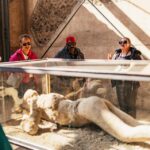
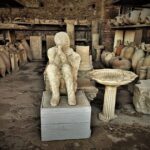
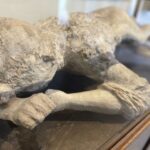
Some parts of Pompeii stop being about ruins and start being about people. The casts of the victims of the eruption are the moment that makes the city feel very real.
Even if you’ve read about Vesuvius, standing near these forms changes the tone of your day. I recommend you don’t skim. Give yourself time to look, then read what the guidebook says so you understand what you’re seeing rather than treating it like a photo moment.
It’s also the part where your pace matters most. If you’re the type who needs to keep moving to stay comfortable, you can still manage it—but try not to rush through purely to get it “over with.” A calm minute here is worth more than an extra 20 minutes elsewhere.
This is also one reason to choose your itinerary length thoughtfully. On the shorter route, the emotional anchors can feel more intense because you have less time to process and reset.
You can also read our reviews of more guided tours in Pompei Campania

Using the updated map so you don’t get lost (too much)
With self-paced ruins, a good map isn’t a nice-to-have—it’s the difference between a great day and a frustrating one.
This experience includes an updated map along with the guidebook. That matters because Pompeii is large and the entrances and paths can be confusing when you’re trying to make sense of what’s nearby.
Here’s how I’d use it in real life:
- Start by picking your time plan: 2, 4, or 6 hours.
- Use the map to find the major anchors you most want (like the amphitheater, baths/spas, and the casts).
- Build in small “detours” based on what looks interesting in the moment, then use the map again to rejoin your route.
Because you’re not tied to a group meeting point every few minutes, you can follow your attention. That’s exactly what Pompeii rewards: stopping for a fresco, then walking 10 minutes more to see something related, not something random.
If you do want help, the info support and operator coordination are designed around the reservation entry process. You’re also told instructor languages are available (English, Italian, Spanish, French), which is useful if you run into a practical question.
Price and logistics: what $41 includes, and when it may not feel fair
The price is listed as $41 per person for a one-day Pompeii visit. At that level, value depends on two things: (1) you’re using the skip-the-line entry, and (2) you’re taking the guidebook seriously enough to get value from it.
What you actually get:
- Entrance ticket for the Pompeii ruins (with skip-the-line entry)
- Guidebook in 13 languages
- Map
- Itineraries in 2, 4, or 6 hours
- The book remains with you as a souvenir
What you don’t get:
- Transfer to/from Pompeii
- A live guide walking you through the ruins
- Food and beverages
So here’s the balanced take: if you’d otherwise buy an entrance ticket and then still want a guidebook, this package tends to make sense. The skip-the-line benefit is the most “day-saving” part. Pompeii is one place where time really does translate into memories—more walking, more stops, less waiting.
When it might feel less satisfying: if you qualify for free or reduced admission based on age or category, you may be able to pay less for entry on your own. In that case, the value shifts because the package price includes both entry and the guidebook.
What to bring for a comfortable Pompeii day
Pompeii is outdoors and you’ll walk more than you expect. Bring basics so you don’t spend your day thinking about discomfort.
Use the provided checklist:
- Passport or ID card
- Comfortable shoes
- Sun hat
- Water
- Comfortable clothes
If you can, also bring sunglasses and a light layer. The ruins are open-air, and weather swings happen fast in Campania.
One more practical point: since food and beverages aren’t included, plan on buying snacks or having your own small provisions before you get deep into the site. It helps keep your pace smooth.
Who this Pompeii ticket is best for (and who should look elsewhere)
This experience is best for you if:
- You want flexibility. You like choosing your own pace instead of following a group.
- You’re okay using a guidebook during the walk and prefer reading as you go.
- You’re happy to explore a big site with a map and choose a route length (2, 4, or 6 hours).
It may be less ideal if:
- You want a full live guide speaking throughout the visit.
- You need lots of hands-on help with navigation.
- You’re traveling with someone who strongly prefers constant human explanations rather than guidebook text.
The sweet spot is a pair, a small group, or anyone who likes to control their time. The “one book per every two participants” setup also makes it feel built for couples and friends.
Should you book this Pompeii skip-the-line ticket with guidebook?
If you want an organized entrance and a plan that matches your energy, I’d book it. The best part is the combination: skip-the-line access plus a guidebook with 2, 4, or 6-hour routes and an updated map. That’s how you turn Pompeii from a stressful chore into a walk you actually enjoy.
I’d think twice only if you’re certain you qualify for free or heavily discounted entry, or if you know you’ll be frustrated without a live guide. In most cases, though, this is a practical way to enjoy Pompeii without rushing and without waiting.
FAQ
What time can I enter Pompeii?
You can enter from 9:00 am until 5:00 pm.
Where do I meet for the reservation?
Meet the operators at the information point located at VIA ROMA 123, Pompei.
Which entrance do I use?
Access is through the Piazza Anfiteatro entrance, tied to your reservation.
How long are the guidebook itineraries?
The guidebook offers itineraries for two, four, or six hours.
Is the visit guided by a person?
The experience is set up for you to explore independently with the included guidebook and map.
What languages are available?
The guidebook is translated into 13 languages, and instructor support is listed for English, Italian, Spanish, and French.
Does the price include food?
No. Food and beverages are not included.
What should I bring?
Bring a passport or ID card, comfortable shoes, a sun hat, water, and comfortable clothes.
Is there free cancellation and a pay-later option?
Yes. You can cancel up to 24 hours in advance for a full refund, and you can reserve now and pay later.