REVIEW · POMPEI CAMPANIA
Pompeii: Guided Tour & Skip the Line Ticket
Book on GetYourGuide →Operated by Enjoy Pompeii · Bookable on GetYourGuide
Pompeii freezes everyday Roman life. With skip-the-line entry and an expert live guide, you don’t just see ruins—you understand how people actually lived here, right up to the moment Vesuvius changed everything.
You’ll walk the ancient streets and hit the major sights people come for, including the Forum and landmark houses, while your guide ties the architecture to the stories, religion, and daily routines behind it.
One heads-up: this tour involves walking on uneven archaeological ground and it’s not wheelchair accessible, and it may be tough if you get motion sickness.
In This Review
- Key takeaways before you go
- Why Pompeii Hits Hard When You Have a Guide
- Getting Started at Ristorante Bar Sgambati (and Why It Matters)
- Skip-the-Line Entry: Two Hours Feels Like More
- The 79 AD Eruption Story You’ll Remember (Because It Explains Everything)
- Roman Streets and City Layout: Walking Through a Real System
- The Forum: Where Pompeii’s Public Life Made Sense
- Houses You Can Picture as Home: Tragic Poet and Golden Cupids
- Stabian Bath: Public Hygiene and Social Time, In Stone
- Pacing, Photos, and Getting Answers Without Feeling Rushed
- Price and Value: What You’re Paying For
- Who This Tour Suits Best (And Who Should Rethink It)
- Should You Book This Pompeii Guided Tour?
- FAQ
- How long is the Pompeii guided tour?
- What’s included with the ticket?
- Where does the tour start?
- What languages are the guides?
- Is the tour refundable if plans change?
- Is this tour wheelchair accessible?
- What should I bring with me?
Key takeaways before you go
- Skip-the-line through a separate entrance so you lose less time waiting.
- A 2-hour live guided walk that’s paced for getting key highlights without rushing.
- Forum + major houses like the House of the Tragic Poet and the House of the Golden Cupids.
- Public life stop at the Stabian Bath, where you’ll see how Romans handled hygiene and social time.
- Small-group style for better questions and a more personal feel.
- Bring comfortable shoes, because Pompeii’s surfaces are not “nice sidewalk” territory.
Why Pompeii Hits Hard When You Have a Guide
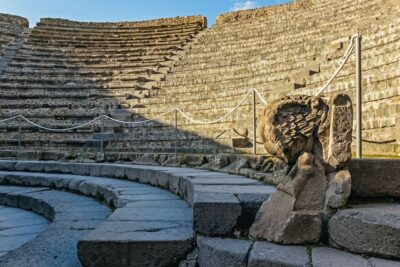
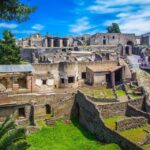
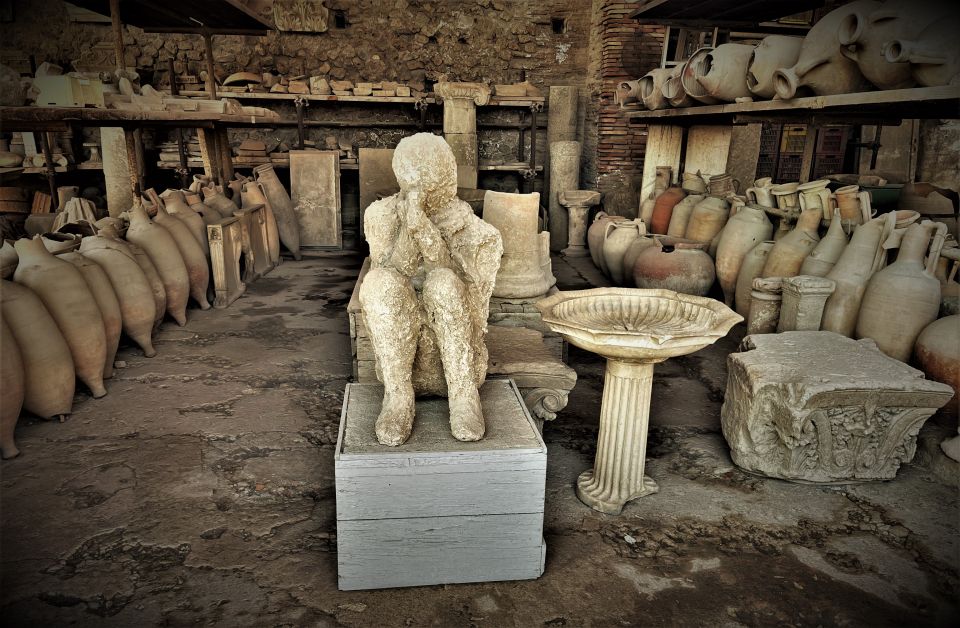
Pompeii is famous for a reason: the eruption preserved buildings and street layout in a way that makes ancient daily life feel uncomfortably close. Left to rot or rebuild, ruins can become abstract. Here, you can still trace rooms, thresholds, courtyards, and the routes people walked.
What I like most about doing Pompeii with a guide is the way the site turns from stone into a set of choices—where people met, where they bathed, and where they displayed status. Even the big landmarks, like the Roman Forum, land with more meaning when someone explains how power and conversation worked day to day in a Roman city.
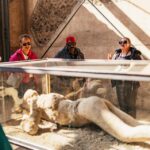
And yes, you’ll get the Vesuvius story, including what happened on the day the eruption preserved Pompeii under volcanic ash. That context matters, because you’ll start noticing details differently once you understand what froze in place.
You can also read our reviews of more tours and experiences in Pompei Campania


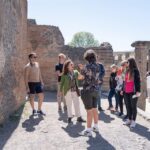
Getting Started at Ristorante Bar Sgambati (and Why It Matters)
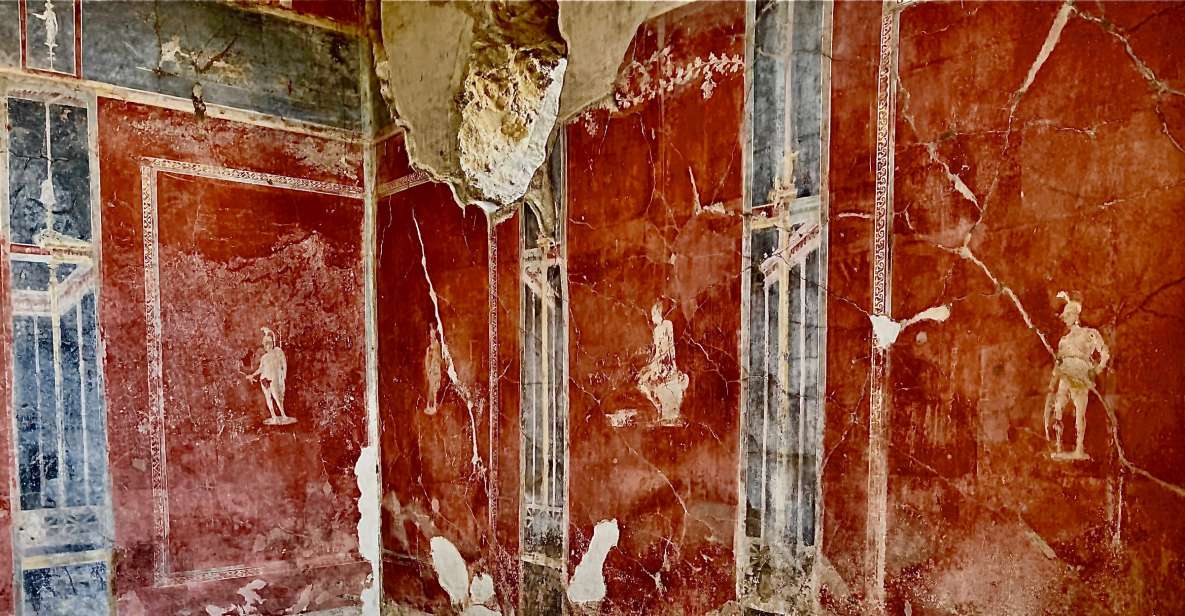
Your tour begins at Ristorante Bar Sgambati, which is a practical choice: it’s an easy point to orient yourself around before you enter the archaeological area. If you’re coming from train connections, it’s generally straightforward to reach the meeting point once you’re in the Pompeii area.
A small-group format also helps. If your timing is off, the guide team can message you to help you get back on track, and that reduces the stress of being late. This is the kind of detail that makes a tour feel smooth instead of chaotic.
Also, because you’re going in with a timed plan, you’re not stuck playing the waiting game. That alone makes the morning or afternoon feel like it belongs to you, not to ticket lines.
Skip-the-Line Entry: Two Hours Feels Like More
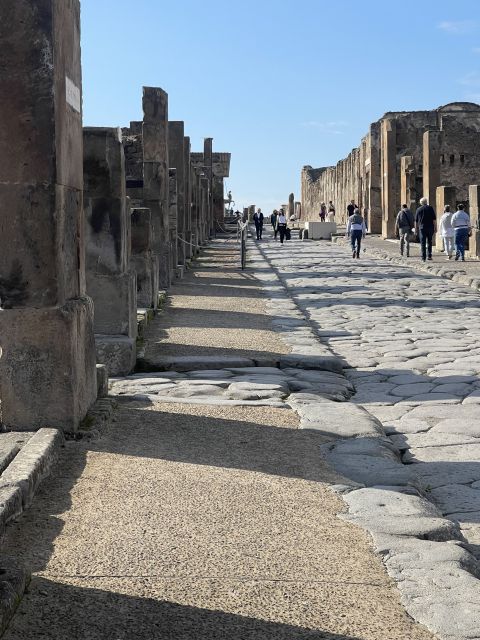
At Pompeii, time is your real currency. The ruins cover a lot of ground, and lines can quietly eat your afternoon. This tour’s skip-the-line ticket helps you spend more time inside the site, not outside negotiating gates.
The skip is handled through a separate entrance, which is a big deal in practice. You get on with the walk while others are still queueing, and that means you reach the key areas when the site still feels manageable.
The other time-saver is the structure of a guided loop. You’ll hit the big highlights—streets, Forum, notable houses, and bath life—without needing to map your own route while you’re trying to read signage in a fast-moving crowd.
The 79 AD Eruption Story You’ll Remember (Because It Explains Everything)
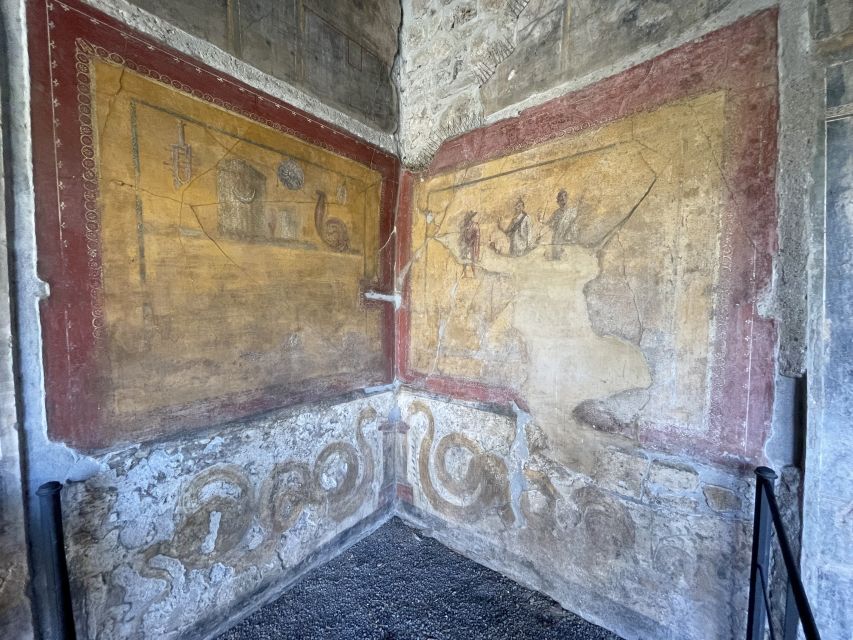
Your guide’s job isn’t just to name places—it’s to connect the timeline to what you see in front of you. The eruption of Mt. Vesuvius in 79 AD is the reason Pompeii looks like it does now, and your tour gives you the sequence that turns “ruins” into “a city mid-moment.”
Once you understand that volcanic ash preserved houses, public buildings, and street edges, details that might seem random start to look intentional. You’re not just looking at walls—you’re seeing what remained after catastrophe and how that survival shapes what archaeologists can interpret today.
This is where live guides make a difference. Some guides focus only on dates. The guides associated with this experience—people like Giulia, Gennaro, and Sasà—are praised for explaining how Romans believed, how they lived, and why the symbolism in art and architecture mattered to daily life.
Roman Streets and City Layout: Walking Through a Real System
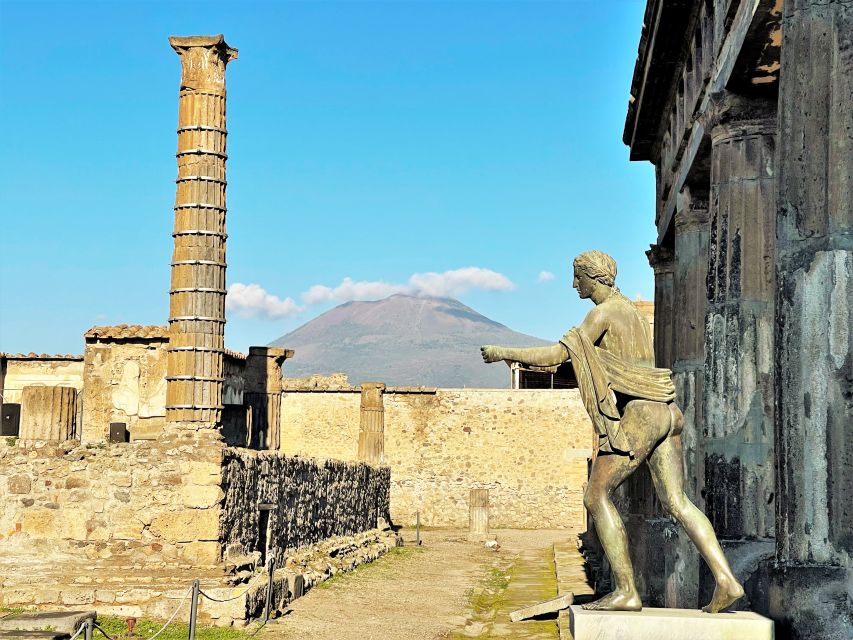
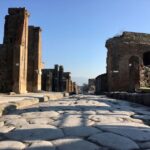
After entry, you’ll walk along ancient streets the way residents once did. The layout is part of the “wow,” but it’s also useful: Pompeii’s streets and building placement help you understand how a Roman city functioned at neighborhood scale.
Your guide will point out how architecture reflects the social structure of the city. For example, you’ll see how public and semi-public spaces behave differently from private home life. Even if you’re not an architecture expert, this kind of framing makes the site easier to process.
One practical tip: take your time at intersections and doorways. Even when the tour is moving, pausing for a few seconds to look at street alignments can help the whole place click.
You can also read our reviews of more guided tours in Pompei Campania

The Forum: Where Pompeii’s Public Life Made Sense
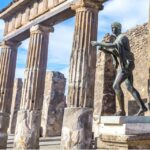
The Forum is the tour highlight that gives you the city’s “center of gravity.” This is the public gathering place where community life, politics, and commerce would have intersected.
Seeing the Forum with a guide is especially valuable because it’s easy to treat it like a single large courtyard. With context, you start understanding it as a designed environment for interaction—where people came to talk, conduct business, and confirm their place in the civic world.
If you’re the kind of person who likes learning while walking, this is one of the best stops on the route. The guide’s explanations help you connect everyday human behavior—meetings, chatter, ritual—with the physical spaces that supported it.
Houses You Can Picture as Home: Tragic Poet and Golden Cupids
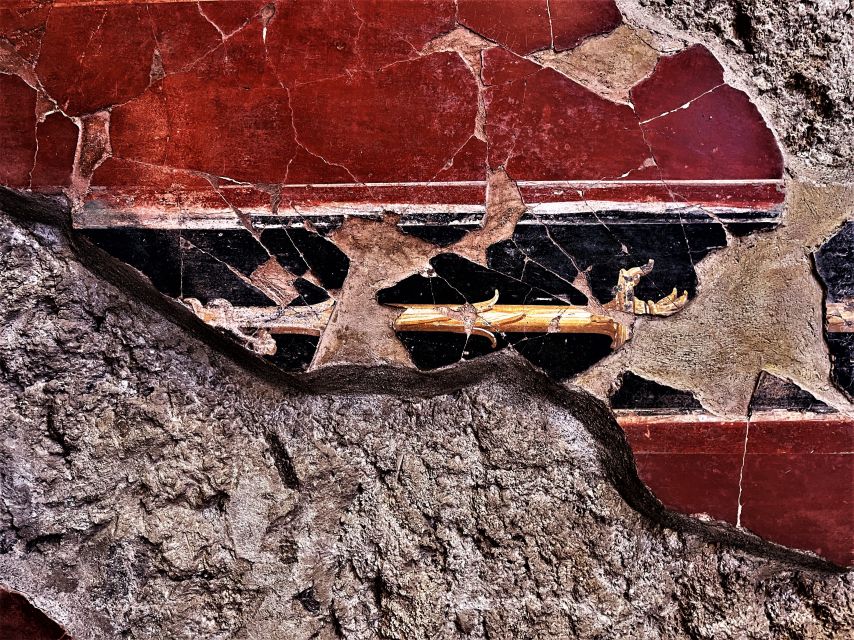
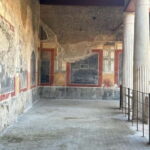
Pompeii’s houses can look like fancy rock shells until someone explains what you’re really looking at. During the walk, you’ll visit major domestic sites such as the House of the Tragic Poet and the House of the Golden Cupids.
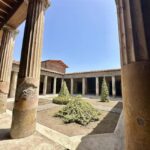
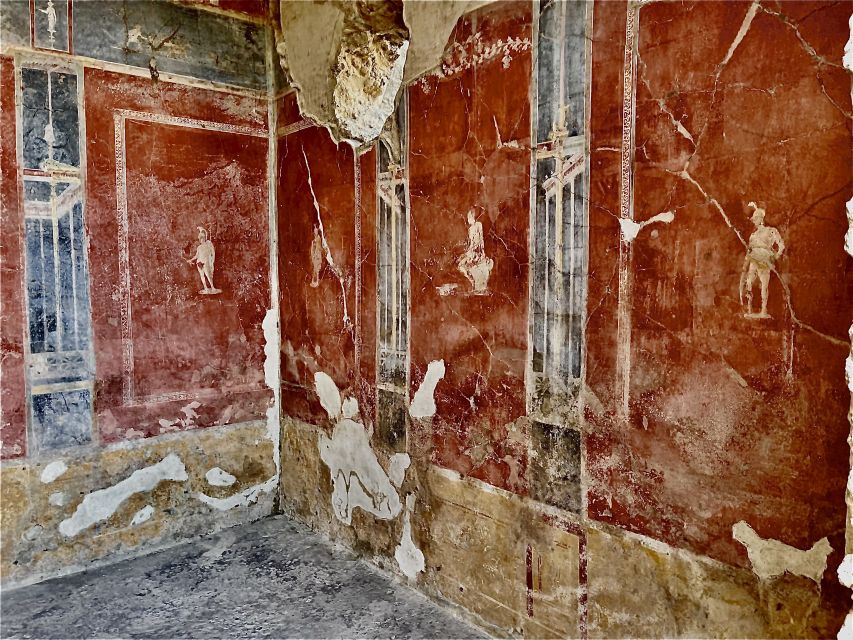
These homes are useful because they show more than wealth. They show lifestyle. When you see courtyards, rooms arranged around light and air, and decorative choices, it helps you imagine how people organized privacy, entertainment, and family life.
The House of the Tragic Poet gets its name from its association with a famous theme, and your guide will help you interpret why myth and storytelling mattered in Roman spaces. The House of the Golden Cupids similarly ties decoration to identity—art wasn’t just for show; it helped shape how you wanted visitors (and the household itself) to feel.
If you care about meaning behind art and symbolism, you’ll likely enjoy these stops a lot. Guides known for mythology and religious context tend to make these homes feel like more than sightseeing.
Stabian Bath: Public Hygiene and Social Time, In Stone
The Stabian Bath is where Pompeii shifts from private life to communal routines. Baths in Roman culture weren’t just about cleanliness. They were about social rhythm—meeting people, relaxing, and spending time in a shared setting.
This stop is great for two reasons. First, it’s visually structured, so you can follow the logic of rooms and movement. Second, it reminds you that daily life in Pompeii was built around public and semi-public spaces, not just home.
With a guide, you’ll connect the architecture to the function. That turns “I walked into some rooms” into “I can see how a Roman might spend an afternoon here.” It’s one of the best ways to understand the city as a lived-in system.
Pacing, Photos, and Getting Answers Without Feeling Rushed
A 2-hour guided format isn’t long, which can be a concern with some tours. Here’s the trade-off: you don’t attempt everything. Instead, you cover the highlights in a way that keeps meaning attached to each stop.
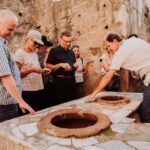
In small-group settings, you also get room for real questions. People have praised how guides answer everything clearly, including random, specific curiosity—my kind of travel style. If you want history explained in plain terms, this format tends to deliver.
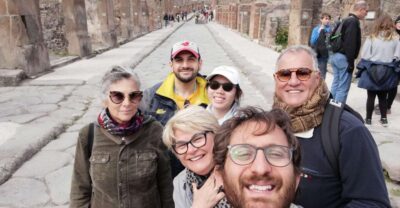
There’s also a practical bonus: guides may point you toward good photo angles and even help take pictures of your group. That means you can get the Pompeii photos without losing your place in the tour.
Price and Value: What You’re Paying For
The price is about $60 per person for a guided Pompeii experience with skip-the-line entry and a live 2-hour tour. That sounds straightforward, but value depends on what you’d do on your own.
If you try to DIY Pompeii, you’ll still spend time figuring out where to go, what to prioritize, and how to interpret what you’re looking at. Pompeii rewards people who can connect the physical site to the human story, and that’s where the guide earns the fee.
You’re also paying for time savings. Skip-the-line entry isn’t just convenience; it’s protection against the “we lost half our visit to waiting” problem. And since the tour is designed around the biggest highlights—Forum, major houses, and bath life—you’re not left wandering.
This is a strong value choice if you want a fast path to the most meaningful parts of Pompeii without turning your day into a self-guided quiz.
Who This Tour Suits Best (And Who Should Rethink It)
This tour is a good match if you:
- Want a guided route through Pompeii’s key highlights in about two hours.
- Prefer small-group pacing and time for questions.
- Like the story of the eruption and why it preserved the city.
- Are interested in how Roman culture showed up in both public spaces (like the Forum and baths) and private life (like the houses).
It’s not a great match if you need wheelchair access, have a pre-existing medical condition that limits mobility, or if motion sickness is a major issue. Even for people who are fine physically, Pompeii’s ground can be uneven and requires attention.
If you’re traveling with kids, this sort of structured highlights route can work well too, since the homes and the Forum are easy to turn into concrete stories (and guides who are patient can help keep young minds on track).
Should You Book This Pompeii Guided Tour?
I’d book it if you want Pompeii to feel understandable, not just impressive. With skip-the-line entry and a tight 2-hour guided walk, you get the big sights—Forum, House of the Tragic Poet, House of the Golden Cupids, and Stabian Bath—plus the eruption context that makes the ruins meaningful.
Skip this one if you’re hoping for a long, free-roaming visit or you need accessibility accommodations. In those cases, you’ll probably be happier with a different plan that fits your pace and physical needs.
FAQ
How long is the Pompeii guided tour?
The guided experience runs for about 2 hours, with walking through the archaeological site during that time.
What’s included with the ticket?
You get a skip-the-line entry ticket and a 2-hour guided tour.
Where does the tour start?
The meeting point is Ristorante Bar Sgambati.
What languages are the guides?
Guides are available in English and Italian.
Is the tour refundable if plans change?
Yes. You can cancel up to 24 hours in advance for a full refund.
Is this tour wheelchair accessible?
No. This activity is not suitable for wheelchair users.
What should I bring with me?
Wear comfortable shoes and clothes, dress for the weather, and bring a passport or ID card (a copy is accepted).